

Market Overview
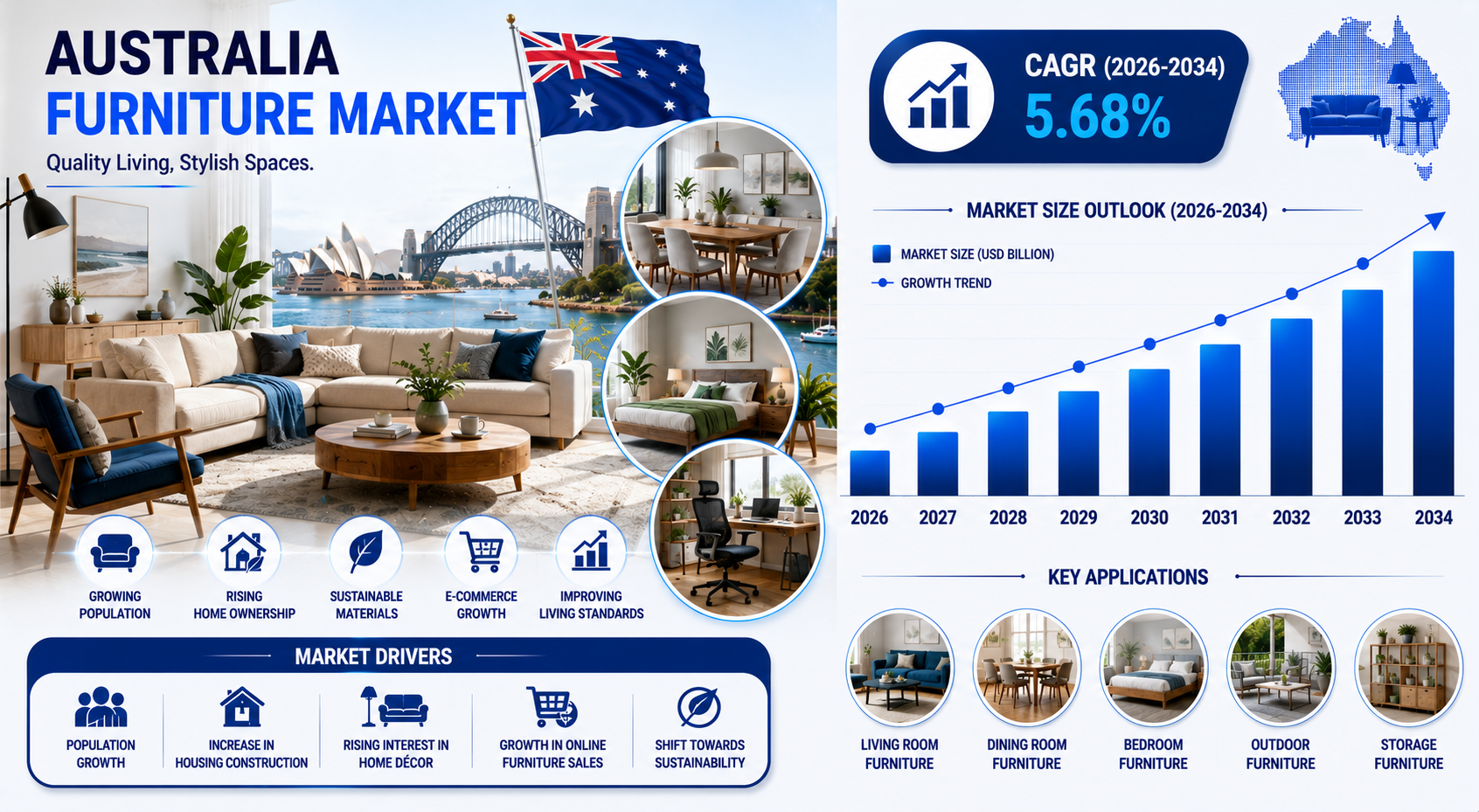
The Australia furniture market is experiencing significant growth, propelled by a confluence of key factors: evolving lifestyle trends and changing consumer preferences, the impact of e-commerce on the retail landscape, sustainability considerations, and the rising integration of advanced technologies in furniture design. The market size reached USD 19.7 Billion in 2025 and is projected to reach USD 32.9 Billion by 2034, growing at a compound annual growth rate (CAGR) of 5.68% from 2026 to 2034.
The growing focus of key manufacturers and suppliers on using friendly packaging and transportation practices is primarily augmenting the market growth across the country. The market is strategically important to Australia's economy as it supports manufacturing, retail, and logistics sectors, creates jobs, and enables consumers and businesses to furnish functional, aesthetically pleasing, and comfortable living and working spaces.
Request a Sample Report for In-Depth Market Insights: https://www.imarcgroup.com/australia-furniture-market/requestsample
Australia Furniture Market Summary
The Australia furniture market encompasses a system where movable items created to facilitate various human activities (sitting, sleeping, storing possessions, etc.) are manufactured, distributed, and sold through various channels to residential and commercial end users.
These furniture pieces (chairs, tables, beds, cabinets, etc., crafted from materials such as wood, metal, plastic, glass, upholstery) are valued for their role in providing comfort, enabling relaxation and ease of activities, contributing to the visual appeal of spaces, and enhancing aesthetics to create pleasing atmospheres.
The ecosystem includes furniture manufacturers, material suppliers (metal, wood, plastic, glass, others), distribution channels (supermarkets and hypermarkets, specialty stores, online stores, others), residential homeowners, commercial property owners, and regional markets across Australia.
Major segments identified in the market include material (metal, wood, plastic, glass, others), distribution channel (supermarkets and hypermarkets, specialty stores, online stores, others), end use (residential, commercial), and region (Australia Capital Territory & New South Wales, Victoria & Tasmania, Queensland, Northern Territory & Southern Australia, Western Australia).
The market is benefiting from evolving lifestyle trends and changing consumer preferences driving demand for innovative and stylish furniture pieces; the impact of e-commerce on the retail landscape; sustainability considerations with consumers increasingly inclined towards eco-friendly and responsibly sourced furniture; and the rising integration of advanced technologies in furniture design, such as smart and multifunctional pieces.
Leading manufacturers are responding to sustainability trends by adopting eco-conscious practices and materials, further stimulating market growth.
PORTER'S FIVE FORCES ANALYSIS — AUSTRALIA FURNITURE MARKET
Bargaining Power of Suppliers — Moderate
Furniture suppliers include material providers (wood, metal, plastic, glass, upholstery, etc.), component manufacturers, and packaging suppliers. The presence of multiple suppliers across different material categories reduces dependency on any single supplier.
The growing focus of key manufacturers and suppliers on using friendly packaging and transportation practices indicates that suppliers who can offer sustainable and eco-friendly materials and packaging have moderate bargaining power.
However, the availability of substitute materials (e.g., wood alternatives, recycled plastics) gives manufacturers flexibility in supplier selection.
Bargaining Power of Buyers — Moderate to High
Buyers include residential consumers and commercial buyers (businesses, offices, hospitality, healthcare, etc.). Each buyer segment has different requirements, budgets, and style preferences.
The convenience of online shopping, coupled with a wide variety of choices and competitive pricing, resonates with consumers, fostering a surge in digital transactions within the furniture sector and giving buyers access to extensive selection and price comparison.
Consumers are seeking functionality and aesthetics, investing in pieces that reflect their unique tastes, but also have the ability to compare between multiple brands, materials, and distribution channels.
For commercial buyers purchasing in volume, bargaining power is higher due to larger order sizes.
Threat of New Entrants — Moderate
The furniture market has moderate barriers to entry. New entrants can enter through niche segments (e.g., sustainable furniture, smart furniture, online-only brands) or through specific material specializations.
However, established furniture brands and retailers have significant brand recognition, distribution networks, and supplier relationships that new entrants struggle to replicate quickly.
The rising integration of advanced technologies in furniture design (smart and multifunctional pieces) requires investment in R&D and technology partnerships, creating barriers for some new entrants.
The impact of e-commerce lowers some barriers by allowing new entrants to reach consumers directly without physical retail stores.
Threat of Substitutes — Low
Furniture has no direct substitute for its core functions of providing comfort, enabling activities (sitting, sleeping, storing), and contributing to the visual appeal of spaces.
Second-hand or used furniture is a substitute for new furniture, but consumer preferences for innovative, stylish, and eco-friendly new furniture reduce this threat for the new furniture market.
DIY or custom-built furniture by consumers themselves is a potential substitute, but the complexity, time, and skill required make professional furniture manufacturing the dominant choice.
Competitive Rivalry — Moderate to High
The Australia furniture market features a competitive landscape with a mix of established furniture manufacturers, specialty retailers, online stores, supermarkets, and hypermarkets offering furniture products.
Differentiation occurs through material quality, design innovation, sustainability credentials, smart technology integration, pricing, brand reputation, and customer service.
The impact of e-commerce on the retail landscape significantly influences competition, with online stores competing alongside traditional brick-and-mortar channels like specialty stores and supermarkets/hypermarkets.
Consumers' demand for functionality and aesthetics, as they invest in pieces that reflect their unique tastes, forces competitors to continuously innovate in design and materials.
MARKET GROWTH DRIVERS
Evolving Lifestyle Trends and Changing Consumer Preferences
Evolving lifestyle trends and changing consumer preferences are driving the demand for innovative and stylish furniture pieces. Individuals across the country are seeking functionality and aesthetics, as they invest in pieces that reflect their unique tastes. As lifestyles become more dynamic and diverse, consumers require furniture that adapts to various activities and spaces. The shift toward remote and hybrid work has increased demand for home office furniture that combines comfort, functionality, and style. Additionally, the growing popularity of multifunctional furniture (e.g., sofa beds, storage ottomans, extendable tables) reflects consumer preferences for space-efficient solutions in urban apartments and smaller homes. The desire for personalized living spaces drives demand for customizable furniture options and unique design pieces.
Impact of E-commerce on the Retail Landscape
The impact of e-commerce on the retail landscape significantly influences the Australia furniture market. The convenience of online shopping, coupled with a wide variety of choices and competitive pricing, resonates with consumers, fostering a surge in digital transactions within the furniture sector. Online stores offer consumers the ability to browse extensive catalogs, compare prices and materials, read customer reviews, and make purchases from the comfort of their homes. Augmented reality (AR) and virtual try-on tools are increasingly being integrated into online furniture platforms, allowing consumers to visualize how pieces will look in their spaces before purchasing. The online distribution channel is explicitly categorized in the market, alongside supermarkets/hypermarkets, specialty stores, and others, reflecting its growing importance. E-commerce also enables smaller and niche furniture brands to reach consumers across Australia without the overhead costs of physical showrooms.
Sustainability Considerations
Sustainability considerations play a pivotal role in shaping the market dynamics. Individuals are increasingly inclined towards eco-friendly and responsibly sourced furniture, thereby reflecting a broader shift towards sustainable living. Leading manufacturers are responding to this trend by adopting eco-conscious practices and materials, which is also stimulating the market growth. Consumers are seeking furniture made from sustainable wood sources (FSC-certified), recycled materials, non-toxic finishes, and low-emission manufacturing processes. The growing focus of key manufacturers and suppliers on using friendly packaging and transportation practices is primarily augmenting the market growth across the country. Sustainable furniture also appeals to environmentally conscious commercial buyers, including offices, hotels, and healthcare facilities seeking green building certifications. This trend aligns with broader Australian government initiatives promoting circular economy principles and reducing environmental impact.
Rising Integration of Advanced Technologies in Furniture Design
The rising integration of advanced technologies in furniture design, such as smart and multifunctional pieces, is a noteworthy driver. Consumers are drawn to furniture that aligns with their tech-savvy lifestyles, leading to an increased demand for innovative and connected furnishings. Smart furniture includes features such as built-in wireless charging, integrated lighting, USB ports, voice-activated controls, adjustable ergonomic settings, and IoT connectivity. Multifunctional furniture incorporates technology to enable space-saving transformations (e.g., motorized lift mechanisms for storage beds). The integration of technology also extends to manufacturing processes, with advanced design software, CNC machining, and automated production lines improving precision, efficiency, and customization capabilities. As technology continues to evolve, furniture designers and manufacturers are creating pieces that seamlessly blend form, function, and connectivity.
AUSTRALIA FURNITURE MARKET SEGMENTATION
Material Insights:
Metal
Wood
Plastic
Glass
Others
Distribution Channel Insights:
Supermarkets and Hypermarkets
Specialty Stores
Online Stores
Others
End Use Insights:
Residential
Commercial
Regional Insights:
Australia Capital Territory & New South Wales
Victoria & Tasmania
Queensland
Northern Territory & Southern Australia
Western Australia
COMPETITIVE LANDSCAPE
The Australia furniture market features a competitive landscape with a mix of established furniture manufacturers, specialty retailers, online stores, supermarkets, and hypermarkets. Leading players differentiate through material quality, design innovation, sustainability credentials, smart technology integration, pricing, brand reputation, and customer service. The impact of e-commerce on the retail landscape has intensified competition, with online-only brands competing alongside traditional brick-and-mortar retailers. The market research report has provided a comprehensive analysis of the competitive landscape, including market structure, key player positioning, top winning strategies, competitive dashboard, and company evaluation quadrant, with detailed profiles of all major companies.
The market includes a diverse range of players operating across different material specializations (metal, wood, plastic, glass), distribution channels (specialty stores, online, supermarkets/hypermarkets), and end-use segments (residential, commercial). Key players are responding to sustainability trends by adopting eco-conscious practices and materials and focusing on friendly packaging and transportation practices. Additionally, manufacturers are integrating advanced technologies into furniture design, creating smart and multifunctional pieces that appeal to tech-savvy consumers.
REGIONAL ANALYSIS
Australia Capital Territory & New South Wales: As the region containing Sydney and the national capital Canberra, NSW and ACT represent a significant furniture market driven by high population density, urbanization, strong residential construction activity, and a flourishing commercial sector. The region's affluent consumer base drives demand for premium, designer, and sustainable furniture. Government investments in public infrastructure and commercial real estate development also contribute to demand for commercial furniture in offices, healthcare, and educational facilities.
Victoria & Tasmania: Victoria, anchored by Melbourne, and Tasmania represent a major furniture market with strong demand for residential and commercial furniture. The region's focus on design innovation and sustainability influences furniture trends, with consumers seeking eco-friendly and responsibly sourced pieces. Melbourne's status as a cultural and design hub drives demand for stylish, contemporary furniture in both residential and commercial spaces (hospitality, retail, offices). The expansion of the construction industry and infrastructure projects supports furniture demand.
Queensland: Queensland's furniture market is driven by rapid population growth, especially in Brisbane and the Gold Coast, fueling demand for residential furniture. The state's focus on coastal and climate-responsive living influences furniture material choices (e.g., weather-resistant outdoor furniture). The expansion of the tourism and hospitality industries drives demand for commercial furniture in hotels, resorts, and restaurants. Queensland's growing retirement and lifestyle communities also create demand for specialized residential furniture.
Northern Territory & Southern Australia: In the Northern Territory and South Australia, the furniture market is driven by government investments in infrastructure, new residential and commercial developments in Darwin and Adelaide, and growth in defense, mining, and tourism sectors. Demand for functional, durable furniture in residential and commercial projects reflects the region's unique climatic and economic conditions. Heritage conservation and adaptive reuse of old buildings in historic areas also create demand for specialized furniture.
Western Australia: Western Australia's furniture market is driven by mining and resource sector expansions, especially in Perth, supporting demand for residential and commercial furniture. High demand for residential housing due to population growth, coupled with a boom in luxury homes, boosts the residential furniture market. The commercial sector, particularly in retail, hospitality, and healthcare, sees growth as businesses invest in creating unique customer experiences, driving demand for commercial furniture. The state's focus on sustainability influences furniture material and manufacturing choices.
RECENT INDUSTRY DEVELOPMENTS
June 2026: Australia's furniture industry continued to benefit from population growth and housing demand. Industry estimates indicated that the Australian furniture retailing sector generated approximately AUD 12.6 billion in revenue during 2025–26, supported by residential furnishing demand and home renovation activity.
May 2026: Online furniture sales continued gaining market share as consumers increasingly used digital channels to purchase home furnishings. Retailers expanded omnichannel strategies, integrating physical showrooms with e-commerce platforms and virtual room-planning tools.
April 2026: Australia's housing market remained resilient, supporting furniture demand. National dwelling values increased by approximately 3.2% over the year to March 2026, contributing to spending on home furnishings, décor products, and renovation-related furniture purchases.
March 2026: Sustainability remained a key trend across the furniture sector. Manufacturers and retailers increased the use of recycled materials, sustainably sourced timber, and environmentally certified products in response to growing consumer demand for eco-friendly furniture solutions.
February 2026: Population growth and migration continued to support household formation across Australia. Strong demand for residential properties and rental accommodation created opportunities for furniture retailers supplying bedrooms, living rooms, dining areas, and home office spaces.
January 2026: The Australian furniture market benefited from ongoing investment in residential construction and renovation projects. Homeowners continued upgrading interiors, driving demand for premium, multifunctional, and space-saving furniture products.
January 2026: Industry data showed that Australia remained one of the largest furniture markets in the Asia-Pacific region, with demand increasingly influenced by urbanization, hybrid working arrangements, and consumer preferences for customizable and contemporary furniture designs.
January 2026: The home office segment remained an important growth area as flexible and hybrid work arrangements continued. Demand for ergonomic chairs, adjustable desks, and workspace furniture remained elevated compared with pre-pandemic levels.
Note: If you need any specific information that is not covered currently within the scope of the report, we will provide the same as a part of customization.
Speak to an analyst: https://www.imarcgroup.com/request?type=report&id=21950&flag=C
About Us
IMARC Group is a global management consulting firm that helps the world's most ambitious changemakers to create a lasting impact. The company provides a comprehensive suite of market entry and expansion services. IMARC offerings include thorough market assessment, feasibility studies, company incorporation assistance, factory setup support, regulatory approvals and licensing navigation, branding, marketing and sales strategies, competitive landscape and benchmarking analyses, pricing and cost research, and procurement research.
Contact Us
IMARC Group
134 N 4th St., Brooklyn, NY 11249, USA
Email: [email protected]
Tel. No.: (D) +91 120 433 0800
United States: +1-201-971-6302
Comments
Log in or sign up to join the conversation.