

The Sentier Research monthly median household income data series is now available for August. The nominal median household income was up $576 month-over-month and up $$2,753 year-over-year. That's an increase of 1.0% MoM and a 5.2% YoY increase. Adjusted for inflation, the latest income was up $615 MoM and up $2,637 YoY. The real numbers equate to 1.1% MoM and a 5.0% YoY increase.
In real dollar terms, the median annual income is 3.4% lower ($1,961) than its interim high in January 2008 but well off its low in August 2011.
Background on Sentier Research
The traditional source of household income data is the Census Bureau, which publishes annual household income data in mid-September for the previous year.
Sentier Research, an organization that focuses on income and demographics, offers a more up-to-date glimpse of household incomes by accessing the Census Bureau data and publishing monthly updates. Sentier Research has now released its most recent update, data through November (available here). The numbers in their report differ from the Census Bureau's in three key respects:
- It is a monthly rather than annual series, which gives a more granular view of trends.
- Their numbers are more current. The Census Bureau's most recent is the 2014 annual data released in September 2015.
- Sentier Research uses the more familiar Consumer Price Index (CPI) for the inflation adjustment. The Census Bureau uses the little-known CPI-U-RS (RS stands for "research series") as the deflator for their annual data. For more on that topic, see this commentary.
Monthly Median Household Income Since 2000
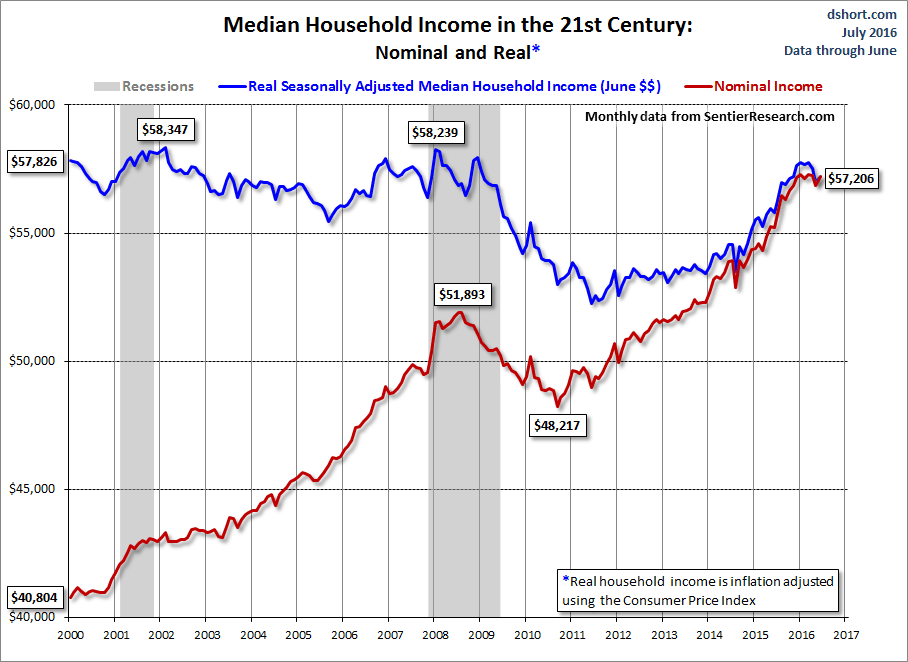
The first chart below is an overlay of the nominal values and real monthly values chained in the dollar value as of the latest month. The red line illustrates the history of nominal median household, and the blue line shows the real (inflation-adjusted value). Callouts show specific nominal and real monthly values for the January 2000 start date and the peak and post-peak troughs.
In the latest press release, Sentier Research spokesman Gordon Green summarizes the recent data:
The 1.1 percent increase in median household income between July and August 2015 is one of the largest month-to-month increases in income during the post-recessionary period. We have now recaptured all of the income losses that have occurred since June 2009, when the Great Recession ended. However, median household income is still 1.5 percent lower than December 2007, when the Great Recession began and 2.7 percent below the level in January 2000.
As for the data itself, Sentier makes it available in Excel format for a small fee (here). We have used the latest Sentier data to create the charts in this update illustrating the nominal and real income trends during the 21st century.
The blue line in the chart above paints the less optimistic "real" picture. Since we've chained in latest dollar value and the overall timeframe has been inflationary, the earlier monthly values are adjusted upward accordingly. In addition to the obvious difference in earlier real values, we can also see that real incomes peaked before the nominal (January of 2008, one month after the recession began, versus July 2008). Also the real post-recession decline bottomed later than the nominal (August 2011 versus September 2010).
The next chart is our preferred way to show the nominal and real household income -- the percent change over time. Essentially we have taken the monthly series for both the nominal and real household incomes and divided them by their respective values at the beginning of 2000. The advantage to this approach is that it clearly quantifies the changes in both series and avoids a common distraction of using dollar amounts ("How does my household stack up?").
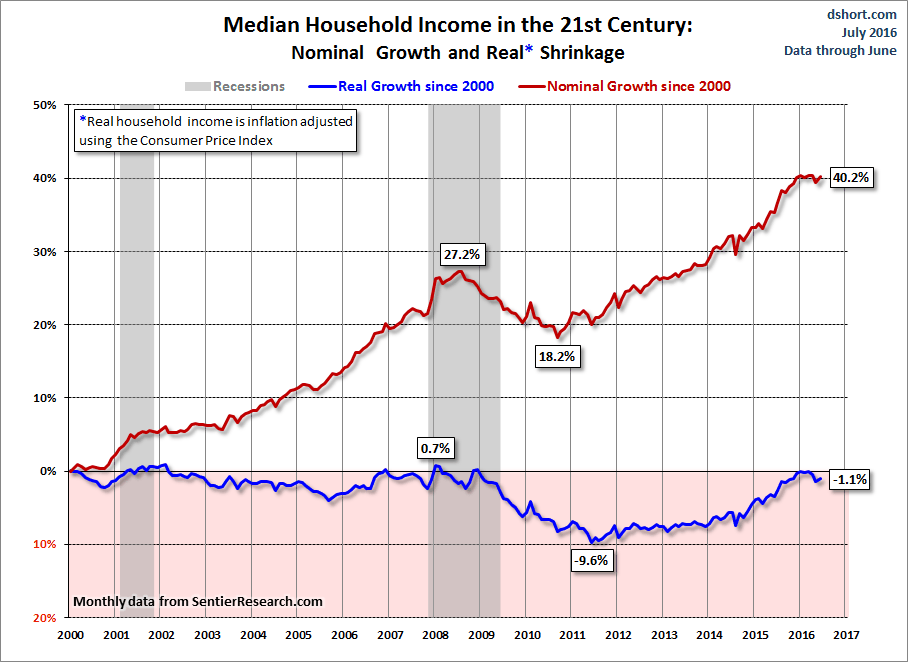
The reality illustrated here is that the real median household income series spent most of the first nine years of the 21st century struggling slightly below its purchasing power at the turn of the century. Real incomes (the blue line) hit an interim peak at a fractional 0.7% in early 2008, far below the nominal illusionary peak (as in money illusion) of 27.2% six months later. The real median household income is now at -2.7%. In contrast, the real recovery from the trough has been depressingly slow.
A Closer Look at the Post-Recession Data
Let's take a closer look at the monthly data since the end of the Great Recession. The chart above highlights the real monthly median value percent change since 2007. The latest real median annual income has finally risen above where it was in June 2009, the month the economic recovery began.

In Summary…
As the excellent data from Sentier Research makes clear, the mainstream U.S. household was struggling before the Great Recession. At this point, real household incomes are in worse shape than they were in mid-2009 when the recession ended.
We'll close this update with another look at real growth, highlighting the actual monthly data points and adding a three-month moving average. The MA trend has been slowly zigzagging higher since the trough in 2011, which illustrates Gordon Green's observations in the latest press release.

Check back next month for another update.
Additional Reading:
- U.S. Household Incomes: A 47-Year Perspective
- U.S. Median Household Incomes by Age Bracket
- Median Household Income Growth: Deflating the American Dream
Note: For more information on the Census Bureau's Current Population Survey (CPS), visit the CPSFrequently Asked Questions page. A common question is what qualifies as income in CPS household survey. The CPS definitions page lists the following:
- Earnings
- Unemployment compensation
- Workers' compensation
- Social security
- Supplemental security income
- Public assistance
- Veterans' payments
- Survivor benefits
- Disability benefits
- Pension or retirement income
- Interest
- Dividends
- Rents, royalties, and estates and trusts
- Educational assistance
- Alimony
- Child support
- Financial assistance from outside of the household
- Other income
Comments
Log in or sign up to join the conversation.