

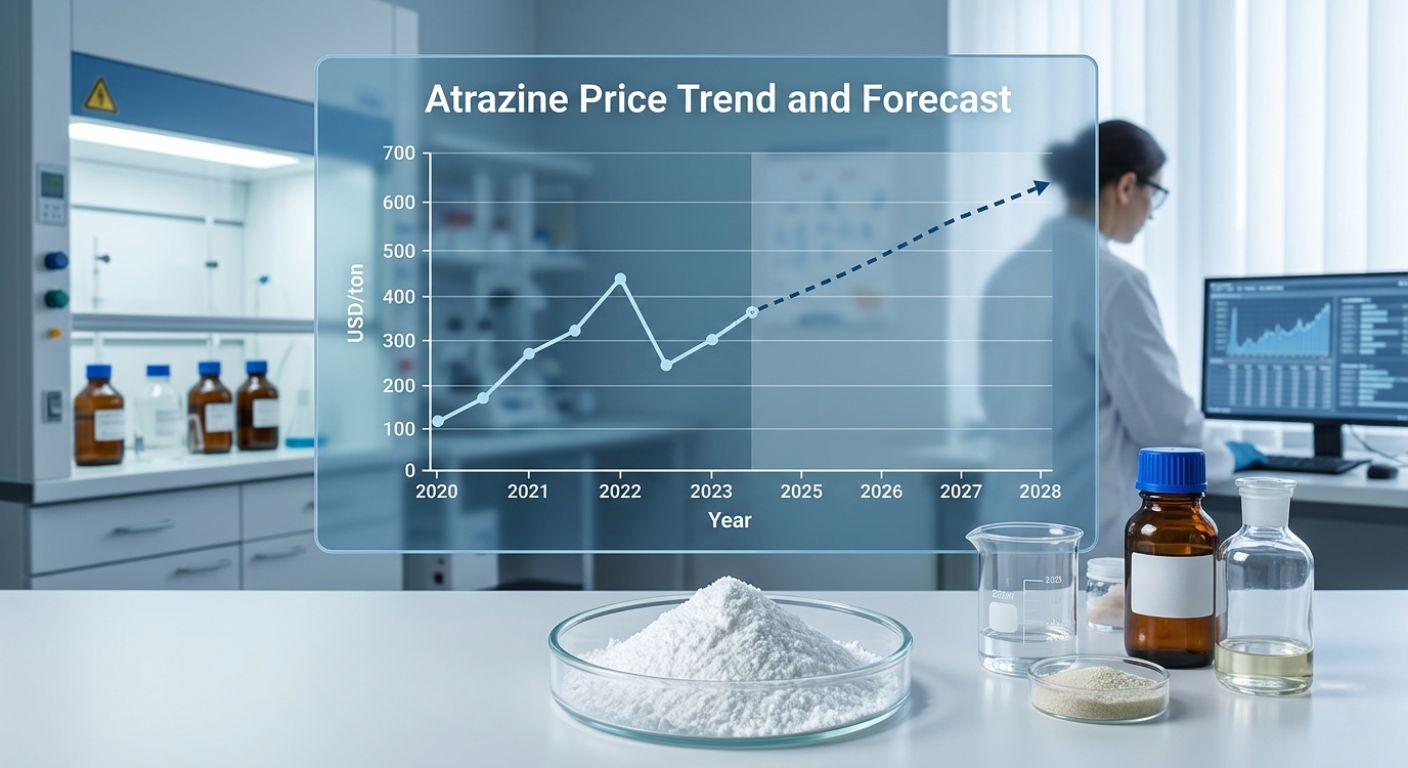
Atrazine, a widely used herbicide in modern agriculture, plays a critical role in enhancing crop yields, particularly for corn and sugarcane production. As a key agrochemical, its pricing dynamics are closely tied to raw material costs, regulatory shifts, and global supply-demand imbalances. In Q4 2025, the global atrazine market displayed mixed pricing trends across major regions, reflecting divergent economic conditions and production cost structures.
Latest Atrazine Price Trend: - https://www.chemanalyst.com/Pricing-data/atrazine-2360
Global Atrazine Market Overview
The global atrazine market has experienced moderate volatility over recent years due to:
Fluctuating raw material prices (notably ammonia and chlorine derivatives)
Environmental regulations impacting production and usage
Supply chain disruptions and energy cost variations
Seasonal agricultural demand cycles
In 2025, the market showed a regional divergence, with North America witnessing price increases, while APAC and Europe experienced downward pressure.
North America Atrazine Price Trend (Q4 2025)
Rising Prices Driven by Production Costs
In the United States, the Atrazine Price Index recorded a quarter-over-quarter increase during Q4 2025. This upward movement was primarily attributed to rising production costs and macroeconomic inflationary pressures.
Key Economic Indicators
Producer Price Index (PPI): Increased by 3.0% year-over-year in November 2025
Consumer Price Index (CPI): Rose by 2.7% in December 2025
These indicators highlight a broader inflationary environment, directly impacting chemical manufacturing costs.
Read Linkedin Article : - https://www.linkedin.com/pulse/atrazine-price-trends-market-insights-pricing-outlook-kishan-singh-iry8c/
Market Drivers
Higher Input Costs
Rising costs of raw materials and energy significantly impacted atrazine production expenses.Stable Agricultural Demand
The U.S. agricultural sector maintained consistent demand for herbicides, supporting price increases.Supply Chain Constraints
Persistent logistical challenges and freight costs added to the overall pricing pressure.
Price Trend Visualization (Conceptual)
Q3 2025: Moderate pricing
Q4 2025: Upward trajectory (+3–5%)
Market Insight
The North American atrazine market remains resilient, with pricing supported by strong domestic demand and cost-push inflation. However, sustainability concerns and regulatory scrutiny may influence long-term growth.
APAC Atrazine Price Trend (Q4 2025)
Declining Prices Amid Competitive Pressure
In contrast to North America, China witnessed a decline in the Atrazine Price Index during Q4 2025. The decrease was largely driven by falling production costs and intense market competition.
Key Factors Influencing Price Decline
Reduced Raw Material Costs
A significant drop in general chemical raw material prices in August 2025 lowered production expenses.Oversupply Conditions
Increased production capacity in China led to excess supply in the domestic and export markets.Competitive Pricing Strategies
Manufacturers reduced prices to maintain market share in a highly competitive environment.
Market Dynamics
Export-oriented producers adjusted pricing to remain competitive globally
Domestic demand remained stable but insufficient to absorb excess supply
Price Trend Visualization (Conceptual)
Q3 2025: Stable pricing
Q4 2025: Decline (-4–6%)
Market Insight
The APAC region, particularly China, continues to act as a global price setter due to its large-scale production capabilities. Lower production costs and aggressive pricing strategies are likely to keep prices under pressure in the near term.
Europe Atrazine Price Trend (Q4 2025)
Weak Demand and Falling Producer Costs
In Germany, the Atrazine Price Index declined quarter-over-quarter in Q4 2025. The price drop was primarily driven by reduced producer costs and subdued industrial demand.
Key Economic Indicator
Producer Prices: Decreased by 2.5% year-over-year in December 2025
This decline reflects a broader slowdown in industrial activity across Europe.
Market Drivers
Weak Industrial and Agricultural Demand
Economic uncertainty and reduced agricultural investments impacted herbicide consumption.Lower Production Costs
Declining energy and raw material costs contributed to reduced pricing.Regulatory Pressure
Strict environmental regulations in Europe continue to limit atrazine usage, affecting market demand.
Price Trend Visualization (Conceptual)
Q3 2025: Slight decline
Q4 2025: Continued downward trend (-3–5%)
Market Insight
Europe’s atrazine market is structurally constrained due to regulatory policies and shifting preferences toward sustainable alternatives. This trend is expected to persist, limiting price recovery in the short term.
Key Market Trends Shaping Atrazine Prices
Cost-Push Inflation vs Cost Relief
North America faced inflationary pressures
APAC and Europe benefited from declining input costs
Supply-Demand Imbalance
Oversupply in China led to price reductions
Stable demand in the U.S. supported price increases
Regulatory Environment
Europe’s strict environmental policies continue to limit growth
Emerging markets maintain relatively flexible regulations
Energy and Feedstock Prices
Energy costs remain a critical determinant of atrazine pricing, particularly in regions dependent on imports.
Atrazine Price Forecast for 2026
North America
Expected Trend: Moderate growth
Drivers: Persistent inflation, steady agricultural demand
Risk Factors: Environmental regulations, input cost volatility
APAC
Expected Trend: Stable to slightly bearish
Drivers: Ample supply, competitive exports
Risk Factors: Policy changes, export restrictions
Europe
Expected Trend: Flat to declining
Drivers: Weak demand, regulatory constraints
Risk Factors: Further restrictions on herbicide usage
Strategic Insights for Industry Stakeholders
For Manufacturers
Optimize production efficiency to manage cost fluctuations
Diversify supply chains to reduce dependency on volatile inputs
For Distributors
Monitor regional price differences for arbitrage opportunities
Maintain flexible inventory strategies
For Agricultural Buyers
Lock in prices during low-cost cycles (especially in APAC)
Evaluate alternative herbicides in regulated markets
Conclusion
The atrazine market in Q4 2025 highlights a clear regional divergence driven by economic conditions, production costs, and regulatory frameworks. While North America experienced price growth due to inflationary pressures, APAC and Europe saw declines fueled by lower costs and weaker demand.
Looking ahead to 2026, the market is expected to remain dynamic, with regional trends continuing to shape global pricing strategies. Stakeholders must stay informed through real-time pricing intelligence and adapt to evolving market conditions to maintain competitiveness.
Contact US:
Email-id: [email protected]
Phone no: +1-(332) 258 - 6602
Address: 420 Lexington Avenue, Suite 300
New York, NY
United States, 10170
Comments
Log in or sign up to join the conversation.