

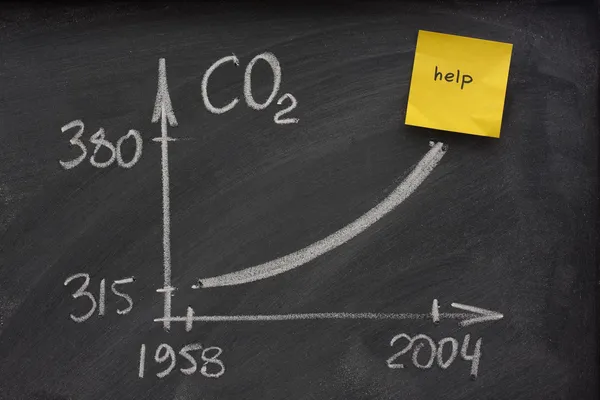
The rate at which carbon dioxide emissions accumulate in the Earth's air fell in June 2026. This measure of human economic activity is now at levels last seen near the bottom of the coronavirus pandemic.
Because China is the world's leading producer of carbon dioxide emissions by a wide margin, the changing concentration of CO₂ in the atmosphere is really telling us quite a bit about the relative health of China's economy. The falling pace of CO₂ accumulation communicates that China's productive economy is operating well below its potential.
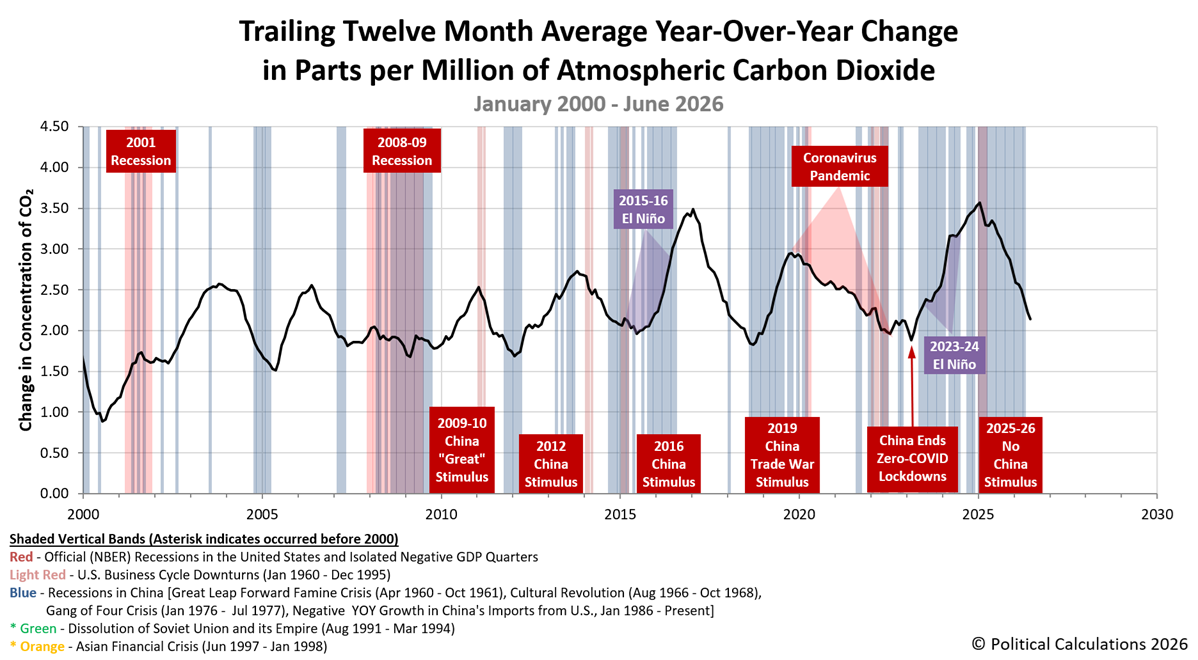
That conclusion is supported by media reports that indicate China is experiencing its lowest economic growth since 2022. The slowing of China's economy has been visible in the trailing year average of the year-over-year change in atmospheric CO₂ concentration levels since they last peaked in January 2025.
The following chart shows how this measure has changed from January 2000 through June 2026, which allows us to compare the current decline with those recorded during the COVID era and other global economic downturns:
Getting back to the scale of China's carbon dioxide emissions, in 2024, China produced 31.8% of the world's total CO₂ emissions. By comparison, the United States produced 12.7% to rank second among nations.
References
National Oceanographic and Atmospheric Administration. Earth System Research Laboratory. Mauna Loa Observatory CO2 Data. [Online Data]. Updated 5 July 2026.


Comments
Log in or sign up to join the conversation.