

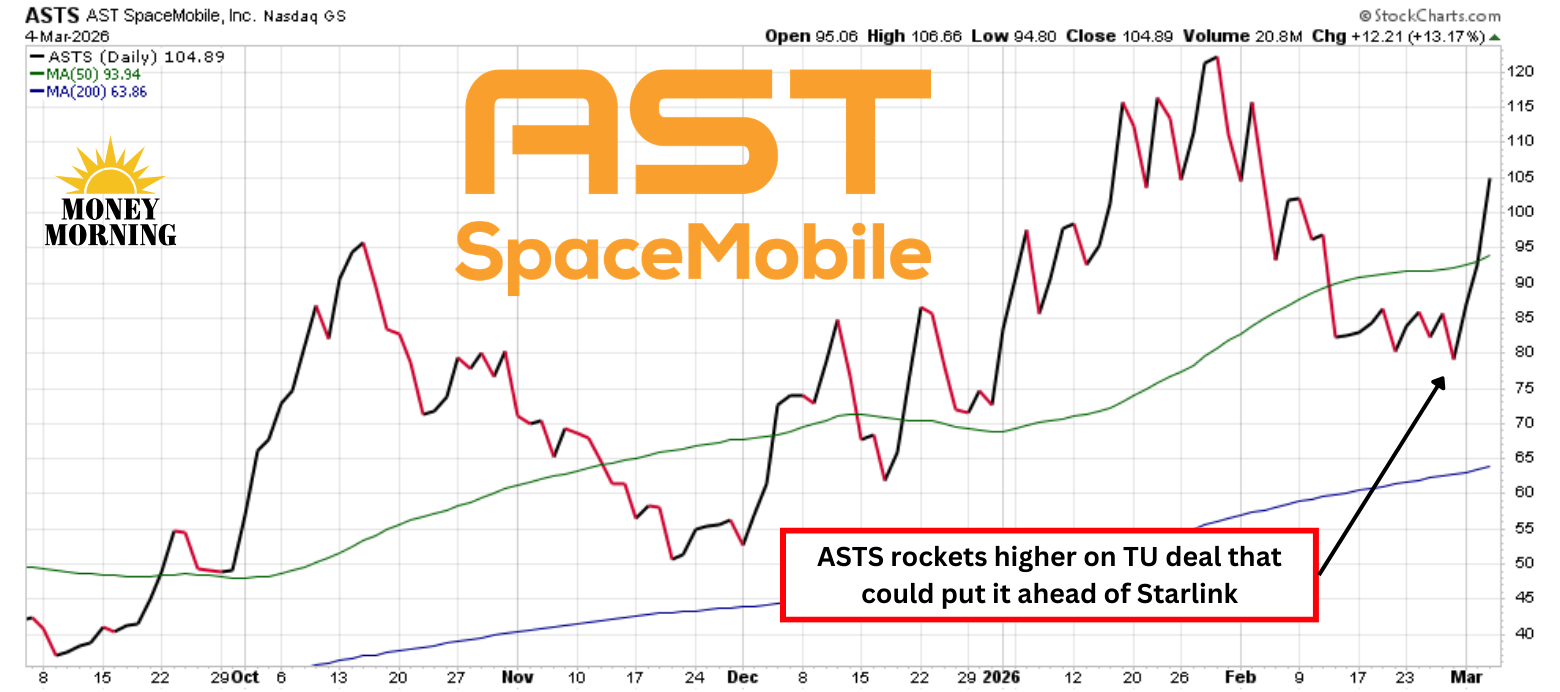
AST SpaceMobile (ASTS) has just signed a major deal with Telus (TU) for direct-to-cell satellite communications in remote regions of Canada. The partnership marks a significant step in expanding cellular coverage to areas long plagued by dead zones, using everyday smartphones without any special hardware. This agreement positions AST SpaceMobile to potentially leapfrog SpaceX’s Starlink, which is also targeting Canada through its collaboration with Rogers Communications (RCI).
The Telus deal, though, gives ASTS a notable edge, thanks to its innovative “space-based cell tower” network that promises seamless integration with existing mobile operators and superior performance in challenging environments.
The Telus Partnership Changes the Trajectory
Telus and AST SpaceMobile announced yesterday a commercial agreement to deliver space-based cellular broadband across Canada, with service launching in late 2026. Telus customers will gain access to satellite-powered text messaging, voice calls, and data in the country's most remote locations, all using their existing smartphones with no extra equipment needed.
As part of the deal, Telus will invest in ground-based satellite infrastructure to support the network rollout and become an equity shareholder in AST SpaceMobile. Telus will also take an equity stake in ASTS, strengthening the long-term alignment between the companies, though specific financial terms were not disclosed. The partnership leverages TU's extensive terrestrial network and spectrum holdings for smooth integration with ASTS's satellite system.
Higher Bandwidth and Broader Capabilities
AST SpaceMobile aims to provide true 4G/5G-quality voice, data, and video services directly to standard, unmodified smartphones, targeting peak download speeds exceeding 120 Mbps. This enables high-definition streaming, video calls, and robust internet use even in areas without ground towers – directly challenging Starlink's current Direct-to-Cell offerings, which remain focused primarily on text messaging in initial phases with partners like Rogers.
The advantage stems from ASTS's satellite architecture. Unlike Starlink's approach of deploying thousands of smaller satellites, AST SpaceMobile uses massive BlueBird satellites designed to operate as cell towers in space. These large platforms incorporate expansive phased-array antennas, delivering higher bandwidth, greater user capacity, and more reliable connections. Starlink's smaller satellites often require a clearer line of sight, which can lead to performance issues in forested, mountainous, or obstructed Canadian terrains. AST's design minimizes such limitations and supports seamless handoffs between terrestrial and satellite networks.
Bottom Line
The Telus partnership adds powerful momentum to ASTS’s existing alliances with telecom giants like AT&T, Verizon (VZ), and Vodafone (VOD). Together, these relationships open potential access to over 3 billion mobile users worldwide, creating a truly global footprint. The agreement solidifies AST SpaceMobile as the premium, high-bandwidth, operator-integrated alternative to Starlink’s broader but lower-speed direct-to-cell strategy and its more consumer-direct model.
While both companies are racing to eliminate connectivity dead zones, ASTS’s focus on massive “cell tower” satellites and carrier partnerships positions it as a formidable contender – potentially reshaping how millions stay connected in remote regions and beyond.



Comments
Log in or sign up to join the conversation.