
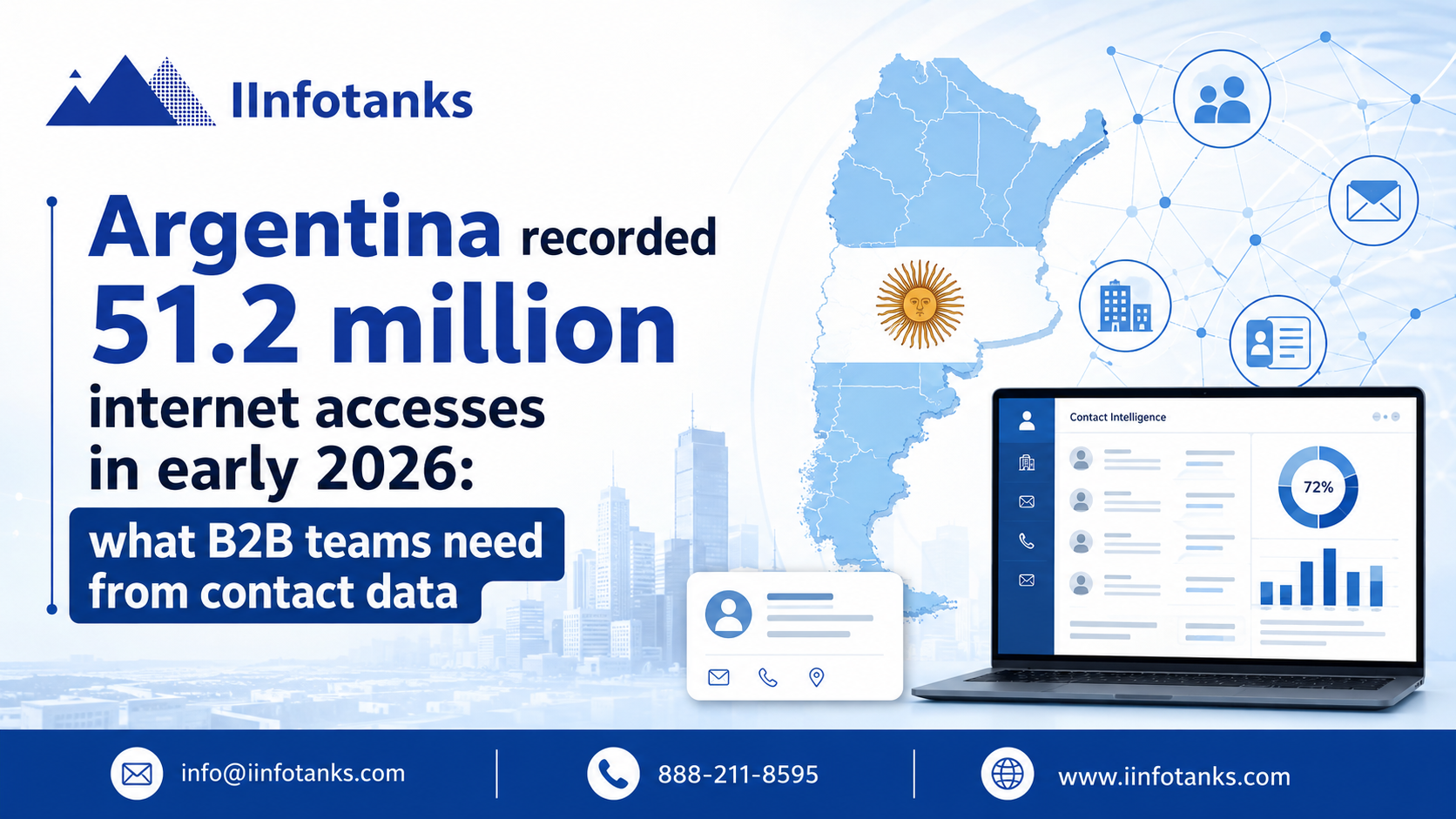
Argentina’s digital reach is large enough to make poor contact selection expensive. The country recorded an average of 51,176,541 internet accesses in the first quarter of 2026, up 3.8% from the same period a year earlier, according to INDEC’s national internet access report. That figure counts connections rather than individual people, yet it still shows the size and movement of the digital market. A broad market can produce broad mistakes when sales teams rely on old addresses, vague job labels, or lists that don’t match the offer.
A useful way to understand a business contact database is to think of it as a rail map. The map connects stations with lines so a traveller can plan a sensible route. In contact data, companies act as stations, while sectors and regions act as lines. Decision-making roles show where a campaign should change direction. The analogy explains how structured information reduces wasted movement, while the campaign message still determines whether the destination is worth reaching.
A large digital market needs a defined route
Argentina had 90% internet use among its population in 2024, based on the World Bank’s Argentina indicators. High digital use widens the number of businesses and professionals that can be reached online. It also increases variation in company type, seniority, buying authority, language preference, and local business conditions. A campaign aimed at every reachable address can lose relevance before the first message is opened.
The first task is to define the route. A useful target profile may combine sector, province, employee range, job function, and seniority. An Argentina email list can support that work when the records contain enough fields to separate a financial director in Buenos Aires from an operations manager in Córdoba. IInfotanks states that its Argentina page covers 150,316 contacts and offers fields for company details, professional roles, location, technologies, and contact status. Those fields matter because the list becomes more useful when each filter reflects a real reason to buy.
Segmentation works like choosing the correct line
A rail map becomes useful when the traveller chooses a line that serves the intended destination. Contact segmentation follows the same logic. Industry can identify the business setting, while company size can indicate budget range or operating complexity. Job function then points towards the person who owns the problem, influences the choice, or controls purchasing.
Argentina’s small-business environment also has an active digital policy context. The OECD SME Policy Index for Argentina gave the country a score of 3.76 for digitalisation and noted national programmes supporting digital public services and small-business adoption. That evidence doesn’t mean every Argentine company buys technology in the same way. The score indicates that digital maturity should be treated as a variable during account selection, especially when the offer depends on software use and online operations with clear budget ownership.
The search phrase buy Argentina mailing list often begins with a volume goal, yet buyers should start with a campaign question. A cybersecurity vendor may need IT leadership at regulated firms, while an industrial supplier may need plant or procurement leaders. The database should make those distinctions visible before outreach begins. Better route selection reduces irrelevant messages and gives the copywriter a clear business problem to address.
Verification keeps the map current
Rail maps need updates when stations close, lines change, or services move. Business records change for similar reasons. People leave companies, titles change, domains expire, and firms merge or shut down. Verification checks whether a record still points to a working business identity and whether the supporting company details remain consistent.
A verified Argentina email database should be assessed through clear questions about recency and scope. Buyers should ask when the records were last checked, how invalid addresses are handled, which fields are verified, and how replacement policies work. A valid inbox alone doesn’t prove that the person still holds the stated role. Stronger checking connects the email address with the company, title, location, and intended segment.
This is also where the rail-map analogy reaches its limit. A map can show a possible route, yet it can’t predict why a person is travelling or whether they’ll take that train. Contact data can identify a plausible recipient, but it can’t prove current demand, budget approval, message interest, or purchase timing. Campaign results still depend on the offer, local context, sender reputation, and the quality of each message.
Legal use depends on purpose and response handling
Argentina’s data rules shape how contact information should be collected and used. The AAIP’s guidance on personal data rights explains consent requirements, limited exceptions for public sources, and a person’s right to request removal from advertising databases. It also states that a company has 5 business days to complete a valid removal request. Teams should document data sources, explain their purpose, and maintain a working suppression process before sending a campaign.
Compliance also affects list design. Sensitive personal information has no place in ordinary B2B targeting, and public availability doesn’t remove the need for fair use. A role-based business record should contain only the information needed for a relevant approach. The wider IInfotanks country email list directory can help teams compare country coverage, but each market still requires its own legal review and contact policy.
Campaign quality depends on what happens after selection
A contact list supports the first stage of outreach. The next stage is message design. Each email should connect the recipient’s role with a specific business issue, use a clear sender identity, and give the reader an easy way to decline further contact. Sending the same copy to a finance director and an IT or operations leader weakens the value created by segmentation.
Measurement should also follow the route chosen at the start. Delivery results can reveal list health, while replies and qualified conversations show whether the target profile fits the offer. A poor response may come from weak data or weak copy. The offer may also fail to match the selected accounts. Testing one variable at a time makes the cause easier to identify.
Frequently asked questions
What information should an Argentina business contact list contain?
A useful list should contain a business email address, company name, job title, and location. Fields such as industry, employee range, seniority, and technology use can support narrower targeting when they’re relevant to the offer. The required fields should be chosen before purchase so the team doesn’t pay for records it can’t use. Each field should also have a clear source and update date.
How many contacts should a company buy for its first campaign?
The first purchase should be large enough to test a defined segment without mixing unrelated audiences. A smaller set of well-matched records often produces clearer findings than a large file covering many industries and roles. Teams can expand after they understand delivery and reply quality, followed by sales acceptance. The test size should reflect the campaign budget and the number of follow-ups the team can manage.
Does a verified email guarantee a response?
Verification confirms certain facts about the record, such as whether the address appears deliverable or matches a business identity. It doesn’t confirm current interest or purchase authority. Response depends on the recipient’s situation and the relevance of the message. Verification protects the starting point, while campaign quality determines what happens next.
Can public business data be used for outreach in Argentina?
Public availability may support certain uses, but it doesn’t remove every duty under Argentina’s data rules. The purpose, data type, source, and removal process still matter. Businesses should keep records of where data came from and honour valid suppression requests. Legal advice may be needed when the campaign includes personal profiling or cross-border data handling.
How often should an Argentina contact database be checked?
The checking schedule should reflect how quickly the selected roles and companies change. Fast-moving sectors may need checks before each major campaign, while stable account sets may follow a scheduled review cycle. Bounces and job changes should be processed as they occur, along with removal requests. A database stays useful through regular maintenance rather than a one-time accuracy claim.
The real principle behind the map
An Argentina business database works best as a decision aid. It helps a team choose companies and roles across selected regions, then gives that team a starting point for relevant contact. The map analogy explains the structure, but the real work remains factual: define the target, verify the records, follow local rules, and judge the campaign by the quality of the resulting business conversations.
For more details, Click Here
Get In Touch
Phone: 888-211-8595
Mail Id: [email protected]
Comments
Log in or sign up to join the conversation.