

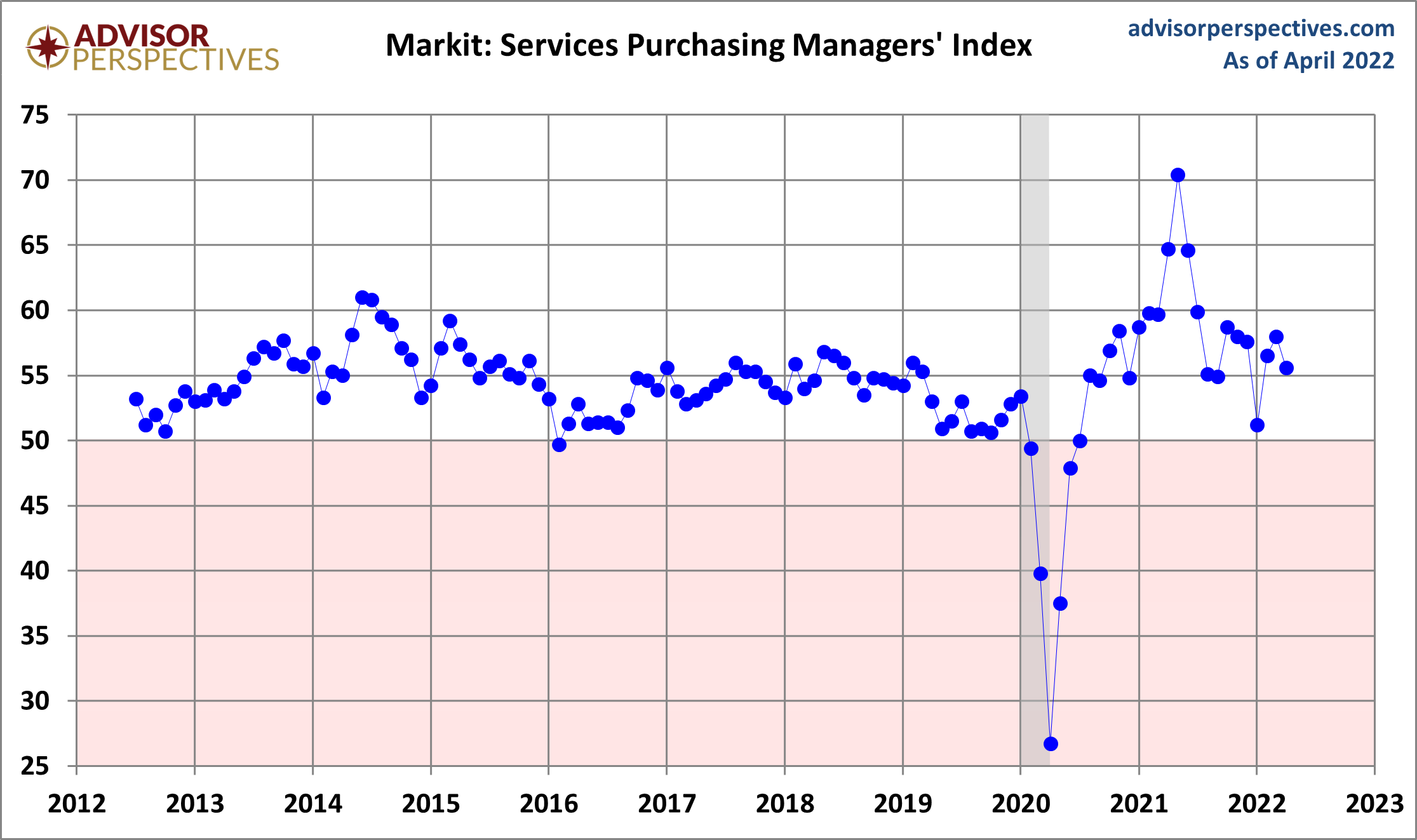
The April US Services Purchasing Managers' Index conducted by Markit came in at 55.6 percent, down slightly from the final March estimate of 58.0.
Here is the opening from the latest press release:
“Alongside the acceleration in manufacturing growth recorded by the S&P Global PMI in April, the sustained solid performance of the service sector points to GDP growth returning in the second quarter.
"Although the service sector lost some momentum in April, this merely reflects pay-back from the surge in spending seen at the end of the first quarter, when Omicron-related virus containment measures were eased.
"It’s clear that growth could be even stronger if activity was not still be constrained by supply chain bottlenecks and labor availability issues. Domestic demand remains buoyant among both households and businesses in spite of current inflationary pressures, and exports are being boosted by pent-up pandemic demand as global travel restrictions are eased. Exports of services grew in April at the fastest rate since data were first collected in 2014.
"The consequence of demand running ahead of supply is higher prices, with average charges levied for services rising at a sharply increased and unprecedented rate in April following a record increase in firms’ costs. Enjoying strong demand, firms were increasingly able to pass on higher energy, materials and staff costs to customers, indicating an economy that continues to run hot." [Press Release]
Here is a snapshot of the series since mid-2012.
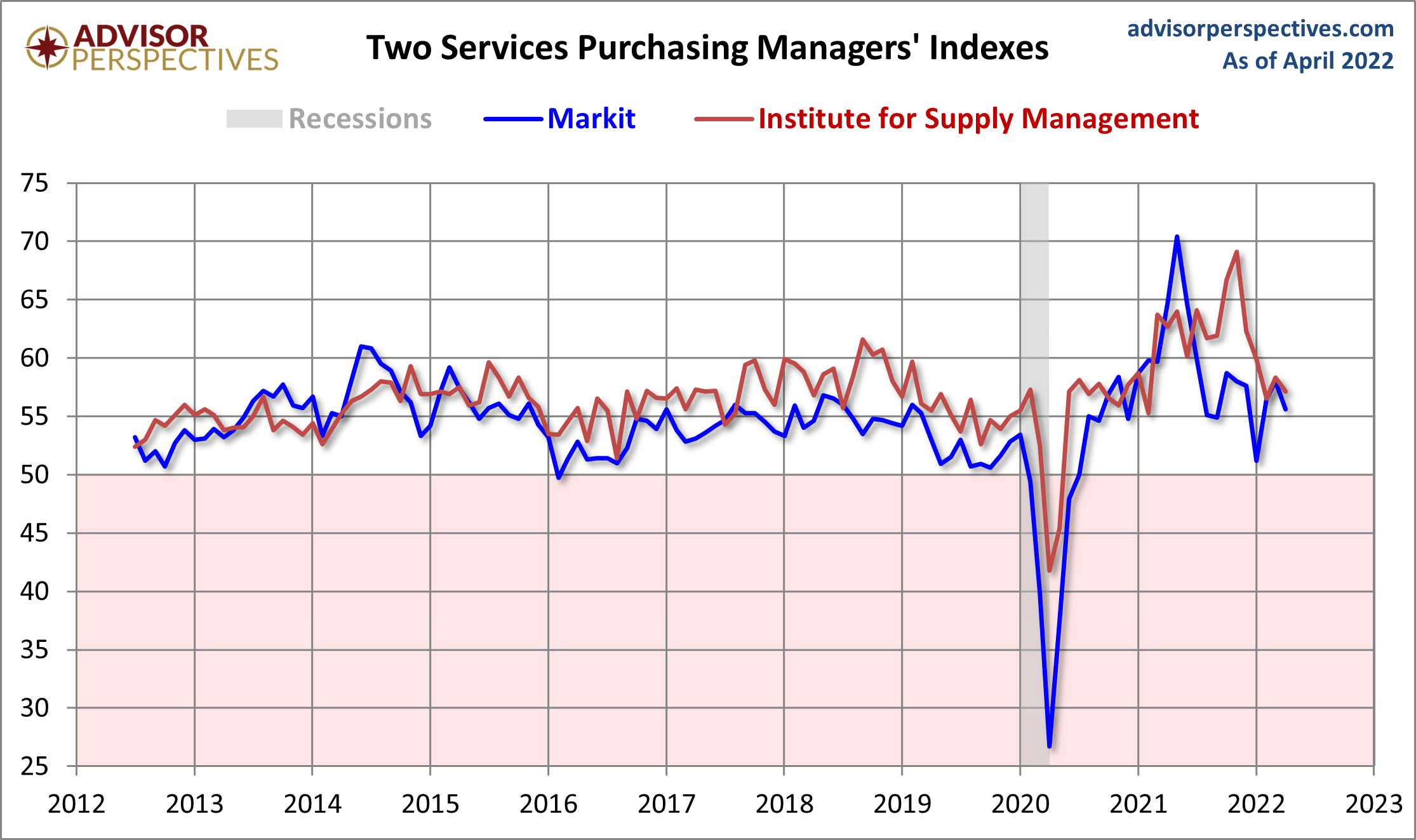
Here is an overlay with the equivalent PMI survey conducted by the Institute for Supply Management, which they refer to as "Non-Manufacturing" (see our full article on this series here). Over its history, the ISM metric has been significantly the more volatile of the two.
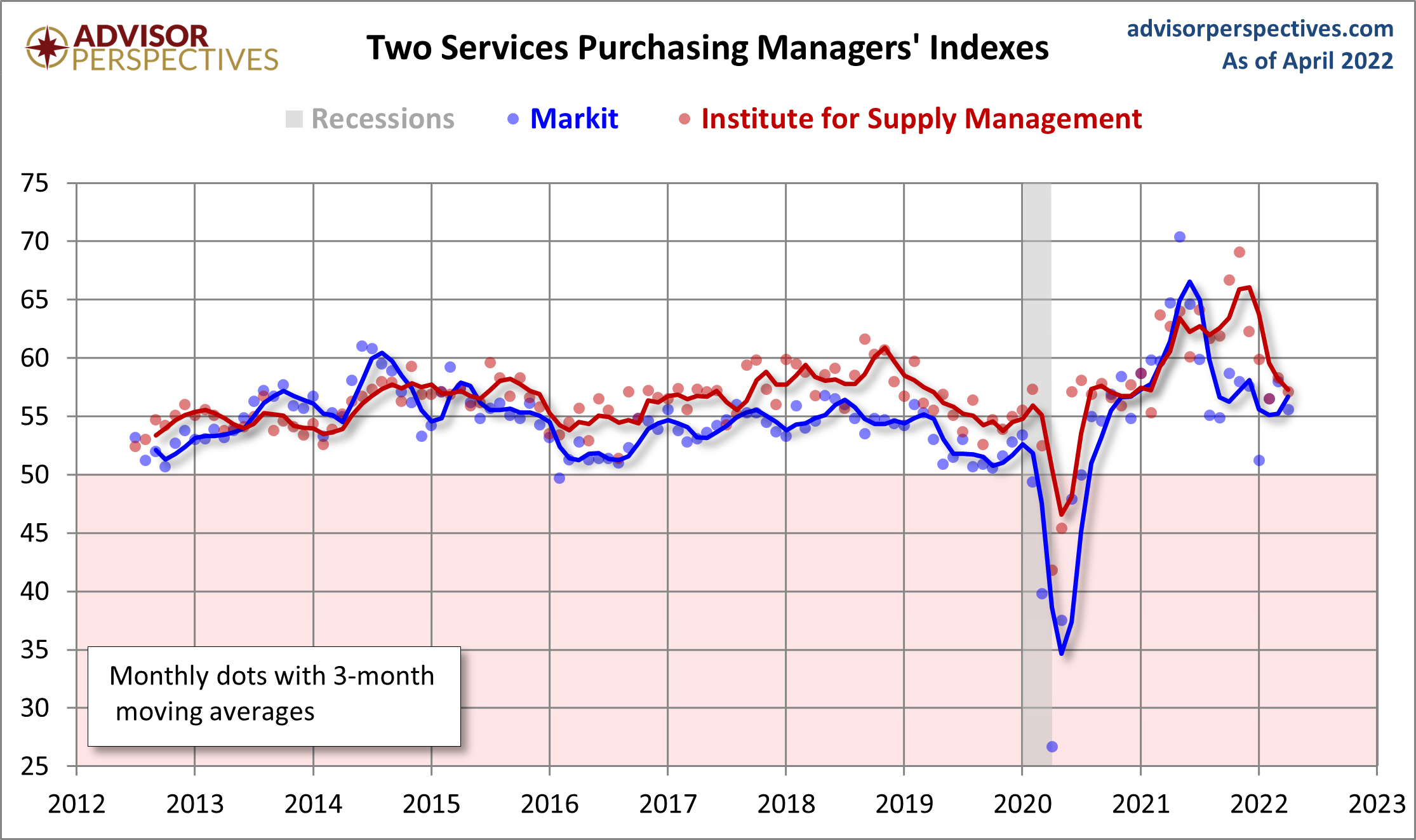
The next chart uses a three-month moving average of the two rather volatile series to facilitate our understanding of the current trend. Since early in 2016, the ISM metric has shown stronger growth than the Markit counterpart.

Comments
Log in or sign up to join the conversation.