

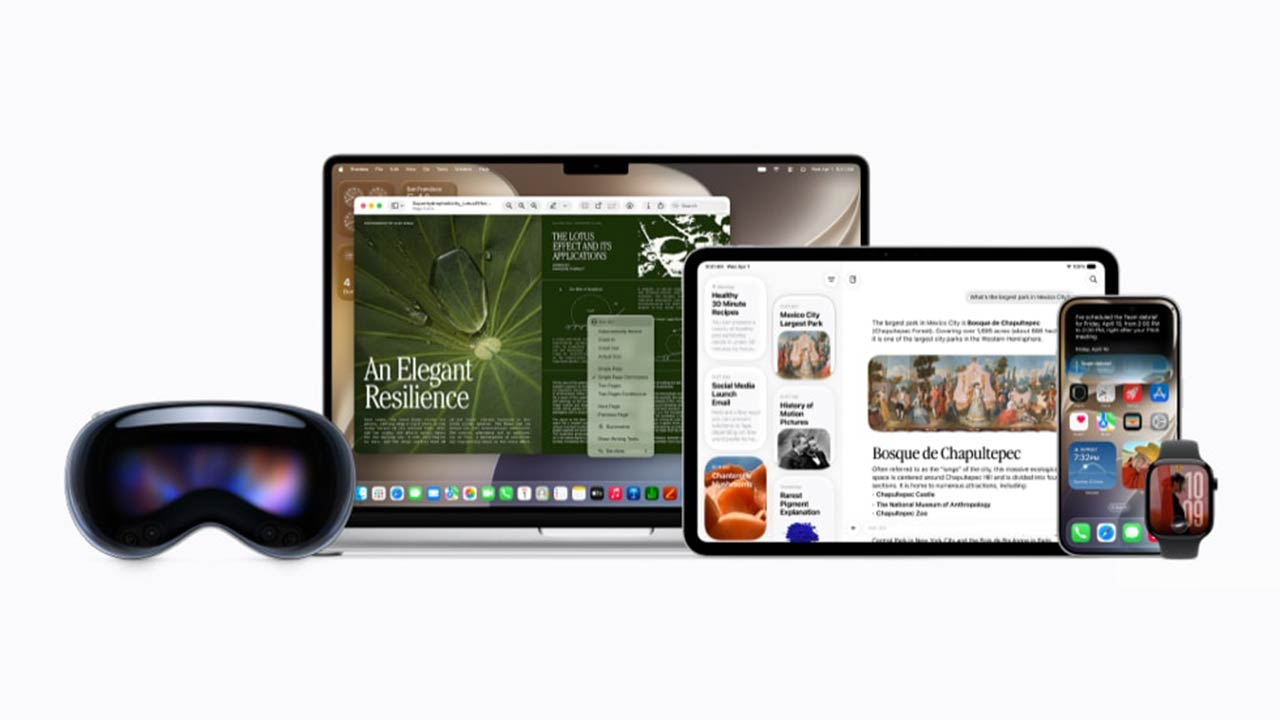
Apple (AAPL) unveiled a major overhaul of its AI strategy at WWDC 2026, centered on a rebuilt Siri and a broad expansion of Apple Intelligence across its ecosystem. The announcement comes two years after Apple first introduced plans for a more capable Siri that never fully materialized.
Apple is reportedly paying Google (GOOGL) around $1 billion per year, in a multi-year deal, for a customized 1.2-trillion-parameter Gemini model that will power Siri AI in the cloud. The new Siri is designed to be more conversational, context-aware, and deeply integrated into the operating system. It can understand what’s on your screen, interact with apps, answer questions about content on your device, assist with messages and calendar management, and maintain conversations across iPhone, iPad, and Mac. Users can interact with Siri through voice or text, and Apple says all processing occurs either on-device or through its privacy-focused Private Cloud Compute infrastructure.
Beyond Siri, Apple introduced AI enhancements throughout its software ecosystem. The Photos app gains new generative editing tools, including improved object removal, image expansion, and a feature called Spatial Reframing that lets users alter the apparent camera angle and composition of existing photos. AI-generated edits will be tagged with hidden SynthID watermarks. Safari now includes AI-powered tab organization, website monitoring for events such as price drops or ticket availability, and automatic password remediation for compromised credentials.
The new Siri is available to developers immediately and will enter public beta later this year. Initial availability will be limited to English, with support for additional languages planned. Regulatory constraints will delay launch on iPhone and iPad in the European Union and prevent launch in China altogether. Some of the most advanced on-device AI capabilities will require Apple’s latest hardware, including the iPhone Air, iPhone 17 Pro, M4-equipped iPads, and M3 Macs with at least 12GB of memory.
Apple positioned its slower approach to AI as deliberate rather than reactive. During the keynote, software chief Craig Federighi argued that many companies are pursuing AI for its own sake, while Apple is focused on creating AI that is useful, private, and centered on the user. Still, many of the newly announced capabilities closely resemble features already available through Google Gemini, ChatGPT, Claude, and other AI platforms.
The press is saying, “Apple finally caught up,” but we won’t know if that’s true until we start using the new Siri/Gemini hybrid. That said, I’m really excited about this. Maybe, possibly, there’s a chance that someday soon, Siri won’t suck.

Comments
Log in or sign up to join the conversation.