

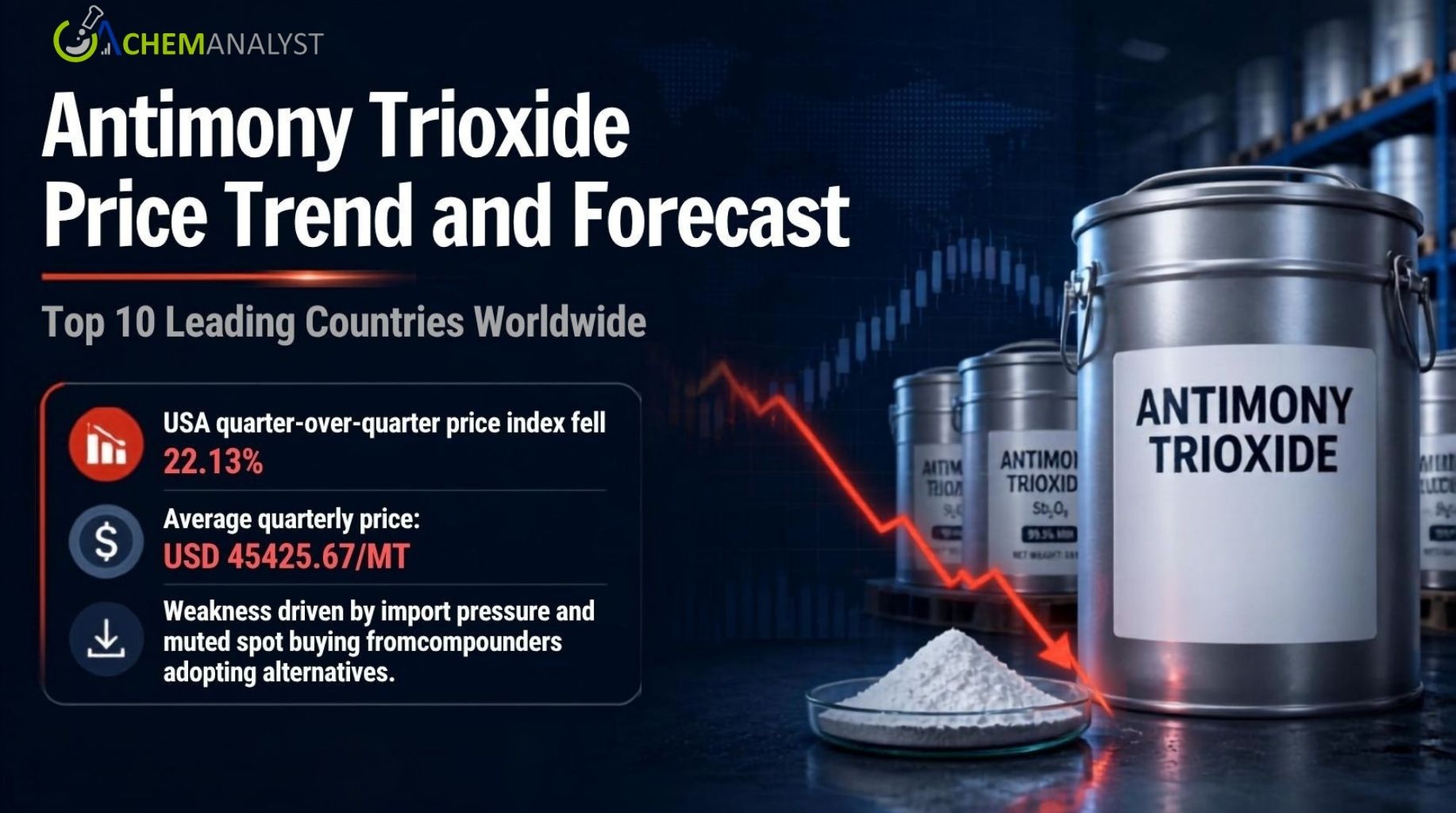
The Antimony Trioxide Price witnessed significant fluctuations across major global markets during the first quarter of 2026, reflecting changing supply-demand dynamics, geopolitical trade patterns, inventory movements, and industrial consumption. While the United States and Europe experienced notable price corrections due to increased imports and easing supply concerns, China remained relatively stable with a slight upward movement supported by production restrictions and tighter domestic availability.
According to ChemAnalyst Antimony Trioxide Price: - https://www.chemanalyst.com/Pricing-data/antimony-trioxide-1691
Antimony Trioxide remains one of the most strategically important flame-retardant additives used in plastics, textiles, electronics, cables, paints, glass, and automotive components. As demand continues expanding across electric vehicles, electronics manufacturing, renewable energy equipment, and infrastructure development, monitoring the Antimony Trioxide Price has become increasingly important for manufacturers, procurement teams, traders, and investors.
In Q1 2026, global pricing reflected a transition from supply-driven volatility toward a more balanced market, although regional differences remained substantial.
North America Antimony Trioxide Price Trend
USA Antimony Trioxide Price Declined by 22.13%
According to ChemAnalyst, the Antimony Trioxide Price in the United States declined sharply during Q1 2026, falling 22.13% quarter-over-quarter. Average prices settled around USD 45,425.67 per metric ton, according to coastal warehouse assessments.
Several interconnected factors contributed to this correction.
Rising Import Availability
One of the largest influences came from increased import arrivals. Higher shipments into U.S. ports improved market availability and eased the supply tightness that had supported elevated prices throughout previous quarters.
As inventories accumulated at coastal warehouses, buyers gained stronger negotiating power, reducing upward pricing pressure.
Improved Inventory Levels
Warehouse stocks improved steadily during the quarter.
This inventory recovery reduced procurement urgency among:
Chemical manufacturers
Flame retardant producers
Plastic compounders
Electronics suppliers
Consequently, purchasing shifted toward just-in-time inventory management rather than aggressive stock building.
Softer Downstream Purchasing
Demand from several downstream sectors moderated during the quarter, including:
Construction materials
Consumer electronics
Automotive plastics
Industrial coatings
Many manufacturers delayed large procurement cycles while waiting for additional price corrections.
North America Market Drivers
Major pricing influences included:
Increased import volumes
Improved warehouse inventories
Reduced purchasing urgency
Lower speculative buying
Balanced industrial demand
Competitive international offers
Despite the quarterly decline, U.S. prices remained among the highest globally because of logistics costs, import dependence, and supply chain expenses.
Asia-Pacific Antimony Trioxide Price Trend
China Market Rose Slightly by 0.40%
China demonstrated remarkable pricing stability during Q1 2026.
According to ChemAnalyst, the Antimony Trioxide Price Index increased modestly by 0.40% quarter-over-quarter, while average market prices reached approximately USD 19,483.33/MT across major trading terminals.
Unlike importing regions, China's pricing was primarily influenced by domestic production controls.
Supply Curbs Supported Prices
Production restrictions across several antimony-producing regions limited excessive market supply.
Mining constraints and environmental compliance measures prevented significant oversupply, allowing suppliers to maintain relatively stable pricing despite moderate downstream demand.
The controlled production environment reduced aggressive price competition among domestic producers.
Read the LinkedIn Article: - https://www.linkedin.com/pulse/antimony-trioxide-price-index-2026-global-market-insights-singh-kg89c/
Stable Industrial Consumption
Demand remained relatively balanced across:
Electronics manufacturing
Flame-retardant plastics
Cable insulation
Polyester production
Rubber additives
Textile chemicals
China's diversified manufacturing base continued supporting consistent consumption throughout the quarter.
Export Market Performance
Export demand remained healthy despite weaker pricing in overseas markets.
Chinese producers maintained competitive pricing advantages because of:
Integrated supply chains
Lower production costs
Domestic raw material availability
Efficient logistics infrastructure
These advantages helped stabilize domestic prices.
APAC Market Highlights
Key factors supporting Chinese prices included:
Controlled mine production
Stable manufacturing activity
Consistent export demand
Balanced inventories
Government environmental regulations
Efficient domestic supply chain
Europe Antimony Trioxide Price Trend
Netherlands Price Fell by 17.11%
Europe experienced another quarter of declining prices.
According to ChemAnalyst, the Antimony Trioxide Price Index in the Netherlands decreased by 17.11% quarter-over-quarter, with average prices reaching approximately USD 38,580.00 per metric ton, based on Rotterdam market assessments.
Synchronized Imports Increased Market Supply
One of the primary reasons behind the decline was synchronized import arrivals.
Multiple cargoes reached European ports within similar delivery windows, substantially increasing available inventories across regional distribution centers.
The higher availability weakened supplier pricing power.
Rotterdam Remained Europe's Pricing Benchmark
Rotterdam continued serving as Europe's primary distribution hub for imported antimony chemicals.
Higher warehouse inventories across Rotterdam contributed to:
Reduced procurement competition
Improved buyer leverage
More aggressive supplier negotiations
Lower spot market prices
Manufacturing Demand Remained Moderate
European industrial demand remained relatively balanced.
Major consuming sectors included:
Electronics
Automotive components
Construction chemicals
Engineering plastics
Fire safety materials
Although demand remained steady, it was insufficient to absorb the increased import volumes immediately.
Europe Market Drivers
Key market influences included:
Higher import arrivals
Improved warehouse inventories
Softer procurement activity
Reduced supply concerns
Competitive overseas pricing
Balanced industrial production
Factors Influencing Antimony Trioxide Price Globally
Several global variables shaped the Antimony Trioxide Price during Q1 2026.
Mining Production
Antimony ore availability remains one of the most important pricing drivers.
Changes in mining activity directly influence:
Smelter operations
Refined antimony output
Chemical production
Export availability
Any disruption in mining immediately affects global supply.
Import and Export Activity
International trade flows significantly impacted regional pricing.
Countries dependent on imports experienced stronger price volatility compared with producing regions.
Shipping schedules, customs activity, and freight costs all contributed to quarterly price movements.
Inventory Levels
Warehouse inventories remained one of the strongest short-term indicators.
Higher inventories generally reduced purchasing urgency, while tighter stocks supported price increases.
Inventory trends differed substantially among North America, Europe, and Asia.
Flame Retardant Demand
Approximately the majority of Antimony Trioxide consumption is associated with flame-retardant applications.
Demand from:
Electronics
Electrical cables
Building materials
Automotive plastics
Consumer appliances
continues to influence global procurement patterns.
Environmental Regulations
Environmental compliance increasingly affects antimony production worldwide.
Governments continue implementing stricter mining regulations, emissions controls, and sustainability standards, influencing production costs and overall supply availability.
Industries Driving Antimony Trioxide Demand
Several major industries continue supporting long-term consumption.
Electronics
Circuit boards, connectors, insulation materials, and electronic housings rely heavily on flame-retardant additives.
Automotive
Electric vehicles require extensive use of fire-resistant plastics and electrical insulation.
Construction
Building materials increasingly incorporate flame-retardant compounds for enhanced fire safety standards.
Textile Industry
Protective clothing and industrial fabrics continue using flame-retardant formulations containing Antimony Trioxide.
Cable Manufacturing
Power transmission and telecommunications infrastructure require flame-retardant cable insulation materials.
Global Supply Chain Outlook
The international Antimony Trioxide supply chain continues evolving.
Several structural trends remain important:
Greater supply diversification
Strategic inventory management
Regional sourcing initiatives
Improved logistics efficiency
Long-term procurement contracts
These developments are expected to reduce extreme price volatility while maintaining sufficient market liquidity.
Antimony Trioxide Price Forecast
Looking ahead, the Antimony Trioxide Price is expected to remain influenced by supply discipline, international trade flows, mining output, and downstream industrial demand.
Several factors could support prices:
Production restrictions
Higher electronics demand
Infrastructure investment
Electric vehicle manufacturing
Improved industrial activity
Conversely, additional imports, slowing manufacturing growth, or inventory accumulation could place downward pressure on prices in importing regions.
China is likely to maintain relatively stable pricing due to domestic production control, while North America and Europe may continue experiencing moderate fluctuations depending on import volumes and warehouse inventory levels.
Procurement Strategies for Buyers
Procurement professionals can reduce pricing risks through several approaches:
Monitor quarterly inventory movements.
Diversify sourcing across multiple regions.
Secure long-term contracts during periods of price stability.
Track mining production and export policies.
Evaluate freight and logistics costs alongside commodity prices.
Maintain balanced inventory levels to avoid overstocking during market corrections.
These strategies can help manufacturers better manage procurement costs in a volatile commodity environment.
Conclusion
The Antimony Trioxide Price landscape in Q1 2026 reflected distinct regional market conditions. The United States experienced the steepest decline, with prices falling 22.13% to an average of USD 45,425.67/MT as increased imports eased supply pressure. Europe followed a similar trend, with the Netherlands recording a 17.11% decline to USD 38,580.00/MT, largely due to synchronized import arrivals and higher inventories at Rotterdam. In contrast, China maintained a relatively stable market, posting a modest 0.40% increase to USD 19,483.33/MT, supported by supply curbs and balanced domestic demand.
As industries such as electronics, automotive, construction, and cable manufacturing continue to expand, Antimony Trioxide will remain a strategically important material. Businesses that closely monitor regional price trends, inventory levels, and supply chain developments will be better positioned to optimize procurement decisions and manage cost volatility in the quarters ahead. Continuous tracking of the Antimony Trioxide Price will remain essential for manufacturers, traders, and investors navigating the evolving global market.
Contact -
Address:
420 Lexington Avenue, Suite 300
New York, NY 10170
United States
Phone: +1 332 258 6602
Website: www.chemanalyst.com
LinkedIn: https://www.linkedin.com/company/chemanalyst/
X (Twitter): https://x.com/chemanalysts
Facebook: https://www.facebook.com/ChemAnalysts/
Comments
Log in or sign up to join the conversation.