
The Fed hiked by 25 basis points and alluded to another hike, as the market expected and as we surmised in our prior Commentary. The more important takeaway from yesterday’s FOMC meeting is what comes next. In the prior Commentary, we pointed out three things to watch: the Summary of Economic Projections (SEP), the balance of risk language, and Warsh’s framing of risks and policy. Let’s review those three factors and begin to appreciate that today’s action is likely to be followed by at least another rate hike this year and not a “one and done” policy.
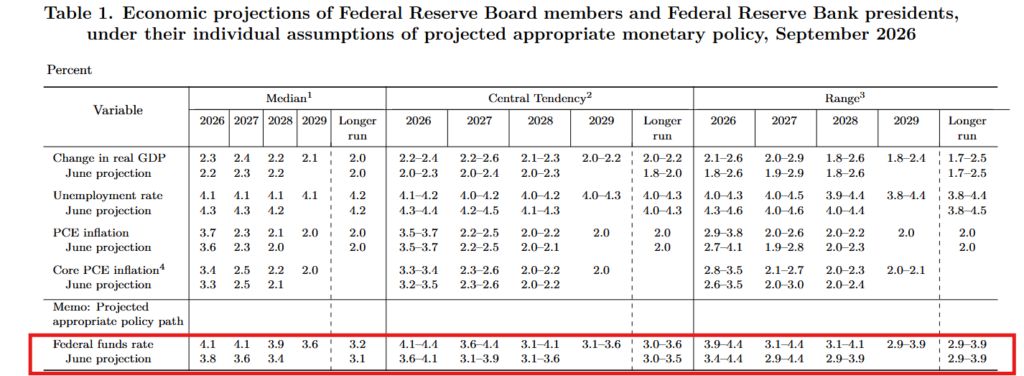
SEP: The median 2026 Fed Funds ending rate was 4.1%, implying another quarter-point hike before year-end. The 2026 year-end range came in relatively tight, 3.9% to 4.4%, suggesting a reasonable, though not unanimous, conviction among voters. The most important consideration was the 2027 projection, where the median remains at 4.1%, up half a point from June’s 3.6%. The Committee effectively erased the rate-cut path it had penciled in three months ago. Cuts are not forecasted to begin until 2028, a much more hawkish stance than markets had priced. The dot plots showing another hike for 2026 and stable rates in 2027 are highlighted below.
Balance of risks: The vote was unanimous, a notable change considering only three members dissented in favor of a hike six weeks ago. Despite good core inflation data, the statement’s tone was firm in its resolve to get inflation to 2%. To wit, the statement ended with:
The Committee will deliver price stability
There was no hedging language suggesting this is a one-off hike. Its labor language was neutral rather than cautious, which gives the Committee more room to focus on inflation. Based on the statement and the SEP, the Fed’s message reads as the “series of hikes” scenario we flagged yesterday, not the “single defensive move.”
Warsh: In Warsh’s opening statement, he stressed that “today’s action will deliver a timelier return to our target.” Earlier statements from Warsh used the word “timely”, thus using “timlier” shows his resolve to fight inflation. He stressed his resolve on inflation throughout the question-and-answer session. Warsh reiterated the FOMC statement and SEP confidence in the labor market and economic growth, giving him and the Fed cover to focus on inflation. Based on his words, another rate hike is highly likely.
What To Watch Today
Earnings
No earnings reports for today.
Economy
Market Trading Update
Yesterday, we worked through what happens after the Fed hikes and why growth, rather than yield levels, drives equity returns. Today, let’s explore whether the momentum trade unwind has gone far enough to set up a rally.
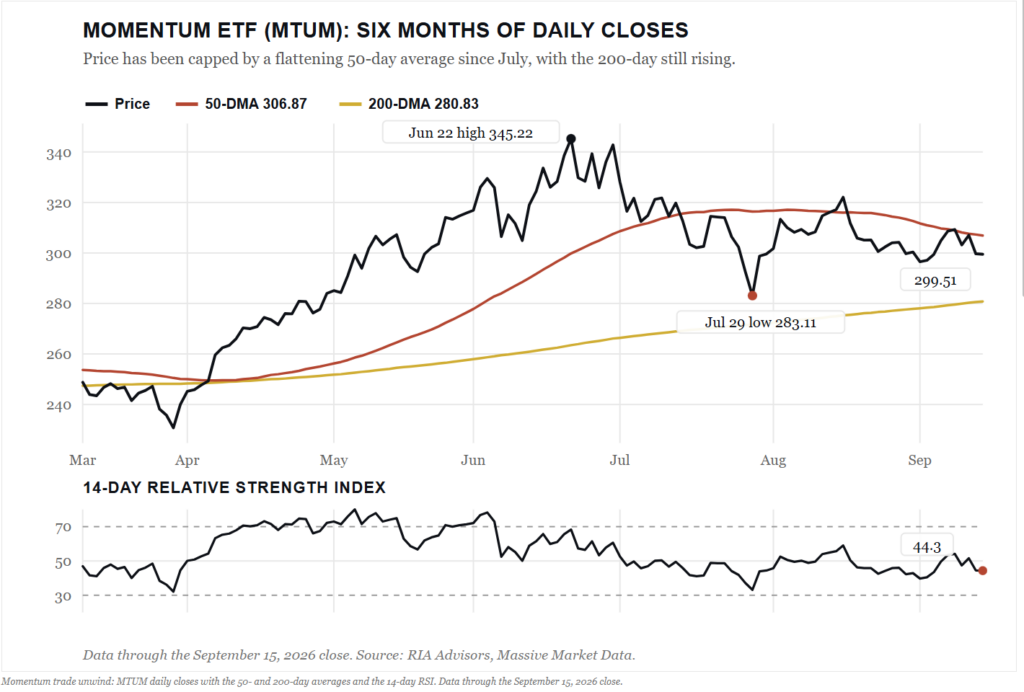
The damage is real. The iShares MSCI USA Momentum Factor ETF (MTUM) closed Tuesday at $299.51, down 13.2% from its June 22 record close of $345.22. Over that same stretch, the S&P 500 sits just 2.6% below its own August 13 high. That gap is the story. Momentum isn’t dealing with a bear market. It’s dealing with a rotation.
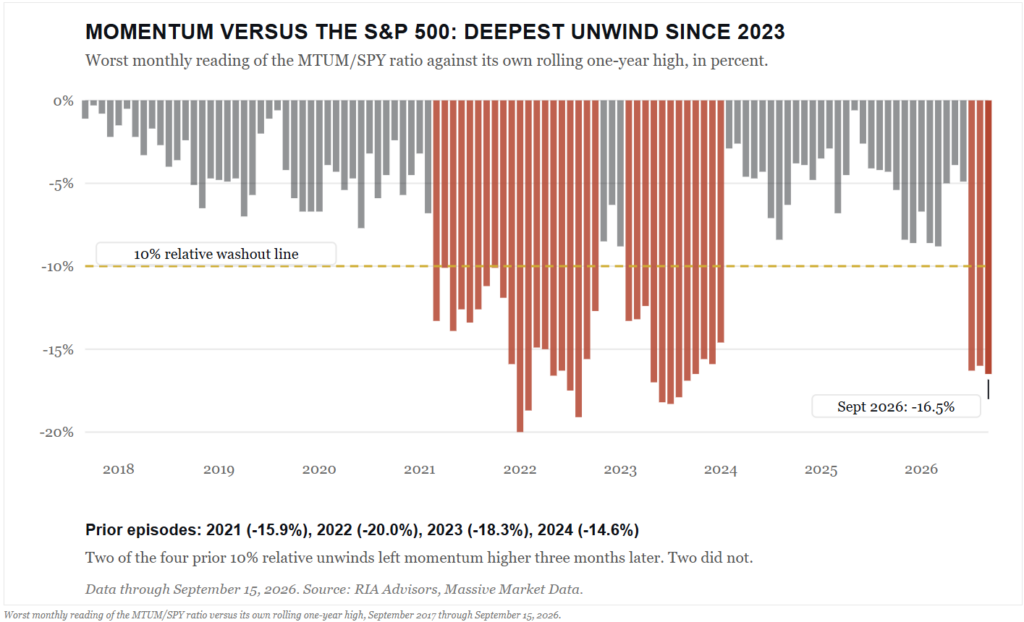
However, notice the chart below. Measured against the index, momentum has given back 16.5% from its rolling one-year high. That’s the deepest relative drawdown since 2023, and only the fourth episode that severe in a decade. Crowded positioning has been cleaned out, which is usually the precondition for a bounce.
But here’s the problem with calling the low, and the momentum panel in the first chart shows it. The 14-day RSI sits at 44.3, and even the July 29 flush only pushed it to 33.1. Momentum never got washed out; the trade just became boring. The 50-day average at $306.87 has rolled over, capping every rally attempt since mid-July. For seven weeks, the market has just consolidated its previous gains.
History doesn’t rescue the bull case either. Of the four prior episodes where momentum surrendered 10% relative to the index, only two were higher three months later. The other two shed another 10% and 3% before finding a floor. That’s a coin flip, not a signal. Momentum is also still up 19.7% this year, compared with 11.1% for the index, so “beaten up” describes June through September, NOT 2026.
So, what does this mean? Most likely, this is a potential setup, not a long-term trade. We’re leaving momentum exposure at target weights in portfolios and routing new money into quality and cash flow rather than chasing the bounce. The trigger we’re watching is mechanical. A close back above $306.87 that holds for more than two sessions turns the 50-day from resistance into support. That’s where we add the position back toward an overweight. The rising 200-day at $280.83 is the line that says we’re wrong. Break it, and the rotation is a regime change rather than a reset.
Two risks sit inside this setup. Momentum is the most rate-sensitive factor we own. Its earnings sit furthest out on the curve. Quarter-end rebalancing is the second, and it runs against last quarter’s winners. For now, there’s been enough damage to stop selling. However, there isn’t enough proof to chase momentum yet, so let the 50-day make the decision for you.
Musk Hints At A Merger
Elon Musk hinted that Tesla and SpaceX could merge, creating one of the largest companies by market cap. To wit, he told the All-In Summit in Los Angeles:
With all this collaboration, on so many levels, who can imagine what action one might take when there’s so much close collaboration in so many areas.
Beyond Musk’s leadership, the two companies already overlap. For instance, Tesla holds an equity stake in SpaceX and the two companies signed a framework agreement earlier this year governing future collaboration. SpaceX buys Tesla batteries, energy products, and Cybertrucks, while Grok, SpaceX’s xAI model, is being embedded in Tesla vehicles and reportedly powers the digital version of the Optimus robot. The two companies are also jointly building Terafab, a chipmaking plant.
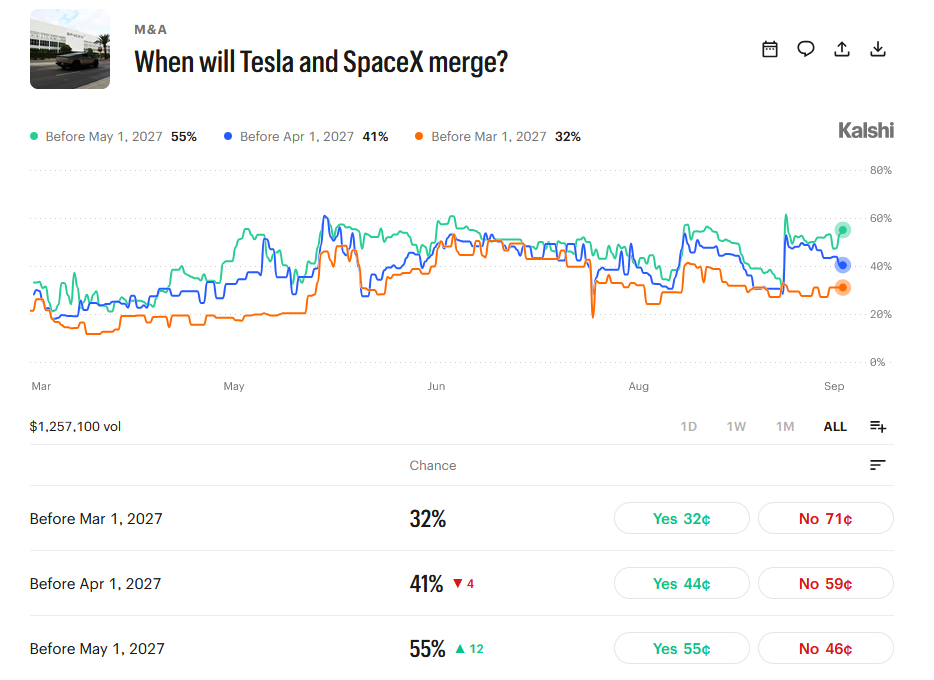
Wall Street is taking the merger possibility seriously. JPMorgan argues SpaceX’s IPO gave Musk fresh capital to make acquisitions. Prediction markets, like Kalshi, are pricing in 55% odds of a merger before May 2027. As shown below, the odds have been relatively steady around 50% for the last few months.
One complication in a potential merger is Musk’s pay package. His November 2025 Tesla compensation structure ties his payout to Tesla’s market capitalization in the event of a merger or acquisition, which could be a nearly $1 trillion windfall. However, that structure creates a conflict of interest that investors should weigh against the legitimate operational logic of a merger.
Has The Bond Market Already Done The Fed’s Job?
If long-maturity yields are weighing on economic activity, has the bond market already done the Fed’s job?
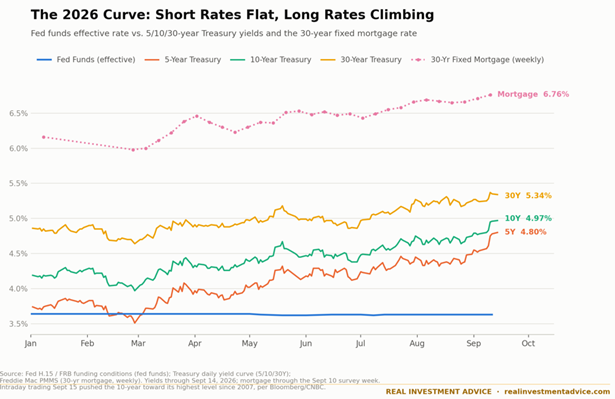
The answer is complicated. The short and long ends of the yield curve impact the economy and inflation differently; accordingly, they are not necessarily substitutes for each other. Both impact GDP and inflation, but through separate channels and timelines.
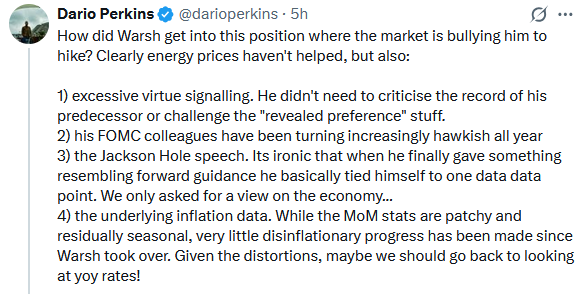
Tweet of the Day

Comments
Log in or sign up to join the conversation.