

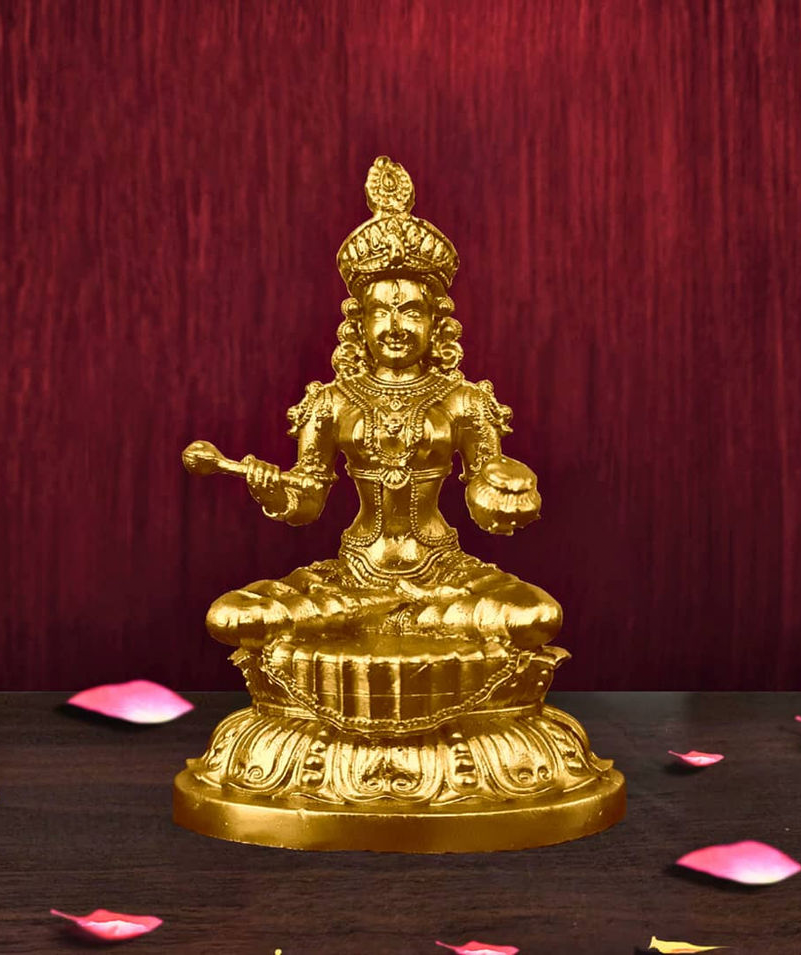
Annapoorani Amman, the Divine Mother who nourishes every living being, is one of the most loved forms of Goddess Parvati, and a brass Annapoorani Amman idol brings her gentle, abundant presence into the home pooja room and kitchen. She is worshipped as the giver of food, the protector of the household, and the compassionate mother who ensures that no one goes hungry.
Her story is a beautiful mix of Puranic legend, temple tradition and everyday devotion. It tells of a world that briefly forgot the value of food, of Lord Shiva himself standing before her with a begging bowl, and of a goddess who feeds the whole universe with a ladle in her hand. In this blog, we explore who Annapoorani Amman is, what her form symbolises, the legend behind her worship, and why she remains dear to families across India. This guide is brought to you by Idol Brass, home of handcrafted South Indian brass idols.
Who Is Annapoorani Amman?
Annapoorani Amman is the goddess of food, nourishment and abundance. Devotees regard her as a form of Parvati, the consort of Lord Shiva, and as a gentle aspect of Adi Parashakti who sustains life in the world.
Annapoorani as a Form of Parvati
In the Puranic tradition, Annapoorani is Parvati herself in the role of the universal provider. While other forms of the Goddess are worshipped for power, victory or wisdom, Annapoorani is worshipped for the most basic and sacred gift of all: food. Her worship is closely tied to the city of Kashi (Varanasi), where she is said to feed all who come to the sacred city.
The Meaning of the Name "Annapoorani"
The name combines Anna, meaning food or grain, and Poorna, meaning full or complete. Annapoorani is therefore the one who is complete with food, whose store never runs empty and who fills the plate of every devotee.
Annapoorani, Annapurna and Annapurneshwari
Across India, she is known by several names. In the north she is commonly called Annapurna, and in Karnataka she is worshipped as Annapoorneshwari. In Tamil Nadu she is lovingly called Annapoorani Amman. The name changes from region to region, but the meaning stays the same: the Mother who nourishes.
Iconography and Symbolism of Annapoorani Amman
Traditional images of Annapoorani follow a form that is easy to recognise. Brass and bronze idols of the Goddess carry the same symbolism, so each detail has a meaning worth knowing.
The Seated Posture and Throne
In many traditional depictions, Annapoorani is seated on a throne or lotus, dressed in fine jewellery and a crown. Her seated posture shows calm authority and the steady, unhurried care of a mother who is always present for her children.
The Ladle and the Vessel of Food
In one hand she holds a ladle, and in the other she holds a vessel filled with food, often rice or payasam. The ladle shows that she serves the food herself, and the vessel represents abundance that never runs out. Together they are the most important symbols of her form.
The Serene Face and Ornaments
Her face is calm and smiling, with large eyes that reflect compassion. The jewellery and crown speak of her royal status as the queen of Kashi and the mistress of the universe, while her gentle expression reminds devotees that her power expresses itself as kindness.
Shiva as the Seeker
In some images and paintings, Lord Shiva is shown standing before Annapoorani with a begging bowl in his hand. This scene carries a powerful message: even the Supreme Lord depends on food, and even he receives it from the Mother.
The Legend of Annapoorani Amman
The legend of Annapoorani is told in a few connected stages, each of which reveals something about her nature.
Shiva Calls the World an Illusion
According to popular tradition, Lord Shiva once declared that the material world, including food, was only maya, an illusion that had no real substance. To him, the world of matter was merely a passing appearance.
Parvati Withdraws and Famine Spreads
Goddess Parvati, who is the very power behind creation, was deeply moved by this statement. To show Shiva the truth, she withdrew from the world. With her disappearance, the earth lost its fertility and food became scarce. Hunger spread among gods, sages and people alike, and the whole creation cried out for relief.
Shiva Realises the Truth
As the suffering grew, Shiva understood that matter and energy cannot be separated, and that food is a sacred gift and not a mere illusion. He realised that without Shakti, even the Lord himself has no way to sustain the world.
Shiva Begs at the Goddess's Door
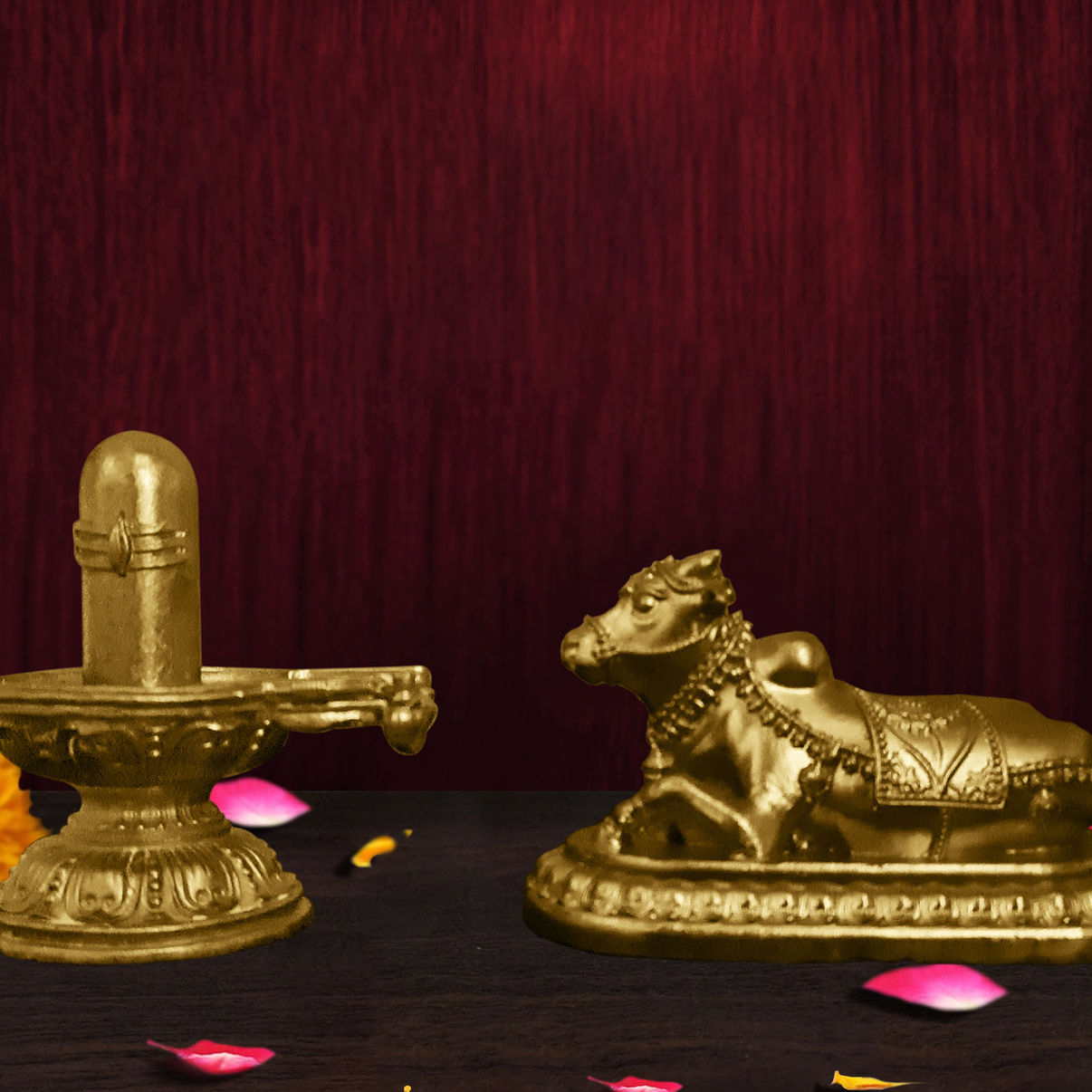
Parvati then appeared in the city of Kashi in her form as Annapoorani. Shiva approached her with a begging bowl and asked for alms. The Goddess, moved by compassion, filled his bowl with food and fed the hungry world. The famine ended, and abundance returned to the earth.
The Goddess Takes Her Seat in Kashi
From that time, Annapoorani is believed to reign in Kashi as the Mother who nourishes all who come to the city, with Lord Vishwanath as its presiding Lord. Devotees say that no one in Kashi goes hungry because of her grace.
Annapoorani Temples and Festivals
Annapoorani is worshipped in many temples and homes across India. Two shrines in particular are well known.
Kashi Annapurna Temple, Varanasi: The best-known shrine of the Goddess, located close to the Kashi Vishwanath Temple. The golden image of Annapurna is displayed to devotees only for a few days around Diwali, during the Annakut festival, when thousands gather for her darshan.
Annapoorneshwari Temple, Horanadu, Karnataka: A celebrated temple in the Western Ghats, where tradition says Adi Shankaracharya installed the Goddess. The temple is especially known for its daily annadanam, the offering of free meals to all visitors.
Devotees also celebrate Annapurna Jayanti on the full moon day of the month of Margashirsha, along with Navaratri, when she is worshipped with special offerings of food. Many families observe her worship in the home kitchen during festive seasons.
Spiritual Significance of Annapoorani Amman
Annapoorani's worship speaks to several parts of daily and spiritual life.
Giver of Food and Abundance
Devotees pray to Annapoorani so that their homes may always have enough food. She is worshipped for full granaries, a well-stocked kitchen and freedom from hunger.
Symbol of Compassion and Annadanam
Her story encourages the practice of annadanam, the giving of food to others. Feeding the hungry is regarded as one of the highest forms of service in Hindu tradition, and Annapoorani is its divine model.
Protector of the Home and Kitchen
Many families keep her image in the kitchen or pooja room, and offer her the first portion of food before eating. The kitchen is treated as a sacred space where her blessings are invited.
Guide to Knowledge and Detachment
The Annapurna Stotram, a hymn traditionally attributed to Adi Shankaracharya, asks the Goddess for alms in the form of knowledge and detachment. It reminds devotees that her gift goes beyond physical food and includes spiritual nourishment.
Why Is Annapoorani Different from Other Devi Forms?
Many goddesses are worshipped across India, but Annapoorani has a special character of her own.
Goddess of nourishment: Her central gift is food, the most basic support of life, rather than victory in battle or worldly wealth.
A nurturing form of Shakti: She is not shown in a fierce or warlike posture, but as a calm mother serving her children.
The Lord as the beggar: Her legend places Lord Shiva himself before her with a begging bowl, which is rare among divine stories.
The ladle and vessel: Her iconography is built around the acts of cooking and serving, which makes her easy to connect with daily life.
Different from Lakshmi's wealth: Lakshmi is worshipped for prosperity in general, while Annapoorani is specifically worshipped for the sufficiency of food and nourishment.
A tradition of annadanam: Her temples, especially Horanadu, keep the practice of feeding all visitors alive every day.
Conclusion
Annapoorani Amman is much more than a goddess of the kitchen. She is the Mother who feeds the world, the reminder that food is sacred, and the divine face of compassion in the Hindu tradition. Her legend teaches gratitude, her iconography teaches generosity, and her hymns teach devotees to seek both food and wisdom. Keeping her brass image in the pooja room or kitchen is a way to welcome that abundance into your home.
Comments
Log in or sign up to join the conversation.