
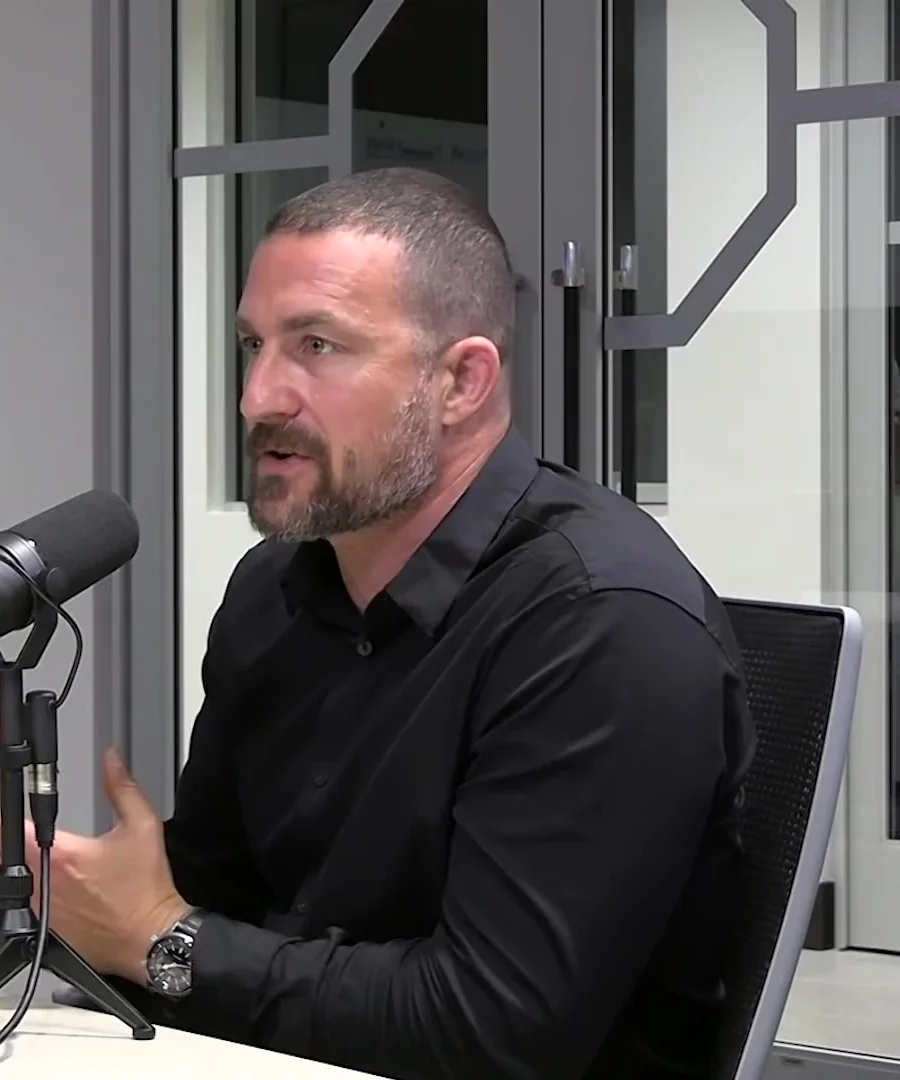
It sounds almost too simple to believe: just ten minutes of sunlight on your skin and in your eyes can fundamentally reshape how well you sleep. But Dr. Andrew Huberman, the Stanford neuroscientist behind the wildly popular Huberman Lab podcast, insists that this small daily investment produces measurable changes in sleep quality within just a few days. The reason lies deep in your biology. Your eyes contain specialized cells that have nothing to do with vision—they exist solely to detect light and send timing signals to your brain’s master clock. When you skip that morning sunlight, you essentially leave your internal clock unset, like a sundial left in a dark closet. That ten-minute habit is not a wellness trend; it is a direct line to better brain health.
The Retinal Ganglion Cells That Control Sleep
Most people believe that vision and sleep are separate systems, but Huberman explains that your retina holds the key to both. Intrinsically photosensitive retinal ganglion cells, or ipRGCs, are light-detecting neurons that project directly to your suprachiasmatic nucleus—the brain region that governs your circadian rhythm. Unlike the rods and cones that help you see shapes and colors, these cells respond primarily to blue wavelengths found in morning sunlight. When they are stimulated, they send a powerful signal that halts melatonin production and starts a fourteen-to-sixteen-hour countdown until your next sleep window. Without that signal, your melatonin rhythm drifts later and later, which is precisely why late sleepers often find it impossible to fall asleep at a reasonable hour.
Why Indoor Light Will Never Work
You might be tempted to skip the outdoors and simply turn on a bright lamp. Huberman warns that this is a losing battle. Indoor lighting, even on its brightest setting, typically reaches only one hundred to five hundred lux. A cloudy morning outdoors easily reaches ten thousand lux, while direct morning sunlight can hit one hundred thousand lux. Your ipRGCs need that intensity to trigger the full circadian response. Sitting by a window helps slightly, but standard glass blocks much of the blue spectrum that these cells crave. This is why people who work in windowless offices or live in northern latitudes during winter often struggle with sleep disorders despite being surrounded by artificial light all day. No lamp yet invented truly replaces the sun.
The First Hour After Waking Is the Golden Window
Timing matters just as much as intensity. Huberman emphasizes that your circadian system is most sensitive to light during the first hour after waking. During this window, your eyes have not yet fully adapted to daylight, and your melatonin levels are still elevated from sleep. A mere ten minutes of sunlight during this period produces a stronger circadian reset than an hour of sunlight at noon. If you wake up before sunrise, turn on as many bright indoor lights as possible until you can get outside, then get that sun exposure as soon as the sun crests the horizon. Delaying your sunlight by even two hours can shift your entire sleep cycle later, making it harder to wake up the next morning.
Cloudy Days and Winter Mornings Still Count
Do not let bad weather become an excuse. Andrew Huberman research shows that even on overcast days, outdoor light remains dramatically brighter than indoor lighting. A heavily clouded sky still delivers about one thousand to five thousand lux, which is ten times brighter than a typical living room. On completely gray winter mornings, extend your exposure to twenty or thirty minutes to compensate for the lower intensity. The same principle applies if you have dark eyes—people with brown or dark brown irises have more melanin in their retinas, which acts like natural sunglasses. They may need fifteen to twenty minutes of morning light to achieve the same circadian effect that a blue-eyed person gets in ten minutes. Know your biology and adjust accordingly.
How Sunlight Regulates Your Evening Melatonin
The ten-minute morning habit does not just help you wake up; it determines when you will feel sleepy. Huberman explains that sunlight exposure sets a timer for melatonin release that evening. For most people, melatonin begins to rise about fourteen to sixteen hours after morning light exposure. So if you get ten minutes of sunlight at 7 a.m., your brain naturally starts producing melatonin around 9 p.m. to 11 p.m., exactly when you want to feel sleepy. If you sleep in until 10 a.m. on weekends, that melatonin release shifts to midnight or later, which is why Sunday night insomnia is so common. The morning light you get today quite literally programs your sleep for tonight.
Combining Sunlight With Morning Movement
To get even more from your ten minutes, Huberman suggests adding gentle movement. Walking, stretching, or simply standing while facing the sun increases blood flow to your retina, making those ipRGCs more sensitive to light. Movement also helps clear adenosine, the chemical that builds up sleep pressure throughout the night, so you feel genuinely awake rather than groggy. Additionally, the combination of light and physical activity boosts dopamine and serotonin, which improves mood and reduces the anxiety that often interferes with sleep. You do not need to jog or break a sweat. Even a slow walk around the block while looking toward the horizon transforms those ten minutes from a passive habit into an active brain reset.
What Happens to Your Brain After One Week
The transformation does not require months of discipline. Huberman cites research showing that consistent morning sunlight for just one week produces measurable changes in sleep architecture. People fall asleep faster by an average of fifteen to twenty minutes. They spend more time in slow-wave deep sleep, which is when the brain clears out amyloid-beta plaques linked to neurodegeneration. They also report fewer nighttime awakenings and more vivid dreaming, which indicates healthy REM sleep. Perhaps most importantly, the evening anxiety that makes so many people dread bedtime begins to fade. Your brain learns to trust the rhythm you have established. Ten minutes of sunlight seems almost laughably simple, but the neuroscience behind it is anything but—and the results speak for themselves.
Comments
Log in or sign up to join the conversation.