

Wedding celebrations usually involve more than one dress code. A Haldi may call for something light and comfortable, while a Sangeet gives you room to dress up. The main wedding ceremony may feel more traditional, and the reception may call for something polished.
When choosing between an Anarkali and a straight kurta set, the occasion can make the decision much easier. Both silhouettes work well as Indian occasion wear, but they create very different looks. Understanding the difference between Anarkali vs straight kurta styles can help you choose an outfit that feels right for each function.
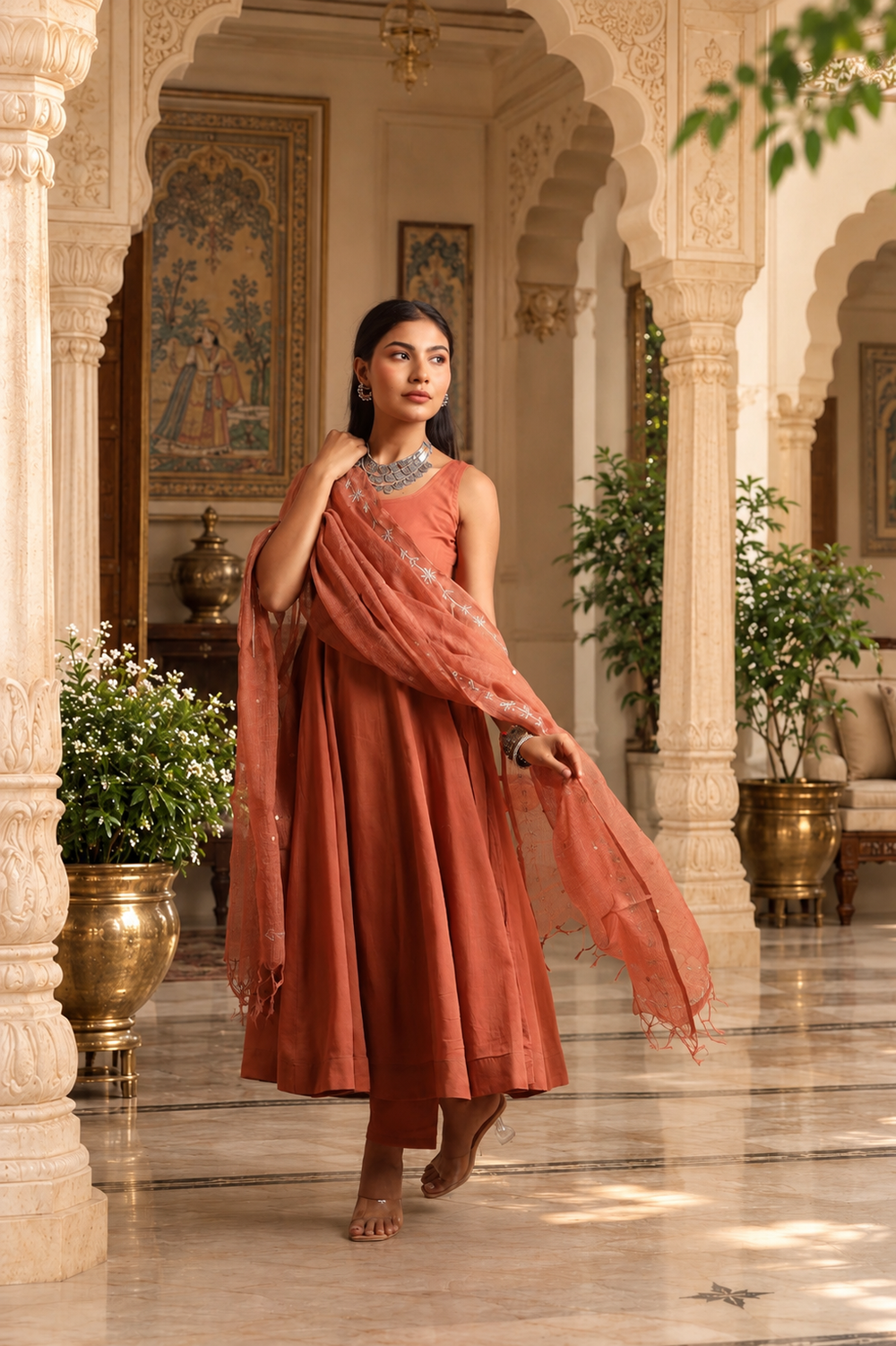
What Makes an Anarkali Different?
An Anarkali is recognised by its fitted or shaped upper section and flared lower portion. The flare can be subtle or dramatic, depending on the number of panels, fabric and cut.
An Anarkali suit for wedding celebrations tends to have a more flowing and traditional appearance. Embroidery, zari, prints, mirror work and detailed borders can make the silhouette even more festive.
An Anarkali is particularly useful when you want your outfit to have movement. The flare creates a noticeable effect when you walk, making it a natural choice for occasions where you want a more dressed-up appearance.
An Anarkali kurta set can also include coordinated trousers, pants or churidars with a matching dupatta, giving you a complete ethnic look.
What Makes a Straight Kurta Set Different?
A straight kurta falls more closely to the body's natural vertical line rather than opening into a wide flare. It can be paired with trousers, pants, palazzos or other bottoms depending on the design.
A straight kurta set generally has a cleaner and more structured appearance. It can be printed, embroidered, plain or detailed, making it suitable for everything from daytime wedding functions to more formal celebrations.
A straight suit set is also easy to style because the silhouette itself is relatively simple. You can change the overall appearance with jewellery, a dupatta, footwear and accessories.
If you prefer outfits that can be worn for different occasions after the wedding, a straight kurta set can be particularly practical.
Anarkali vs Straight Kurta for Haldi
Haldi functions are usually active and informal compared with the main wedding ceremony. You may be sitting on the floor, moving between guests or taking part in the ceremony itself.
For this type of function, a straight kurta set can be easier to manage, especially when made from lightweight cotton or another breathable fabric. A shorter or less flared Anarkali can also work if you prefer the silhouette.
Yellow, green, pink and orange are popular choices for Haldi-inspired looks. A printed wedding kurta set can give you a festive appearance without requiring heavy embellishment.
If comfort and easy movement are your main concerns, the simpler construction of a straight kurta set can be useful.
Anarkali vs Straight Kurta for Mehndi
Mehndi functions allow more freedom with colour and prints. Both silhouettes can work well here.
A printed straight suit set with colourful accessories can create a relaxed daytime look. You can pair it with jhumkas, bangles and juttis for a traditional finish.
An Anarkali works equally well if you want more movement and a slightly more noticeable silhouette. A printed Chanderi Anarkali or lightly embroidered style can look festive without becoming too formal.
For a wedding guest outfit, consider the venue and time of day. Lightweight fabrics are usually easier to wear for outdoor or daytime celebrations.
Which Works Better for Sangeet?
Sangeet is usually the kind of function where you can have more fun with your outfit. Since music and dancing are often involved, movement is an important consideration.
An Anarkali with a controlled amount of flare can create beautiful movement while walking or dancing. A richer colour, embroidery or metallic detailing can make it feel more appropriate for an evening celebration.
A straight kurta set can also work for Sangeet, particularly if you prefer a contemporary appearance. Pairing a straight kurta with wide-leg trousers and a statement dupatta can create a more modern silhouette.
The choice comes down to the kind of look you prefer: the flowing shape of an Anarkali or the cleaner lines of a straight set.
What to Wear for the Wedding Ceremony
For the main ceremony, an Anarkali often lends itself naturally to traditional styling. A detailed Anarkali suit for wedding celebrations can be paired with a statement dupatta, traditional jewellery and embellished footwear.
Chanderi, silk blends, georgette and other occasion-friendly fabrics can work well depending on the season and venue.
However, a straight kurta set can be just as suitable when the design has enough festive detail. Embroidery, zari work, a decorative dupatta or traditional prints can make a straight set feel appropriate for the ceremony.
If you want a more streamlined appearance, the straight silhouette may be the better fit for your personal style.
Which Is Better for a Reception?
For an evening reception, both styles can be dressed up considerably.
An Anarkali with a rich fabric, detailed embroidery and a flowing silhouette can create a formal look. Statement earrings, a clutch and heels may be all you need to finish the outfit.
A straight kurta set can take a more contemporary route. Try a heavily embroidered kurta with wide-leg pants, a contrasting dupatta and statement jewellery.
A kurta set for wedding receptions is particularly useful if you want an outfit that feels polished but not overly traditional.
Comfort and Movement
Comfort is often overlooked when choosing occasion wear. Wedding functions can last several hours, so think about how much walking, sitting and standing you will be doing.
An Anarkali with a very wide flare may require more room, especially in crowded venues. A straight kurta is generally easier to move around in and can feel less bulky.
That does not mean every straight kurta is more comfortable. Fabric, fit, lining and construction matter just as much as silhouette.
Rewearing the Outfit After the Wedding
If you want to get more use from your outfit, consider how easily you can style it differently.
A printed straight kurta set can be worn with different dupattas, jewellery or bottoms for festivals and family gatherings. An Anarkali can also be restyled, particularly if it has a simple print or subtle embroidery.
The versatility of either outfit depends more on its fabric, colour and detailing than on the silhouette alone.
Anarkali or Straight Kurta: A Quick Guide
Choose an Anarkali when you want:
A flowing, traditional silhouette
More movement in the outfit
A dressier appearance
A statement look for Sangeet or reception
A more dramatic wedding outfit
Choose a straight kurta set when you want:
A clean, streamlined silhouette
Easy movement
A practical daytime outfit
A contemporary ethnic look
More opportunities for repeat styling
Final Thoughts
There is no single answer when comparing Anarkali vs straight kurta for weddings. The better choice depends on the function, venue, weather, level of formality and the way you like your clothes to fit and move.
An Anarkali can be a strong choice for Sangeet, wedding ceremonies and receptions when you want a flowing, festive silhouette. A straight kurta set can work particularly well for Haldi, Mehndi, daytime celebrations and occasions where you prefer a cleaner look.
Both can make excellent wedding outfits. Start with the event you are dressing for, then choose the silhouette, fabric, colour and accessories that make sense for that particular celebration.
Comments
Log in or sign up to join the conversation.