


- After the RBA increased interest rates by 25 basis points on Tuesday, the AUD/USD currency pair was met with some supply.
- A slight appreciation of the USD adds to the pressure, but the market can only fall so far.
- As yields on US bonds continue to fall, the risk-on urge appears to be capping the dollar and providing support.
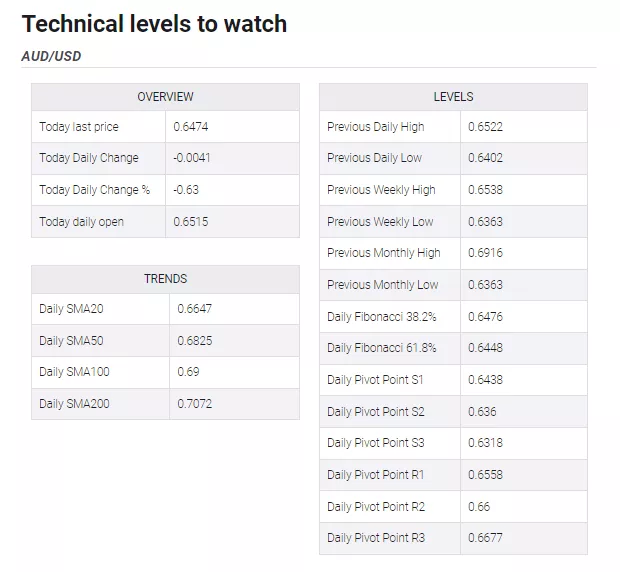
On Tuesday, the AUD/USD pair faces renewed selling pressure, wiping out some of the significant gains the day before. The pair has kept its early European session offered tone and is trading at the bottom of its daily range, barely above the mid-0.6400s.
The Australian dollar fell when the Reserve Bank of Australia (RBA) decided to raise interest rates by 25 basis points (bps) instead of the expected 50 bps. This, along with a slight strengthening in the US currency, puts downward pressure on the AUD/USD. However, the downside appears restricted, at least for the time being, so negative traders should proceed with care.
Since inflation is heading over the target range, the Australian central bank has indicated in its monetary policy statement that it plans to continue hiking interest rates this year. RBA Governor Philip Lowe has also predicted that inflation will climb in the following months and end the year at around 7.75%. The RBA now has room to tighten even further because of this and the labour market's robust state.
However, with US Treasury bond yields continuing to decline, the USD has been unable to make any headway. The risk-on urge, exemplified by a robust follow-through rally in US equities futures, is also a headwind for the safe-haven dollar. As a result, the risk-averse Australian dollar receives some support, and the AUD/USD currency pair suffers fewer losses.
Participants in the market are awaiting the US economic docket, which includes the JOLTS Job Openings and Factory Orders data. This, combined with FOMC member comments and US bond yields, will affect the USD and boost the AUD/USD. In addition, investors will look to the general market's attitude toward risk to determine how best to capitalize on the major's short-term prospects.
Comments
Log in or sign up to join the conversation.