

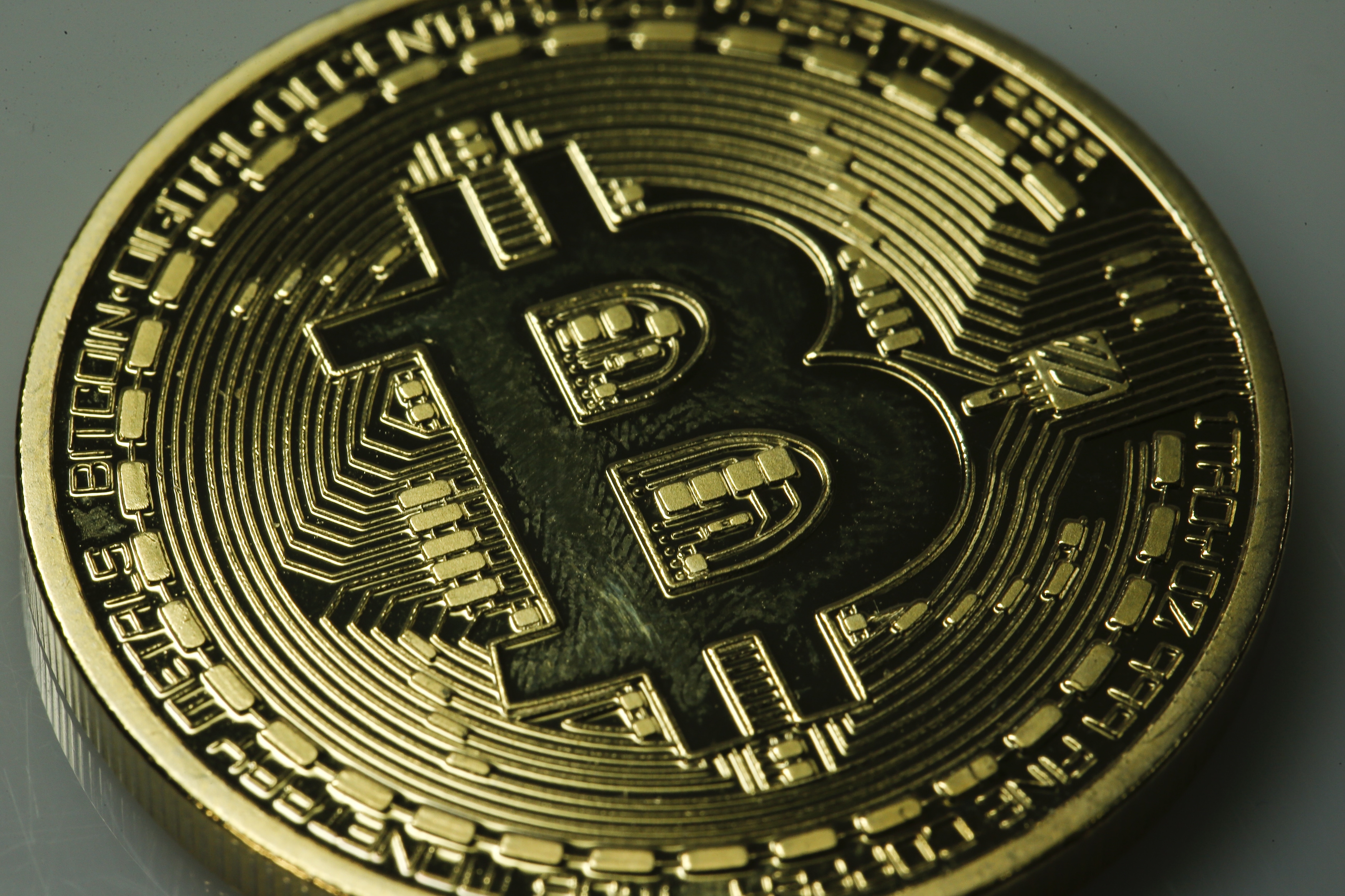
As global markets have been caught up in a whirlwind of activity over the past week, Bitcoin (BTC) unsurprisingly proved to be a popular topic of conversation in the midst of it all. During the mayhem, the digital currency saw its price drop as low as $6,000, shredding as much as 70% of its nearly $20,000 valuation from back in December. At the time of writing, its price stands around $9,680 according to emerging cryptocurrency data tracking platform OnChainFX.com.
But a major problem with the general conversation regarding Bitcoin and all that’s associated with it is the lack of agnosticism within the dialogue. Too frequently people choose to play the binary game by either determining the leading cryptocurrency to be the financial messiah and flawless in design or dead on arrival and bereft of even potentially bearing any value to society.
Berkshire Hathaway Vice Chairman Charlie Munger, for example, just yesterday said, “I never considered for one second having anything to do with [bitcoin]. I detested it the minute it had been raised. The more popular it got, the more I hated it…Bitcoin is noxious poison.” A bit extreme, no? Denying consideration is also a great way to not know much about what you’re discussing.
In another instance, Bert Ely of the Hill published a piece called “Bitcoin is a Ponzi scheme, and it will collapse like one”, yet it simply cannot be a Ponzi scheme.
On the flip side, Evander Smart’s CoinTelegraph article “How Bitcoin Blockchain and Ripple May Help Kill U.S. Dollar” is shortsighted in many ways too. And flip to Twitter, where cybersecurity expert John McAfee is betting big on Bitcoin hitting $1 million and other users are romanticizing about the imminent demise of central banks.
The issue here is that both extremes are typically spoken about as blanket statements with such heavy conviction that it leaves little room to actually dissect the unique and very separate elements of the technological asset which deserve much deeper scrutiny on an individual basis.
It is for this reason that I hope to offer a more objective take on Bitcoin as it stands today. It is not an inherent evil nor the manifestation of financial perfection. It’s a fintech development that took the world by storm, offering the globe fresh perspective on everything from money to data storage to human ideals. Condensing Bitcoin into being either simply “good” or “bad” or destined for “failure” or “success” serves its brief, yet fascinating history little justice. So, let’s explore its strengths and societal contributions, as well as its shortcomings and undesirable traits. By doing so, we paint a much more detailed picture of what Bitcoin is, and where it might be headed in the future.
As a Protocol
Back in November, I wrote about the “dramatic Bitcoin family” that the original Bitcoin protocol (now referred to as Bitcoin Core) and all its forks had collectively constructed. The issues touched on in that piece, namely the lack of consensus within the Bitcoin development team and scalability concerns, have only reinforced themselves since then, highlighted by the vicious Bitcoin Core vs. Bitcoin Cash (BCH) battle that has emerged with ardent supporters on either side and the promise of the Lightning Network’s ability to fix Bitcoin Core’s limitations.
It’s therefore difficult to pinpoint the future trajectory for Bitcoin a protocol because nobody really knows, or agrees on, its true identity. Is Bitcoin Cash as what Satoshi Nakamoto had in mind? Or is Bitcoin Gold (BTG) more in line with the project’s objectives? What about Bitcoin Diamond (BCD) or the recently hyped Bitcoin Private (BTCP)? Each fork is nuanced in its own way, varying in block size, transaction capacity, mining algorithms, and privacy initiatives. As all of these are critical matters for the cryptocurrency aiming to achieve extensive adoption, it’s too soon to say how the dust will settle. Until it does, though, Bitcoin Core is the protocol globally recognized as Bitcoin.
This point might be very telling in how it relates to Bitcoin’s future potential. Is the lack of consensus within the development of the asset a sign that it will eventually spread itself too thin? Or is its anonymous founder and lack of explicit direction what will prove to be the ultimate display of decentralization that will shine when one or multiple protocols prevail? Of course, only time can tell.
As a Currency
Referencing the previous point, depending on which Bitcoin protocol you believe to be its true identity, the digital asset’s ability to perform as a currency will differ significantly. Bitcoin Cash settles payments much quicker than Bitcoin Core, and Bitcoin Gold better eliminates miner manipulation, for example. But moving forward, we’ll stick to scrutinizing Bitcoin Core, as it’s the protocol most commonly accepted and discussed.
As a means of payment and potential adoption as a currency, Bitcoin certainly has a long way to go. The Bitcoin network settles a measly 5-7 transactions per second. For comparison’s sake, “rival” cryptocurrency Ripple does 1,500 and Visa can do up to 24,000. Should Bitcoin be able to become a legitimate currency, how will it address this issue? As it stands, it currently couldn’t even come close to handling Amazon’s hundreds of purchases per second. Further, Bitcoin transactions can take anywhere from 10 minutes to 5+ hours to settle at times, and transaction fees for even nominal amounts of money have been as high as $30. These fees are largely affected by the congestion of the network at any given time, which no one has control over.
Even though other forks of Bitcoin can handle more transactions per second than Bitcoin Core, loyalists to the original protocol feel that forks aren’t true to what Bitcoin’s anonymous creator originally intended. The answer for this cohort is to build upon Bitcoin Core’s code and find ways to make it more functional, such as Segregated Witness (SegWit) and now the Lightning Network, which takes much of the cumbersome transaction processing off the blockchain.
Before many of these issues surfaced, many progressive merchants started accepting Bitcoin as a means of payment. Most recently and notably, the Arizona Senate passed a bill allowing tax payments to be made in Bitcoin. However, some merchants have also reversed this business decision due to the nature of the digital asset’s somewhat crippled viability as a currency.
As of now, proponents of Bitcoin as a currency have an overall unimpressive track record to defend, so their contention of viability can come off as rather comical to anyone who has used the technology for such a purpose as of late. Effective payments need to be swift and cheap to make, but Bitcoin is a new technology, so growing pains are certainly expected. Now that we’ve seen them, how will Bitcoin respond?
As an Investment Vehicle
Bitcoin is scarce in nature with only 21 million tokens ever to be in circulation. The limited supply creates the immediate comparison to gold, which has, in turn, generated a basis for market value. While Bitcoin has historically rewarded patience, the recent sell-off have some worried. But should they be? Anyone who is shocked by the recent plunge of Bitcoin’s price likely hasn’t done much research on the digital currency’s past. In fact, what we’re currently witnessing with regards to Bitcoin’s price action is not all that surprising by Bitcoin’s standards when you consider its historical data.
A traditional market correction is constituted by a 10% recession in market cap. A bear market occurs when that figure hits 20%. Bitcoin has historically scoffed at these minor dips, crashing countless times since its inception. Perhaps in its worst crash, Bitcoin plummeted some 94% in 2011 from $32 to just $2 following the first Mt. Gox security breach and increased bubble talk. It has continually punished investors over time, dropping from $266 to $54 in 2013 for a 79% loss and then again from $1,200 later that year to under $200 in 2015 for an 85% drop-off. Here’s a more comprehensive look at Bitcoin’s volatility since it was introduced to the world. Amazingly, it has rebounded from every crash to hit new all-time-highs at some point the future. We’re waiting to see if it will happen again and eclipse the $20,000 mark.
Talk of advanced tech development, pushback against “broken” traditional financial institutions, and optimistic PR have contributed positively to Bitcoin’s price over time. Association with the Dark web, security breaches, and natural opposition to innovation that threatens existing systems have had the inverse affect over the same period. The age of social media where news spreads so quickly, the fact that the market is largely deregulated and a boatload of other reasons have likely contributed to the volatility in both directions. Again, Bitcoin has historically rewarded investors who demonstrate patience, so a sharp resurgence upwards shouldn’t come as a shock to anybody either. It’s already back up 61% from last week’s low to almost $10,000 again.
Finally, it must be noted that those calling the Bitcoin’s recent activity a “crash” must contextualize what a brief setback to a staggering price $6,000 really says about the picture at large.
As an Environmental Factor
Opponents to Bitcoin are quick to call out the cryptocurrency for the energy-intensive mining process that confirms Bitcoin transactions on the blockchain. It’s so exhaustive, in fact, that China recently banned it, and the hardware used in the process is now causing major issues in Iceland. The cost of mining one transaction could power some homes for over a week.
Those more optimistic about the future of mining contend that new technology will emerge to make mining more energy efficient, as the Bitcoin website explains, “mining hardware may become so energy efficient over the next century that transaction fees prove to be plenty to keep miners in business.”
For Bitcoin to take the next step in the relatively environmentally conscious world we live in, its community will likely have to address this issue head-on and find more conservative ways of supporting blockchain transactions.
As a Market Leader
Cryptocurrency exploded onto the main stage in the recent years essentially through Bitcoin exclusively. But ever since, the “altcoin” index of the industry has had its own boom and even overtaken Bitcoin’s dominance over the cryptocurrency sector. Altcoins (i.e. “alternative coins”) refer to all other cryptocurrencies not named Bitcoin and range drastically in their product design and intention.
But for as far as altcoins have come, they have proven to almost always follow Bitcoin’s movement in the market, unable to make autonomous changes. They effectively mirror Bitcoin’s price action, regardless of direction, but in exaggerated fashion. So, when Bitcoin is in the green, altcoins can grow more than 100% in a single day as their market caps have more room to expand. Conversely, a bear market for Bitcoin can mean altcoins write off the majority of their value in equally as short of a period of time, as these periods often lead to consolidation of smaller coins back into the larger players (i.e. Bitcoin, Ethereum, etc.).
This correlation means a variety of things. For cryptocurrency investors, the high correlation can strongly impact strategy and allocation decisions, especially in times of volatility. For government agencies, it gives the industry a unique landscape to regulate. And for the common spectator, Bitcoin’s ability to remain the single most influential digital currency makes it a powerful asset to keep focus on.
As a Technological Development
Here is where the conversation begins to shift. Where market value and potential as a payment solution are up for contentious for debate, it’s difficult to refute the technological breakthrough that Bitcoin stands as. The housing product of sophisticated mathematics, cryptography, and advanced programming fused into a living network that is transforming everything from information sharing to computing systems cannot be overlooked. Responsible for bringing blockchain to the forefront, Bitcoin, from a tech standpoint, should be celebrated as a breakthrough, and one we don’t take for granted. We likely won’t; it’s already spurring a new wave of tech that will change infrastructure systems and information exchange for the foreseeable future. Distributed ledgers and various forms of chained databases are reforming more than just finance, but also business, medicine, entertainment, communal issues, and more. Bitcoin is by no means perfect technology (after all, it is the first blockchain protocol), but it has opened up a gateway that we could be exploring for a long time.
As an Innovation
Virtual money that can be sent to my friend across the world in minutes? A trustworthy network that doesn’t have a central point of control? Is there really need for those middlemen and intermediaries? Bitcoin has been such a compelling conversation starter because of its revolutionary and innovative nature. It is forcing society to reassess how we share with each other and how we trust each other. Bitcoin’s novel approach to finance and restoring much of the power back to the individual is proving enough to shake up the world’s largest banking CEOs and trigger a half trillion dollar crypto-asset market.
The Need for Objectivity
For every bit of optimism that Bitcoin has received, it has earned at least as much legitimate criticism. And that is perfectly okay. In fact, it’s what is making it one of the biggest anomalies in years. Bitcoin owns some undesirable characteristics and operational issues, yet it has simultaneously created wealth for many and is an undeniable breakthrough. So, when people say Bitcoin will succeed or fail, it's important to ask: "as what?", because so many of its constructive elements are mutually exclusive. Completely overlooking the technological innovation Bitcoin has delivered because of its current shortcomings as a currency, for example, is essentially meaningless and asinine.
So, will Bitcoin go to $1 million and replace the current financial infrastructure as some predict? Could it equally as easily go to $0 and be looked back on as a fad that resulted in history’s largest popped bubble? Will the next three decades be full of blockchain integration and overhaul of current systems? Will cryptocurrency mining cause countries to lose control of their power supply? Will one of these crashes be too big to overcome, or will Bitcoin defy all odds and keep rebounding stronger each time? It’s all unclear at this point, but legitimate arguments can be made in almost any direction on any given aspect. It’s important to investigate the data, strive to understand positions beyond our own, and most importantly maintain an objective assessment of Bitcoin, as that is the only way to substantiate the conversation at hand.

Comments
Log in or sign up to join the conversation.