

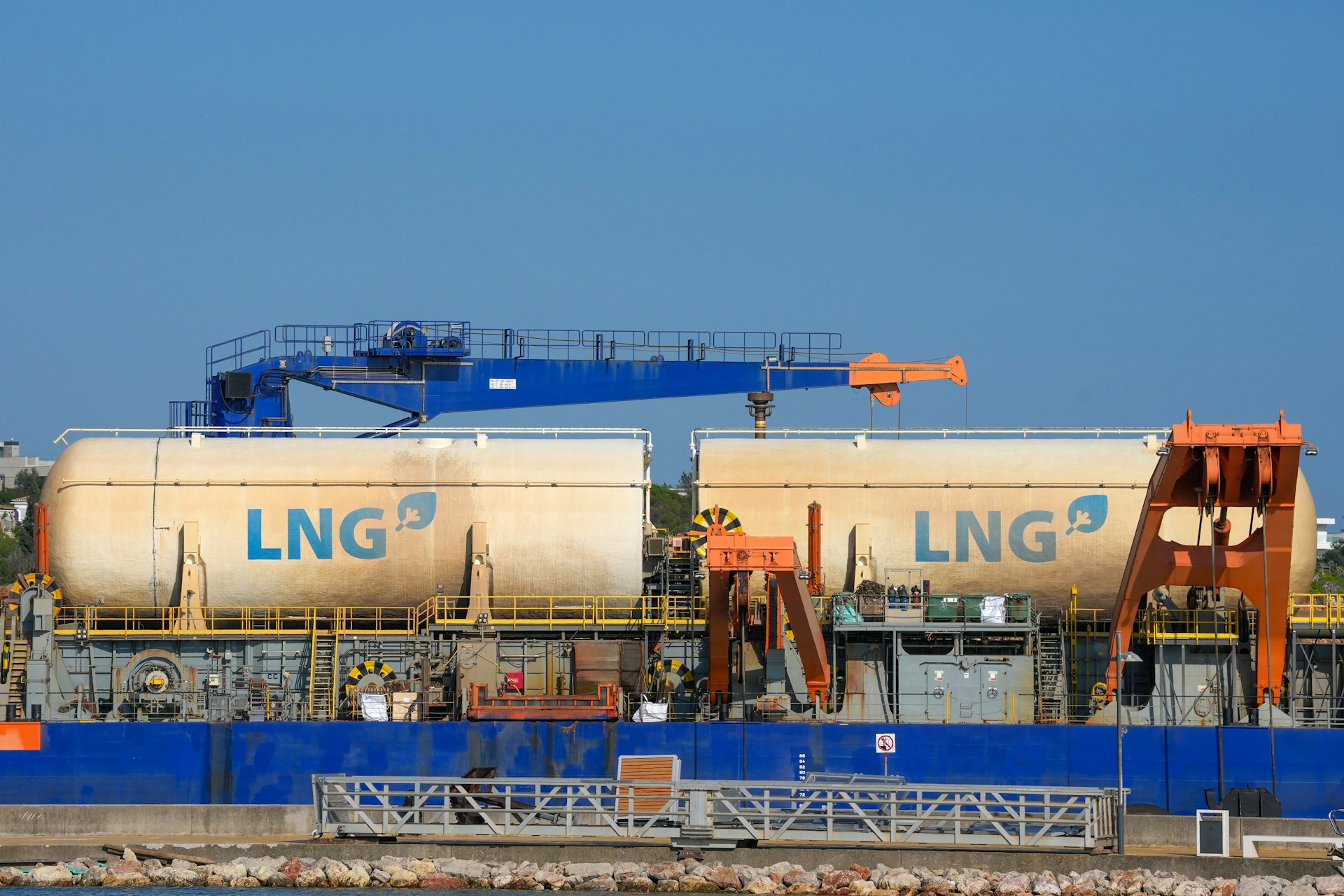
A decade ago, the United States was only beginning to emerge from an energy outlook that had once assumed steadily rising dependence on imported natural gas. For years, the prevailing concern was that domestic production would struggle to keep pace with demand, leaving the country increasingly reliant on liquefied natural gas brought in from overseas. That expectation proved badly wrong. Horizontal drilling and hydraulic fracturing unlocked enormous shale gas resources, domestic production surged, and facilities originally designed to receive imported LNG were instead converted into export terminals.
The transformation happened quickly. Cheniere Energy (LNG) shipped the first large-scale LNG cargo from the Lower 48 out of Sabine Pass in 2016, and by 2023 the United States had become the world’s largest LNG exporter. U.S. LNG exports increased to a record 15.1 billion cubic feet per day in 2025, and the U.S. Energy Information Administration now forecasts that exports will average 17.4 Bcf/d this year and 18.6 Bcf/d in 2027. EIA also expects U.S. LNG export capacity by 2031 to be nearly double the level that existed at the end of 2025.
That growth represents one of the more remarkable reversals in modern energy markets, but it also changes the nature of the risk facing the industry. For much of the past decade, the central question was whether the United States could build enough export infrastructure to take advantage of its abundant domestic gas. As additional capacity comes online, the more important issue becomes whether global demand will grow fast enough to keep those terminals well utilized and economically attractive.
Why the U.S. Became an LNG Powerhouse
The United States has several structural advantages that helped it rise so quickly in the global LNG market. The most obvious is the scale of the domestic resource base. Production growth from the Marcellus, Haynesville, Permian Basin, and other shale regions gave exporters access to large volumes of relatively low-cost natural gas. That resource advantage was reinforced by an existing industrial system of pipelines, storage facilities, ports, engineering expertise, and access to capital that made the Gulf Coast a natural location for LNG development.
The commercial structure of U.S. LNG also proved important. Many export contracts are linked to Henry Hub natural gas prices rather than directly to crude oil, and U.S. contracts have generally offered buyers more flexibility to redirect cargoes than some traditional LNG supply agreements. That flexibility became particularly valuable after Russia invaded Ukraine in 2022, when Europe suddenly needed alternatives to Russian pipeline gas. Europe received 69% of U.S. LNG exports that year, up from 34% in 2021, and was still taking about 68% of U.S.-origin LNG through most of 2025, according to EIA data on U.S. LNG trade flows.
This year’s Middle East conflict provided another demonstration of the value of flexible supply. Disruptions to Gulf LNG flows tightened global markets just as new North American capacity was ramping up. During the first half of 2026, U.S. LNG exports averaged 17.4 Bcf/d, 23% higher than during the same period a year earlier. New terminals and expansions accounted for much of that growth, allowing U.S. exporters to respond to higher international prices and lost supply elsewhere.

Comments
Log in or sign up to join the conversation.