


Photo by Christian Wiediger on Unsplash
Artificial intelligence is moving beyond chatbots and into the corporate org chart. The next phase of AI isn't just answering questions, it's interviewing candidates, managing supply chains, coordinating workflows, and making operational decisions in real time.
That matters because enterprise software is one of the stickiest businesses in tech. Once companies embed a platform into hiring, logistics, or customer management, switching becomes costly and disruptive.
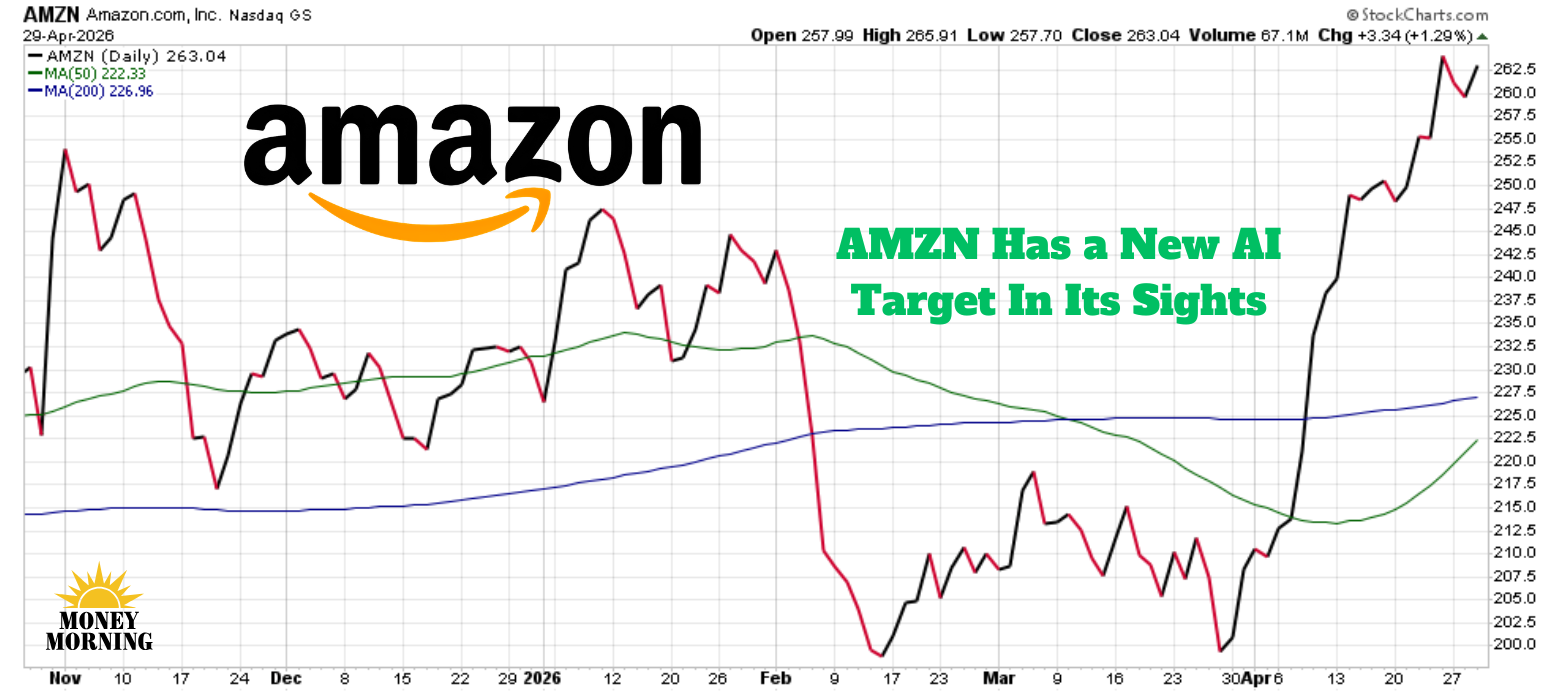
So when Amazon (AMZN) unveiled two new AI agent tools this week, investors should have paid attention.
The company introduced Amazon Connect Talent and Amazon Connect Decisions, AI-powered systems aimed at recruiters and logistics teams. According to Amazon Web Services, the products can automate candidate screening, summarize interviews, forecast supply chain disruptions, and recommend operational responses using AI agents trained on Amazon's own internal systems.
That's a fancy way of saying Amazon wants to move beyond cloud infrastructure and deeper into the daily workflows businesses depend on.
Amazon Is Expanding Beyond the Cloud
For years, AWS dominated the infrastructure side of cloud computing. Businesses rented servers and processing power from Amazon instead of building expensive data centers themselves.
But infrastructure alone is no longer enough.
The larger opportunity sits higher up the stack: productivity software, workflow automation, and enterprise AI services currently dominated by Microsoft (MSFT), Oracle (ORCL), and Salesforce (CRM).
Amazon Connect Talent targets hiring departments. AWS says the platform can conduct AI-assisted interviews, evaluate candidates, generate recruiter summaries, and help companies process large applicant pools faster.
Meanwhile, Connect Decisions focuses on logistics and operations. The software analyzes inventory trends, forecasts disruptions, and recommends supply chain actions using AI models built from Amazon's operational data.
Surprisingly, that internal experience may be Amazon's biggest advantage.
The company spent decades refining logistics systems capable of managing millions of deliveries daily. Now it is commercializing those tools for outside businesses.
Microsoft has Copilot. Salesforce has Agentforce. Oracle controls large parts of enterprise databases and ERP software.
Amazon wants a piece of all of it.
The Real Goal Is Enterprise AI Control
According to IDC, global AI investment is expected to surpass $1.3 trillion annually by 2029. Much of that growth will come from workflow automation and AI agents embedded inside business systems.
AWS generated $107.6 billion in revenue over the last 12 months. Operating income from AWS rose 39% year over year last quarter, while margins expanded to 37.6%.
Here's what the numbers tell us: enterprise AI may become one of the most lucrative software markets in decades.
That's exactly where Amazon is positioning itself.
Granted, Amazon still trails Microsoft in workplace productivity software and trails Salesforce in customer relationship management.
But Amazon already has one critical advantage: distribution.
Thousands of enterprises already run applications on AWS. That gives Amazon a built-in pathway to introduce AI workflow tools without forcing businesses into an entirely new ecosystem.
Bottom Line
Amazon's newest AI tools may look narrow today, but they signal a much broader ambition.
The company is trying to combine cloud infrastructure, workplace productivity, logistics software, CRM integration, and AI automation into a single enterprise ecosystem. If successful, that would place Amazon into more direct competition with Microsoft, Oracle, and Salesforce than ever before.
Regardless of how you look at it, Amazon is no longer content merely powering the cloud behind enterprise AI.
It wants to own the workflows running on top of it too.



Comments
Log in or sign up to join the conversation.