

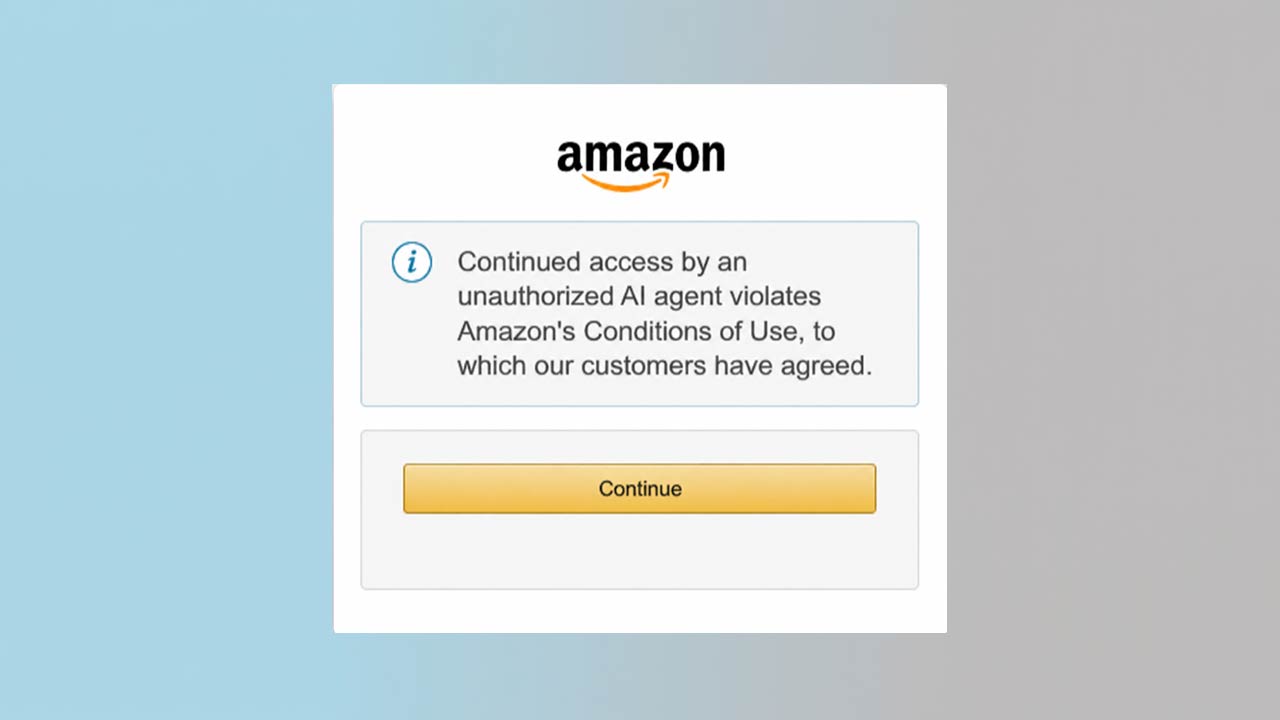
Amazon (AMZN) has blocked Meta (META)’s Muse personal AI agent from shopping on Amazon. As of Sunday night, Muse users who try see a popup that says, “Continued access by an unauthorized AI agent violates Amazon’s Conditions of Use, to which our customers have agreed.” Amazon says it had previously asked Meta to voluntarily pull Amazon out of Muse.
According to Amazon, the agent does not identify itself when it browses, and it appears to capture and store customer credentials. Meta’s September 8 launch post says Muse “has no visibility into people’s passwords or payment methods,” credentials sit in secure storage, and the agent asks before it buys. Meta’s launch materials also say that when a service has no API, Muse can use it through a browser “the way you would.” A week after launch, Muse was the No. 1 free app in Apple (AAPL)’s U.S. App Store, ahead of ChatGPT.
Amazon says this is about security. I say it’s about protecting more than $68 billion in annual ad revenue. At the moment, bots don’t care about ads or sponsored product listings.
Amazon sued Perplexity over its Comet browser last November and has moved to block shopping agents from Google (GOOGL) and OpenAI. This summer, it stripped product names from order confirmation emails (a spokesperson told The Verge the change reduces customer information shared outside Amazon’s own channels). Amazon won a preliminary injunction against Perplexity in March and lost it on August 4, when the Ninth Circuit ruled that the user is the party accessing Amazon’s computers under federal anti-hacking law. The court denied rehearing on September 10. The ruling left contract and terms-of-service claims open, and the Muse popup cites the Conditions of Use and never mentions hacking.
Traditionally, a retailer owns the customer relationship, the product data, retail media ad inventory, and at least a piece of the transaction economics. I can’t imagine an AI-savvy retailer ceding that data to a third party without compensation. This is where payment rails, bot IDs, and the entire network topology around agents (which by definition act on your behalf) must evolve. We can expect a hot mess until there’s a generally accepted semi-standardized way for retailers and agents to interact. In the end, Amazon’s blocking of bots will not survive the reality of bots going around it to other authorized dealer sites and finding the lowest price or the best terms of sale. Get ready for a bot-centric shift in shopping. It is coming sooner than you think.

Comments
Log in or sign up to join the conversation.