

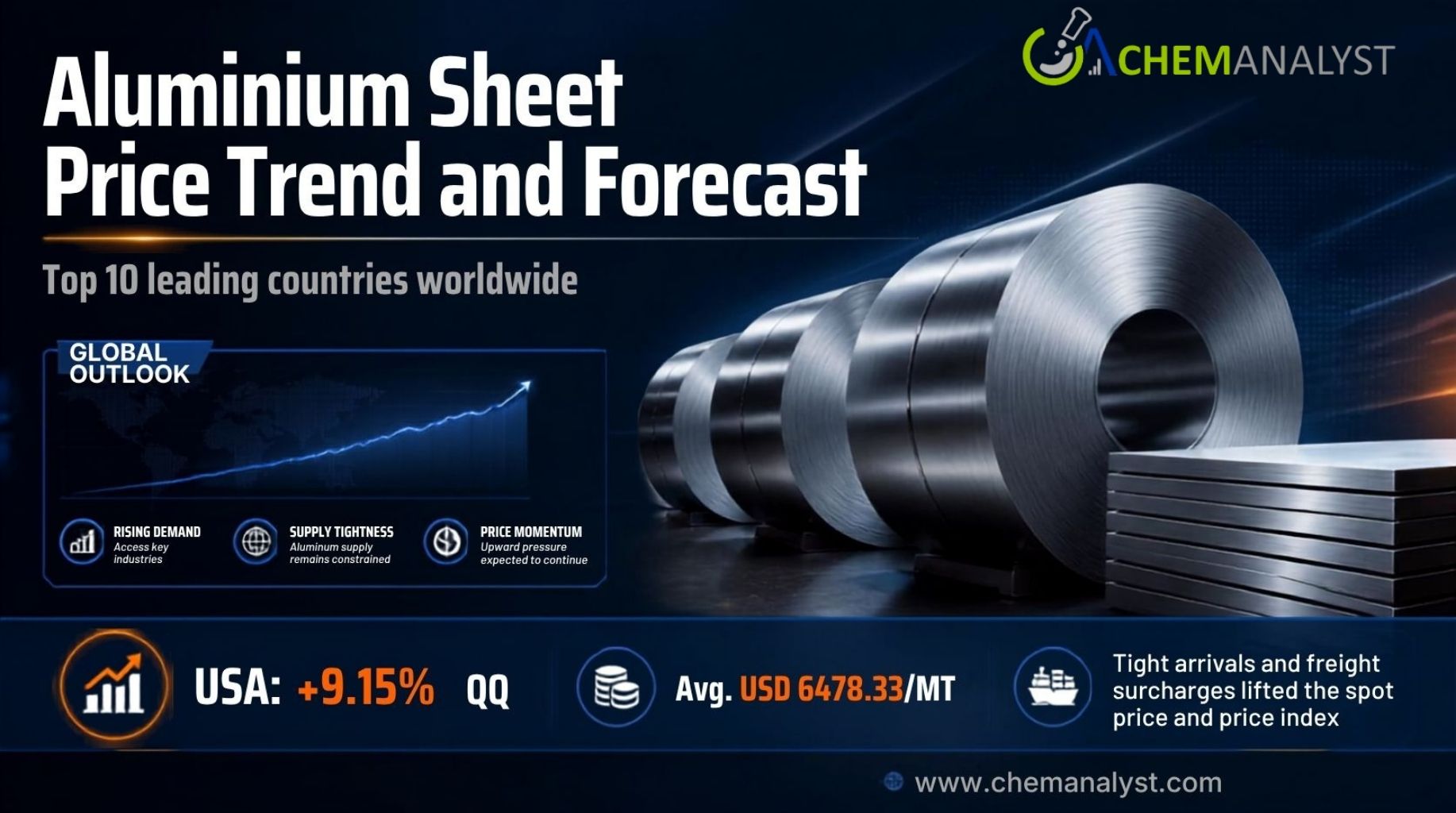
The Aluminium Sheet Price witnessed notable upward momentum across major global markets during the first quarter of 2026 as supply constraints, higher upstream production costs, and tightening inventories supported bullish pricing sentiment. From North America to Asia-Pacific, Europe, and the Middle East, aluminium sheet producers faced increasing cost pressures stemming from elevated primary aluminium prices, logistics challenges, and constrained raw material availability.
According to ChemAnalyst Aluminium Sheet Price: - https://www.chemanalyst.com/Pricing-data/aluminium-sheet-1493
Aluminium sheet remains one of the most widely used semi-finished metal products, serving industries such as automotive, aerospace, construction, packaging, electrical equipment, renewable energy, marine engineering, and consumer appliances. As manufacturing activity strengthened across several economies during Q1 2026, procurement teams experienced higher acquisition costs due to tightening supply conditions and persistent inflationary pressures.
Global Aluminium Sheet Price Overview
The global Aluminium Sheet Price Index recorded consistent quarter-over-quarter gains during Q1 2026. The market was influenced by several macroeconomic and industry-specific factors, including:
Tight global aluminium supply
Higher alumina and energy costs
Trade restrictions and constrained imports
Improved manufacturing demand
Strong infrastructure investments
Rising transportation and logistics expenses
Stable consumption from automotive and construction sectors
Despite regional variations, the overall market sentiment remained positive, with buyers increasing procurement activity amid expectations of further supply tightness.
North America Aluminium Sheet Price Analysis
USA Aluminium Sheet Price Trends
The United States witnessed a significant increase in Aluminium Sheet Price during Q1 2026.
Key Market Statistics
Aluminium Sheet Price Index: +9.15% QoQ
Average Quarterly Price: USD 6,478.33 per metric ton
The price increase primarily resulted from constrained aluminium imports, which tightened domestic availability. Higher costs of primary aluminium, elevated freight expenses, and steady industrial demand further supported the market.
Several downstream industries—including automotive manufacturing, aerospace fabrication, electrical equipment, and commercial construction—continued healthy purchasing activity throughout the quarter.
Domestic rolling mills also experienced higher operating costs due to increased electricity prices and elevated feedstock costs, limiting their ability to expand production rapidly.
Key Drivers
Constrained aluminium imports
Higher raw material costs
Increased production expenses
Strong manufacturing demand
Stable construction activity
Improved industrial output
APAC Aluminium Sheet Price Analysis
Malaysia Aluminium Sheet Price Trends
Malaysia experienced another strong quarter for aluminium sheet pricing.
Key Market Statistics
Aluminium Sheet Price Index: +8.67% QoQ
Average Quarterly Price: USD 3,555 per metric ton
The regional market benefited from constrained supply conditions that reduced material availability across Southeast Asia.
Rolling mills continued operating at healthy utilization rates, although upstream supply limitations prevented inventory replenishment. Export demand also remained supportive, limiting domestic availability.
Malaysia continued benefiting from its position as an important regional aluminium processing hub, supplying construction, packaging, transportation, and industrial equipment manufacturers.
Read the LinkedIn Article: - https://www.linkedin.com/pulse/aluminium-sheet-price-forecast-2026-market-trends-regional-singh-k7oac/
Key Drivers
Constrained regional supply
Healthy export demand
Stable manufacturing activity
Improved downstream consumption
Higher upstream aluminium costs
Europe Aluminium Sheet Price Analysis
Germany Aluminium Sheet Price Trends
Germany recorded the strongest regional price increase among the major markets covered during Q1 2026.
Key Market Statistics
Aluminium Sheet Price Index: +10.8959% QoQ
Average Quarterly Price: USD 14,052 per metric ton delivered
European prices rose sharply due to tightening aluminium supply throughout the region.
Manufacturers continued facing elevated production costs linked to electricity prices, labour expenses, and raw material procurement.
Industrial demand remained resilient across automotive production, engineering applications, machinery manufacturing, and renewable energy infrastructure projects.
Supply chain constraints also reduced market availability, supporting higher transaction prices throughout the quarter.
Key Drivers
Tight aluminium supply
Elevated production costs
Strong industrial demand
Infrastructure investments
Stable manufacturing output
Middle East & Africa Aluminium Sheet Price Analysis
UAE Aluminium Sheet Price Trends
The UAE Aluminium Sheet Price market also strengthened during Q1 2026.
Key Market Statistics
Aluminium Sheet Price Index: +7.85% QoQ
Average Quarterly Price: USD 3,563 per metric ton CFR Jebel Ali
Supply constraints remained the primary catalyst behind rising prices.
The UAE continued serving as an important regional distribution hub, with demand supported by construction, infrastructure, transportation, and industrial manufacturing projects.
Import costs, freight expenses, and steady procurement activity further contributed to higher market prices.
Key Drivers
Supply constraints
Stable industrial demand
Infrastructure expansion
Higher freight costs
Regional trading activity
What Is Driving Aluminium Sheet Prices?
Rising Primary Aluminium Prices
Aluminium sheet manufacturing depends heavily on primary aluminium availability.
Any increase in primary aluminium prices directly impacts rolling mills' production costs, resulting in higher finished sheet prices.
Higher Energy Costs
Aluminium production is highly energy intensive.
Electricity represents one of the largest operating expenses for smelters and rolling facilities. Elevated power prices continued increasing production costs throughout Q1 2026.
Supply Constraints
Limited availability of raw materials, constrained imports, and tighter inventories reduced market supply across multiple regions.
These shortages supported stronger pricing despite moderate improvements in production.
Growing Industrial Demand
Several industries continued purchasing aluminium sheet at healthy rates.
Major consuming industries include:
Automotive manufacturing
Aerospace
Construction
Electrical equipment
Packaging
Marine engineering
Renewable energy
Consumer appliances
Steady industrial production helped maintain positive pricing momentum.
Transportation and Logistics Costs
Shipping expenses remained above historical averages in several trade corridors.
Higher freight rates increased landed costs, especially for import-dependent markets.
Aluminium Sheet Production Process
Understanding production costs helps explain Aluminium Sheet Price movements.
The manufacturing process typically includes:
Bauxite mining
Alumina refining
Primary aluminium smelting
Casting aluminium slabs
Hot rolling
Cold rolling
Heat treatment
Surface finishing
Quality inspection
Packaging and shipment
Each stage contributes to the overall production cost, making the industry sensitive to fluctuations in energy prices, labour costs, and raw material availability.
Industries Driving Aluminium Sheet Demand
Aluminium sheet remains indispensable across multiple industries due to its lightweight properties, corrosion resistance, durability, and recyclability.
Major consumers include:
Automotive
Vehicle manufacturers increasingly use aluminium sheets to reduce vehicle weight, improve fuel efficiency, and support electric vehicle production.
Aerospace
Aircraft manufacturers rely on high-strength aluminium sheets for structural components and lightweight engineering applications.
Construction
Roofing, cladding, curtain walls, architectural panels, and insulation systems continue supporting long-term demand.
Packaging
Food containers, beverage cans, and industrial packaging materials remain major consumption segments.
Renewable Energy
Solar panel frames, wind turbine components, and energy infrastructure projects continue increasing aluminium consumption globally.
Procurement Intelligence for Aluminium Sheet Buyers
Procurement teams should closely monitor several market indicators before making purchasing decisions.
Important indicators include:
Primary aluminium prices
Alumina costs
Regional production capacity
Inventory levels
Import-export policies
Energy prices
Freight rates
Manufacturing activity
Infrastructure spending
Currency fluctuations
Long-term contracts, diversified supplier portfolios, and strategic inventory planning can help organizations reduce procurement risks during periods of price volatility.
Aluminium Sheet Price Forecast
The Aluminium Sheet Price outlook remains cautiously bullish over the coming quarters.
Several factors are expected to influence future pricing:
Bullish Factors
Continued infrastructure investment
Strong manufacturing activity
Growing electric vehicle production
Expanding renewable energy projects
Tight global aluminium supply
Stable aerospace demand
Potential Downside Risks
Improved global aluminium production
Weak industrial demand
Lower energy prices
Easing freight costs
Increased imports
Slower economic growth
Market participants should continue monitoring macroeconomic developments, central bank policies, and global trade conditions that may influence aluminium demand and production costs.
Conclusion
The Aluminium Sheet Price demonstrated strong upward momentum across North America, Asia-Pacific, Europe, and the Middle East during Q1 2026. Constrained imports, tightening supply chains, elevated upstream costs, and resilient demand from key industrial sectors collectively supported higher prices worldwide.
Among the regions analyzed, Germany recorded the strongest quarterly price increase, followed by the United States, Malaysia, and the UAE. As infrastructure development, electric vehicle manufacturing, aerospace production, and renewable energy investments continue expanding, aluminium sheet demand is expected to remain robust.
For procurement professionals, manufacturers, and market participants, closely monitoring raw material costs, energy prices, freight trends, and regional supply conditions will remain essential for navigating future Aluminium Sheet Price fluctuations and securing cost-effective sourcing strategies.
Frequently Asked Questions (FAQs)
What is driving the Aluminium Sheet Price increase in Q1 2026?
The primary drivers include constrained imports, tightening aluminium supply, higher energy costs, elevated raw material prices, and steady demand from construction, automotive, aerospace, and industrial manufacturing sectors.
Which region recorded the highest Aluminium Sheet Price?
Germany recorded the highest average Aluminium Sheet Price during Q1 2026 at approximately USD 14,052.00 per metric ton delivered, reflecting tight supply and elevated production costs.
Why is aluminium sheet important across industries?
Aluminium sheet offers an excellent combination of lightweight performance, corrosion resistance, strength, formability, and recyclability, making it suitable for automotive, aerospace, construction, packaging, marine, and renewable energy applications.
What factors should procurement professionals monitor?
Procurement teams should track primary aluminium prices, alumina costs, energy expenses, freight rates, inventory levels, trade policies, manufacturing activity, and regional supply-demand dynamics to make informed sourcing decisions.
Contact -
Address:
420 Lexington Avenue, Suite 300
New York, NY 10170
United States
Phone: +1 332 258 6602
Website: www.chemanalyst.com
LinkedIn: https://www.linkedin.com/company/chemanalyst/
X (Twitter): https://x.com/chemanalysts
Facebook: https://www.facebook.com/ChemAnalysts/
Comments
Log in or sign up to join the conversation.