

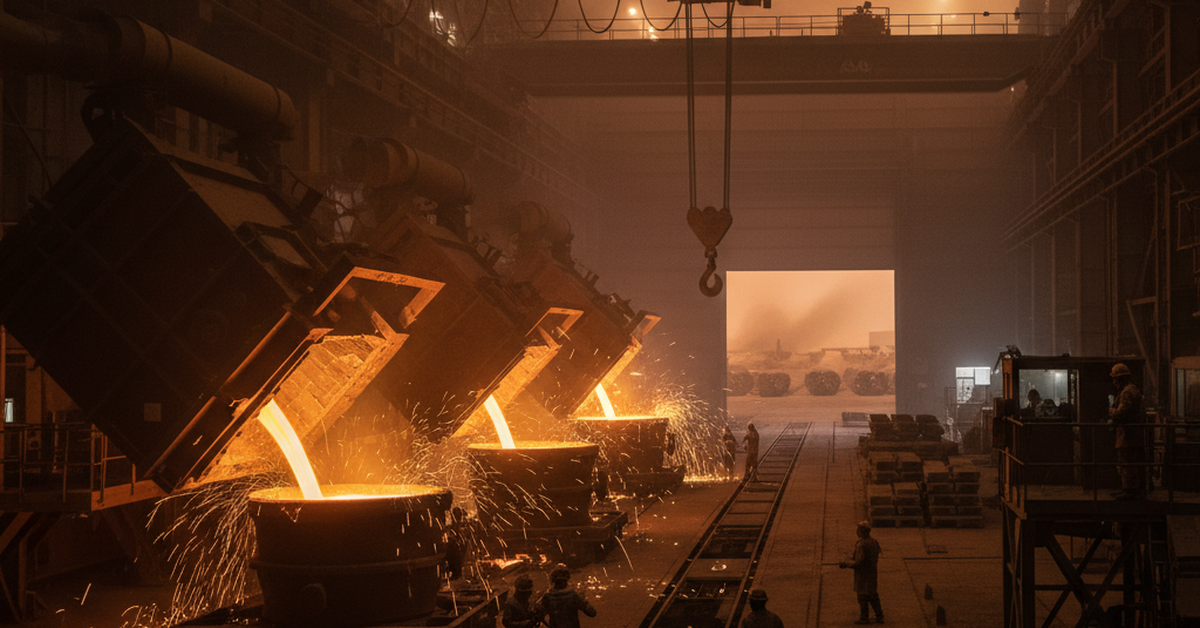
Alcoa (AA) stock jumped as much as 12.8% on Monday after Iranian missile and drone attacks over the weekend struck two of the world's largest aluminum smelters, raising the prospect of a sustained global supply crunch that directly benefits the Pittsburgh-based aluminum giant.
The attacks on March 28 targeted Emirates Global Aluminium's Al Taweelah smelter in the United Arab Emirates and Aluminium Bahrain's facility in Bahrain. Both operations reported significant damage and employee injuries. The Middle East accounts for roughly 9% of global aluminum production, and with the Strait of Hormuz effectively closed to normal traffic, the supply picture tightened overnight.
Aluminum forward contracts surged 4% to 4.8% on the news, reaching near four-year highs. Since the Iran conflict began roughly a month ago, aluminum prices have more than doubled.
Why Alcoa Wins When Rivals Get Hit
EGA and Alba are not just any producers. They are among the lowest-cost, highest-volume aluminum smelters in the world, benefiting from cheap energy and state-backed capital in the Gulf. When facilities of that scale go offline, even partially, the global market feels it immediately.
Alcoa's production is concentrated in the Americas, Australia, and Europe, well outside the conflict zone. That geographic separation means Alcoa faces none of the operational risk while capturing all of the pricing upside. Every dollar aluminum prices rise flows almost directly to the bottom line in Alcoa's upstream smelting and refining business.
Century Aluminum (CENX) and Kaiser Aluminum (KALU) also saw significant gains Monday for the same reason. But Alcoa, as the largest pure-play U.S. aluminum producer, has the greatest leverage to sustained price elevation.
The Analyst Shift
Wall Street was already warming up to Alcoa before today. Multiple analysts turned more constructive on the name in recent weeks, citing improving aluminum demand fundamentals and the company's cost discipline following several years of restructuring. The geopolitical catalyst accelerated a re-rating that was already underway.
Aluminum demand from the electric vehicle sector, aerospace, and construction has been building steadily. Unlike steel, which faces tariff complexity and oversupply from China, aluminum supply is genuinely constrained by energy costs and smelter capacity. Adding Middle East disruptions to an already tight market is a meaningful structural shift, not a one-day blip.
How Long Does This Last?
The bear case is resolution. If Middle East tensions ease, the Gulf smelters repair and restart, and aluminum prices retrace, Alcoa's premium evaporates quickly. The stock has a history of sharp moves in both directions tied to commodity price swings.
But the bull case is duration. Smelter repairs take months, not days. The Strait of Hormuz disruption has broader effects on LNG and energy flows that are not resolved overnight. And if aluminum has genuinely re-priced to a higher structural level after years of being suppressed by cheap Gulf production, the earnings power Alcoa demonstrated today could persist well into 2026.
Bottom Line
Alcoa is the clearest direct beneficiary of the Middle East aluminum supply shock, and today's move reflects that. For investors who believe the conflict and its supply chain effects are not resolved quickly, AA offers leveraged exposure to elevated aluminum prices with a blue-chip balance sheet behind it.
The risk is a faster-than-expected resolution. The reward is a company printing cash at prices it has not seen in years, with analysts already turning bullish before this week's catalyst landed.

Comments
Log in or sign up to join the conversation.