
Airport parking shuttle services play an important role in connecting travelers with terminals, especially when passengers park at remote or off-site lots. A well-planned Airport Parking Shuttle Charter Bus service can improve passenger convenience, reduce congestion, and create a smoother connection between parking facilities and airport terminals. For operators, however, successful shuttle transportation requires careful planning around vehicle selection, scheduling, staffing, safety, accessibility, and airport-specific operating requirements.
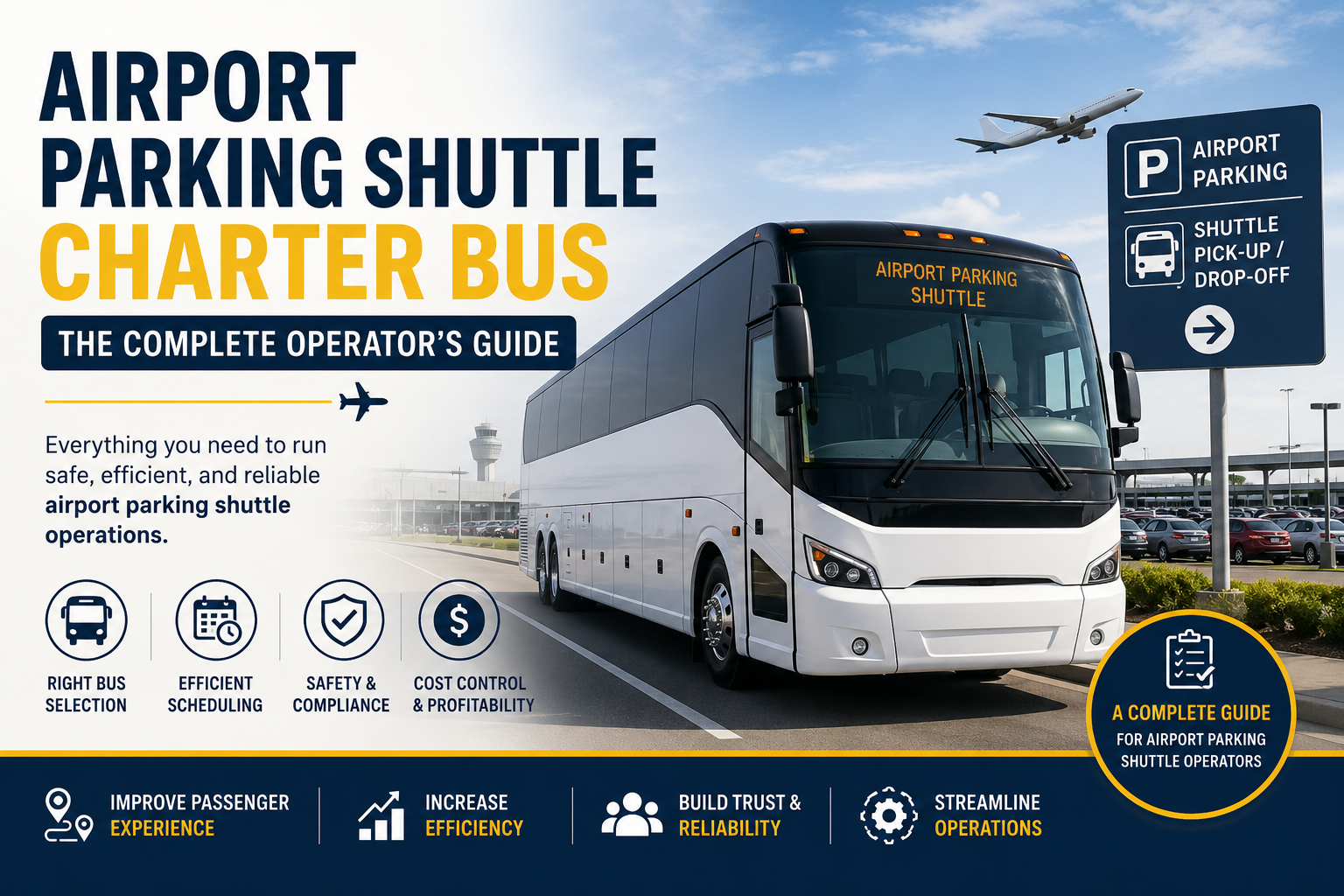
What Is an Airport Parking Shuttle Charter Bus?
An airport parking shuttle transports passengers between parking facilities and airport terminals. The service may operate on a fixed schedule, frequent loop, or demand-responsive basis depending on the airport and parking facility.
Airport parking systems commonly use shuttle buses to move travelers from designated parking areas directly to terminals. Transportation research also notes that airport parking shuttles may operate on scheduled or on-demand routes, with some services stopping at designated locations within parking facilities.
Why Reliable Shuttle Operations Matter
Passengers often have luggage, tight flight schedules, children, or mobility needs. Delayed or infrequent shuttle service can create unnecessary stress and potentially cause travelers to miss important airport deadlines.
For operators, the goal should be a predictable service with clear pickup locations, reasonable wait times, efficient routes, and consistent communication.
Choosing the Right Charter Bus
Vehicle selection should be based on passenger volume, route length, luggage requirements, accessibility needs, and operating conditions. Larger parking operations may require full-size buses, while smaller facilities can often use minibuses or shuttle vehicles.
Some airport transportation providers offer fleets ranging from small passenger vehicles to buses accommodating more than 50 passengers, allowing operators to match vehicle capacity with demand.
Consider Luggage and Accessibility
Airport passengers typically carry suitcases, backpacks, carry-on bags, and other personal belongings. The selected vehicle should provide enough space for passengers to board without creating crowded aisles or obstructing exits.
Accessibility is equally important. Operators should determine whether their shuttle fleet can accommodate passengers using wheelchairs or other mobility aids and verify the applicable airport and transportation requirements.
Create an Efficient Shuttle Schedule
A successful Airport Parking Shuttle Charter Bus operation depends on efficient scheduling. Operators should analyze passenger demand by time of day, flight schedules, parking occupancy, and seasonal travel patterns.
During peak periods, additional vehicles may be necessary to reduce passenger wait times. During quieter periods, operators can adjust service frequency to avoid unnecessary operating costs.
Plan Pickup and Drop-Off Locations
Clear pickup and drop-off locations are essential. Airport rules may specify exactly where commercial and charter buses can load and unload passengers.
For example, Chicago O'Hare currently directs non-scheduled charter buses to designated commercial lanes rather than its Multi-Modal Facility, demonstrating why operators must verify current airport-specific procedures before operating.
Understand Airport Operating Requirements
Every airport can establish its own rules for ground transportation providers. These requirements may cover permits, insurance, vehicle standards, driver credentials, designated routes, pickup zones, operating hours, and access procedures.
Operators should review the airport's current ground transportation requirements before launching or modifying a shuttle service. Airport parking contracts can also establish specific requirements for shuttle routes, schedules, operating standards, and service levels.
Maintain Strong Communication
Drivers and dispatch teams should have reliable communication throughout the operating day. Dispatchers can monitor vehicle locations, respond to passenger demand, coordinate additional buses, and communicate service changes.
Clear signage and passenger instructions are also valuable because travelers may be unfamiliar with parking facilities and airport terminals.
Focus on Safety and Vehicle Maintenance
Safety should remain a central part of every airport shuttle operation. Vehicles should receive appropriate inspections and preventive maintenance, while drivers should be properly qualified for the vehicles they operate.
Operators should also establish procedures for mechanical problems, traffic delays, weather disruptions, passenger incidents, and other unexpected situations.
Prepare for Peak Travel Periods
Holiday weekends, summer vacations, major sporting events, and other high-travel periods can significantly increase parking and shuttle demand. Operators should review historical demand and prepare additional vehicles and drivers when necessary.
A flexible fleet can help maintain service levels when passenger volumes suddenly increase.
Technology Can Improve Shuttle Operations
Modern shuttle programs can benefit from technology such as GPS vehicle tracking, digital signage, passenger information systems, reservation platforms, and operational reporting.
Technology can help operators monitor vehicle performance, identify delays, analyze passenger demand, and improve scheduling. Large transportation programs may also use centralized customer support and data reporting to monitor driver performance and service quality.
Final Thoughts
An effective Airport Parking Shuttle Charter Bus Rentals operation requires more than simply providing vehicles. Operators need the right fleet, trained drivers, efficient schedules, accessible transportation, clear pickup locations, strong communication, and compliance with airport-specific requirements.
By studying passenger demand, planning routes carefully, maintaining vehicles, preparing for peak periods, and using appropriate technology, operators can create a dependable shuttle service that connects parking facilities with airport terminals efficiently and provides travelers with a smoother start and finish to their journeys.
Comments
Log in or sign up to join the conversation.