

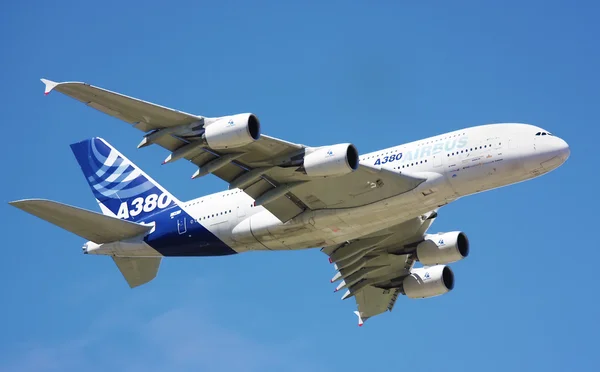
Air Canada and Airbus (AIR) announced a series of initiatives aimed at scaling the sustainable aviation fuel industry in Canada, including plans to establish a jointly funded Sustainability Co-Investment Platform, aimed at supporting a commercial-scale Sustainable Aviation Fuel (SAF) industry in Canada.
Under the initiative, the companies said that they will invest up to approximately CAD$13.7 million (US$10 million), through the platform, which they added “can serve as a catalyst for the broader Canadian SAF ecosystem.”
Fuel accounts for the vast majority of the aviation sector’s emissions. Generally produced from sustainable resources, like waste oils and agricultural residues, SAF is seen as one of the key tools to help decarbonize the aviation industry, with lifecycle GHG emissions substantially lower than conventional fuels. Efforts to meaningfully increase the use of SAF by airlines face significant challenges, however, including the low supply currently available on the market, and prices well above those of conventional fossil-based fuels.
One of the key focus areas of the new collaboration is the acceleration of a jointly agreed Canadian SAF project toward a Final Investment Decision (FID). The companies said tat while they intend to drive the investment, they plan to continue engagement with government partners to establish the right structural frameworks to support SAF production to emerge at scale in Canada.
Valerie Durand, Vice President, Airport Affairs, Corporate Real Estate and Sustainability at Air Canada, said:
“Air Canada is proud to help advance aviation’s energy transition in Canada. Through this joint initiative with Airbus, we are taking meaningful steps toward supporting domestic SAF production, helping corporate customers address the emissions associated with business travel, and contributing to a lower-carbon path for the industry. With continued industry collaboration and a supportive policy environment, we are confident this momentum can accelerate.”
The initiatives also include a new agreement between the companies through Air Canada’s Leave Less Travel Program, which enables corporate customers and cargo freight forwarders to purchase Scope 3 environmental attributes associated with SAF or carbon offset credits related to their own business air travel or cargo shipments.
Airbus has signed a five-year agreement under the program and will purchase SAF environmental attributes associated with more than 60,000 litres of SAF for its initial allocation. Air Canada will track Airbus’ greenhouse gas (GHG) emissions associated with their corporate travel and remove verified SAF environmental attributes on the company’s behalf.
Julie Kitcher, Chief Sustainability Officer and Communications at Airbus, said:
“By launching this co-investment platform and making a long-term commitment to Air Canada’s Leave Less Travel Programme, we will help to stimulate the production of, and demand for, SAF in Canada.”
Air Canada’s sustainability goals, announced by the company in 2021, include a commitment to achieve net-zero greenhouse gas emissions (GHG) throughout its global operations by 2050, along with interim targets to achieve 20% GHG net reductions from flights plus 30% GHG net reductions from ground operations by 2030. The airline has also pledged to invest $50 million in SAF and carbon reductions and removals.
Comments
Log in or sign up to join the conversation.