

In today's fast-paced digital environment, organizations are constantly looking for ways to improve productivity, reduce operational costs, and streamline business processes. One of the most effective technologies helping businesses achieve these goals is AI Workflow Automation. By combining artificial intelligence with workflow management, organizations can automate operations, eliminate repetitive tasks, and improve overall efficiency.
As businesses generate more data and manage increasingly complex processes, traditional manual workflows often become bottlenecks. AI-powered automation provides a smarter approach by enabling systems to make decisions, process information, and execute tasks with minimal human intervention.
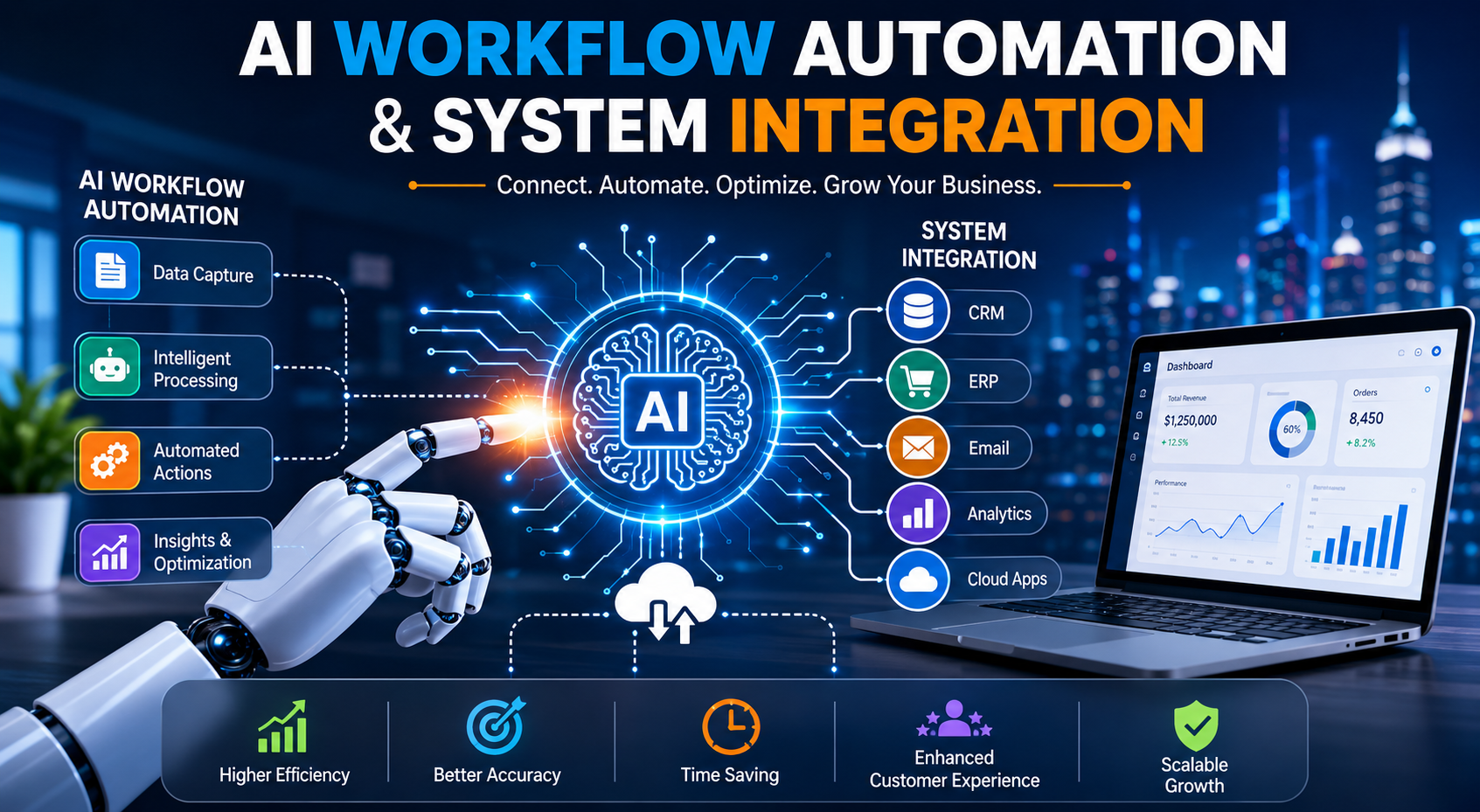
What Is AI Workflow Automation?
AI Workflow Automation refers to the use of artificial intelligence technologies to automate business workflows and operational processes. Unlike traditional automation, which follows predefined rules, AI-driven systems can learn from data, identify patterns, and make intelligent decisions.
These systems can handle tasks such as data entry, document processing, customer support, approval workflows, inventory management, and reporting. By leveraging machine learning, natural language processing, and predictive analytics, businesses can automate operations that previously required significant manual effort.
The result is a more agile, efficient, and scalable organization capable of responding quickly to changing business needs.
Why Businesses Are Adopting AI Workflow Automation
Organizations across industries are embracing AI Workflow Automation because it offers measurable improvements in efficiency and productivity. Businesses often face challenges such as repetitive administrative work, delays in approvals, data inaccuracies, and resource constraints.
AI automation helps solve these issues by:
Reducing manual and repetitive tasks
Improving process accuracy
Accelerating decision-making
Enhancing employee productivity
Lowering operational costs
Increasing workflow visibility
Supporting business scalability
When companies automate operations, employees can focus on strategic activities instead of spending valuable time on routine tasks.
Key Components of AI Workflow Automation
Successful AI Workflow Automation solutions typically combine several technologies that work together to streamline processes.
Machine Learning
Machine learning enables systems to learn from historical data and improve performance over time. This allows workflows to become more intelligent and adaptive.
Natural Language Processing (NLP)
NLP helps systems understand and process human language. Businesses use it for tasks such as email classification, customer service automation, document analysis, and chatbot interactions.
Predictive Analytics
Predictive analytics uses historical data to forecast future outcomes. Organizations can use these insights to optimize workflows and make proactive decisions.
Intelligent Process Automation
This combines AI technologies with traditional automation tools to create end-to-end automated workflows capable of handling both structured and unstructured data.
How AI Workflow Automation Helps Automate Operations
One of the biggest advantages of AI Workflow Automation is its ability to automate operations across multiple business functions.
Customer Service
AI-powered systems can automatically respond to customer inquiries, route support tickets, and provide instant assistance through virtual agents. This reduces response times and improves customer satisfaction.
Human Resources
HR departments use AI to automate resume screening, employee onboarding, attendance management, and performance tracking. This helps HR teams focus on employee engagement and talent development.
Finance and Accounting
Financial workflows often involve repetitive tasks such as invoice processing, expense approvals, and report generation. AI can automate operations in these areas while reducing errors and ensuring compliance.
Supply Chain Management
AI helps organizations optimize inventory levels, forecast demand, track shipments, and identify potential disruptions. Automated workflows improve efficiency throughout the supply chain.
Sales and Marketing
Marketing teams use AI to automate lead scoring, campaign management, customer segmentation, and personalized communication. Sales teams benefit from automated follow-ups and customer insights.
Benefits of AI Workflow Automation
The growing popularity of AI Workflow Automation is driven by the significant benefits it delivers to organizations.
Increased Efficiency
Automated workflows complete tasks faster than manual processes, reducing delays and improving productivity.
Improved Accuracy
AI systems minimize human errors by consistently following defined processes and analyzing data with precision.
Cost Reduction
When businesses automate operations, they can reduce labor-intensive activities and lower operational expenses.
Better Decision-Making
AI provides real-time insights and predictive recommendations that help leaders make informed business decisions.
Enhanced Scalability
As organizations grow, automated workflows can handle increased workloads without requiring proportional increases in staffing.
Employee Satisfaction
Removing repetitive tasks allows employees to focus on creative, strategic, and value-driven work, leading to higher job satisfaction.
Challenges to Consider
While AI Workflow Automation offers numerous benefits, businesses should also be aware of potential challenges.
Data Quality
AI systems rely on accurate data. Poor-quality data can negatively impact workflow performance and decision-making.
Change Management
Employees may need training and support to adapt to new automated processes.
Integration Complexity
Organizations often need to integrate AI tools with existing business systems, which may require careful planning and technical expertise.
Security and Compliance
Automated workflows must comply with industry regulations and protect sensitive business information.
Addressing these challenges through proper planning can significantly improve implementation success.
The Future of AI Workflow Automation
The future of AI Workflow Automation is expected to be even more transformative. Advances in artificial intelligence will enable workflows to become increasingly autonomous, intelligent, and adaptive.
Future systems may be capable of analyzing business objectives, recommending process improvements, and automatically adjusting workflows based on changing conditions. Generative AI, advanced analytics, and real-time decision engines will further expand automation capabilities across industries.
As organizations continue their digital transformation journeys, the demand for intelligent automation solutions will grow rapidly.
Conclusion
AI Workflow Automation is reshaping how businesses operate by helping organizations automate operations, improve efficiency, and reduce manual workloads. From customer service and human resources to finance and supply chain management, AI-powered workflows deliver measurable business value across departments.
As technology continues to evolve, organizations that embrace AI Workflow Automation will be better positioned to enhance productivity, optimize resources, and remain competitive in an increasingly digital marketplace. By strategically implementing intelligent automation, businesses can create smarter workflows, achieve operational excellence, and unlock new opportunities for growth.
Comments
Log in or sign up to join the conversation.