

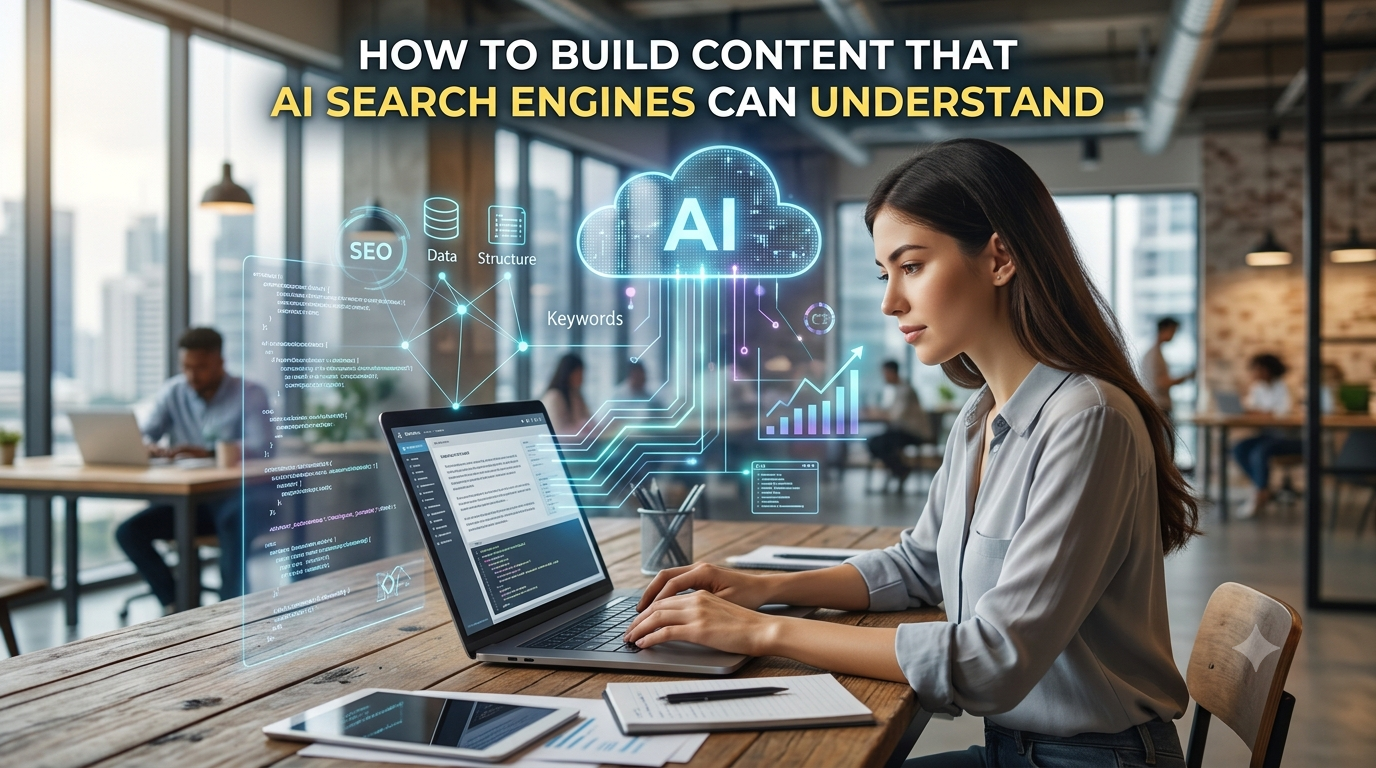
Search is no longer limited to typing a keyword, scanning blue links, and choosing a website. For businesses investing in a Digital Marketing Company, the bigger challenge in 2026 is being visible when users ask complex questions and expect an immediate, AI-generated answer. This shift matters even more in India, where digital advertising reached ₹947 billion in 2025, growing 26% year over year and accounting for 63% of total advertising revenue, according to the FICCI-EY report.
Google has also changed how people search. AI Overviews are driving more than a 10% increase in Google usage for the types of queries where they appear in major markets including India, while AI Mode has been rolled out in India with conversational, multimodal and follow-up search capabilities.
For marketers, therefore, the question is no longer AI search vs Google Search. The real question is how to optimize a brand for both.
How AI Search Is Changing Google Search
Traditional Google Search primarily matches a user's query with relevant indexed webpages and ranks those pages according to multiple signals.
AI-powered Search adds another layer. Instead of simply presenting results, Google's AI experiences can synthesize information from multiple sources and provide a conversational response with links to supporting webpages.
Traditional Search vs AI-Powered Search
Traditional search typically works like this:
User enters a keyword.
Google displays relevant search results.
The user compares titles and descriptions.
They visit selected websites.
The website attempts to convert the visitor.
AI-powered search introduces a different journey:
User asks a detailed or conversational question.
AI interprets the context and intent.
A synthesized response is generated.
Supporting websites may be cited or linked.
The user can continue with follow-up questions.
Commercial research can happen across multiple conversational steps.
Google says AI Overviews and AI Mode are designed to help users ask longer and more complex questions while still connecting them with relevant websites.
Why This Matters for Indian Businesses
The change is particularly relevant for Indian businesses competing for local and commercial searches.
Google reported that AI Overviews are already increasing usage for relevant query types by more than 10% in India and the US. Meanwhile, India's digital advertising market grew strongly in 2025, showing how important digital discovery has become for businesses.
This means businesses cannot rely only on traditional rankings. Their content needs to be useful enough to appear in conventional search results while also providing information that AI systems can understand, summarize and potentially reference.
For example, a user searching for “best digital marketing services for a Kolkata-based retail business” may no longer follow a simple keyword-to-page journey. They may ask about pricing, services, experience, local expertise and expected outcomes through several follow-up searches.
That makes search intent, topical authority, structured information and trustworthy content increasingly important.
What Marketers Should Change in 2026
1. Optimize for Questions, Not Just Keywords
Keyword targeting still matters, but content should be built around the questions behind those keywords.
Instead of creating separate pages around minor keyword variations, marketers should answer related commercial questions within a well-structured topic.
For example, a service page can address:
What does the service include?
Who needs it?
How does the process work?
What should businesses check before hiring a provider?
What results can realistically be expected?
Which factors affect cost?
How can performance be measured?
This approach supports both conventional SEO and answer-focused search experiences.
2. Build Strong Topical Authority
AI systems need reliable information to understand what a business does and whether its content is relevant.
A strong website should therefore demonstrate expertise through:
Detailed service pages
Supporting blogs
Industry-specific content
Case studies
FAQs
Author information
First-hand experience
Consistent business information
Relevant internal links
For local businesses, an SEO Company Kolkata can also strengthen location relevance by developing useful content around local customer needs rather than simply repeating “Kolkata” throughout every page.
3. Make Content Easy to Extract and Understand
AEO becomes particularly useful here.
Important answers should not be buried inside large blocks of text. They should be presented clearly with descriptive headings, short paragraphs, lists, definitions and direct answers.
For instance, instead of spending 300 words explaining what a service does, provide a concise answer first and then explain the details underneath.
This makes the content useful for both human readers and AI-powered search systems.
Does SEO Still Matter With AI Search?
Yes. AI search does not eliminate SEO; it changes what effective SEO needs to achieve.
Google has stated that it continues to send billions of clicks to websites and that overall organic click volume has remained relatively stable year over year in its reported data. It also reported that clicks from AI-powered search can be higher quality because users often visit websites when they want to investigate a topic further, explore options or make a purchase.
Therefore, traditional SEO fundamentals remain important:
Technical accessibility
Search intent alignment
Helpful content
Internal linking
Page experience
Relevant backlinks
Clear site architecture
Local SEO
Strong brand signals
However, content should now be created with AI visibility, citations and conversational discovery in mind as well.
How a Digital Marketing Agency Should Adapt
A modern digital marketing agency in Kolkata should not treat SEO, content marketing, local SEO, paid advertising and AI search optimization as completely separate activities.
Instead, these channels should work together.
For example, a business can use:
SEO to capture high-intent organic searches
Local SEO to strengthen visibility in location-based searches
Content marketing to establish topical authority
AEO to answer decision-oriented questions
GEO to improve visibility across generative search experiences
Google Ads to capture immediate commercial demand
Social media to strengthen brand recognition
Conversion optimization to turn qualified visitors into enquiries
Google itself has highlighted the growing role of AI in discovery and decision-making, including AI Overviews, AI Mode and multimodal search.
The objective, therefore, should be broader than ranking for one keyword. It should be building a brand that search engines and AI systems can understand and users can trust.
What Should Marketers Measure in 2026?
Rankings should no longer be the only SEO KPI.
A stronger measurement framework should include:
Organic qualified traffic
Conversion rate
Lead quality
Branded search growth
Local visibility
Featured snippets and AI search visibility
Search impressions
Click-through rate
Assisted conversions
Engagement with high-intent pages
Mentions or citations across relevant AI search experiences
This gives marketers a clearer picture of whether search visibility is actually contributing to business growth.
Final Takeaway
The shift toward AI-powered search does not make Google Search obsolete. Instead, Google Search itself is becoming more conversational, contextual and AI-driven.
Businesses that continue relying only on exact-match keywords and traditional rankings may find it harder to compete. Those that combine SEO, AEO, GEO, useful content, strong brand signals and conversion-focused strategy will be better positioned for the changing search journey.
For businesses reviewing their 2026 search strategy, working with an experienced Digital Marketing Company can help connect traditional SEO with AI-focused visibility while keeping the strategy centred on measurable business outcomes.
FAQs
1. Is AI Search replacing traditional Google Search?
No. AI features are being integrated into Google Search rather than completely replacing conventional results. Users can still access webpages and traditional search results alongside AI-generated responses.
2. Should businesses still invest in SEO in 2026?
Yes. SEO remains important because AI-powered search still relies on information from the web and provides links to relevant sources. Strong technical SEO, useful content and authority continue to support online visibility.
3. What is the difference between GEO and traditional SEO?
SEO primarily focuses on improving visibility in search engines, while GEO focuses on making a brand and its content more understandable and reference-worthy within generative AI search experiences.
4. How can a business prepare its website for AI search?
Start with technically accessible pages, clear site structure, original expertise, trustworthy information, direct answers to relevant questions, strong internal linking and content that addresses real customer decision-making needs.
5. Will AI Search reduce website traffic?
Not necessarily. Google reports that overall organic click volume has remained relatively stable and says clicks from AI-powered search can be higher quality for certain searches. However, traffic patterns and the types of queries generating visits are likely to continue changing.
Comments
Log in or sign up to join the conversation.