

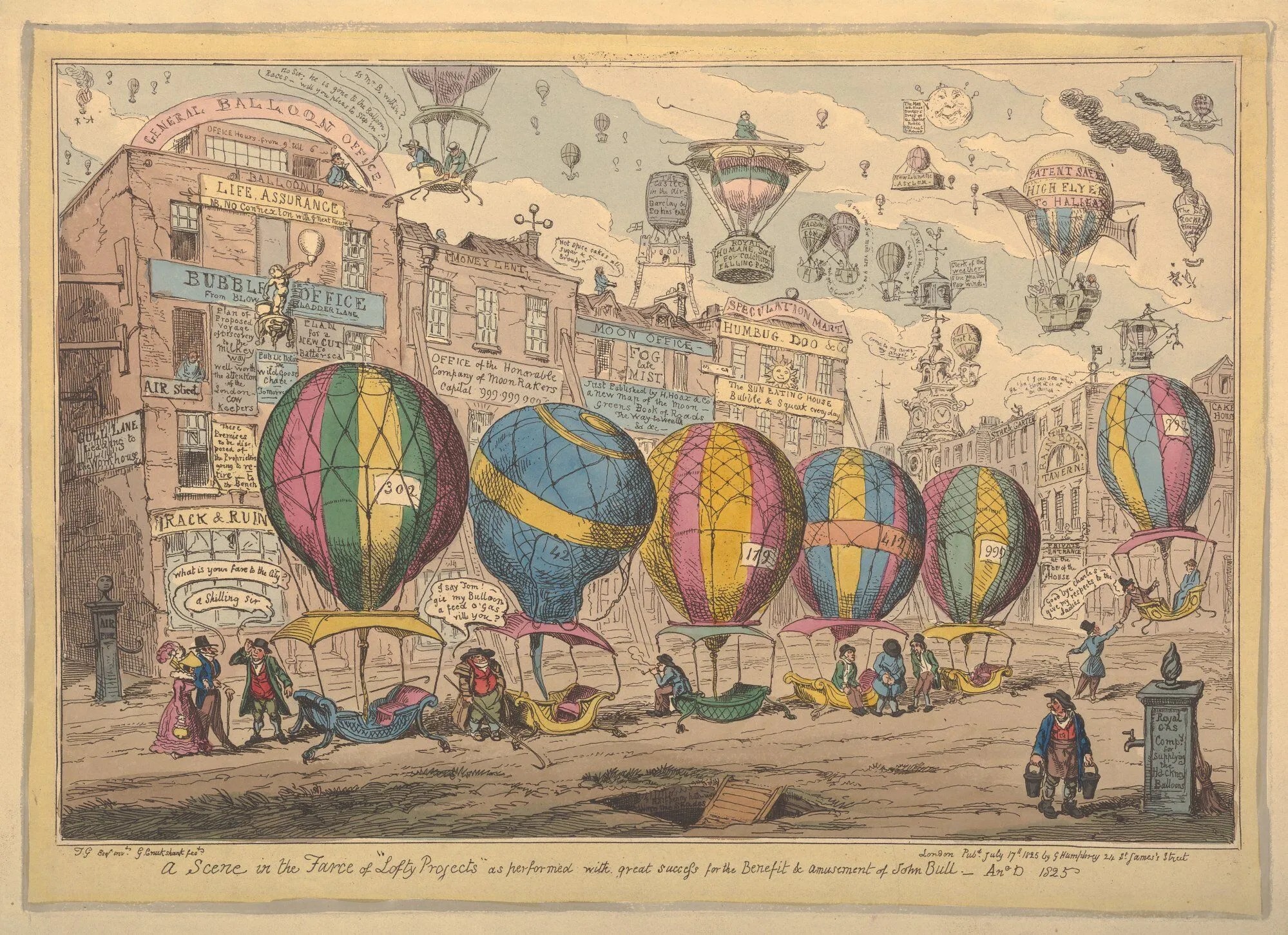
Below are some of the most interesting things I came across this week.
CHART
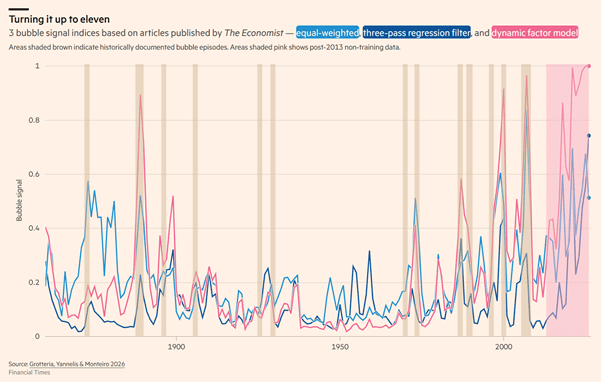
It’s popular to say that financial bubbles can only be identified well after the fact. But FT Alphaville highlights a study that shows the media, in aggregate, is actually pretty good at spotting bubbles in real time. “Almost every time these lines have ticked above 50 per cent, it has coincided with a historically recognised bubble, which has, before too long, popped.”
CHART
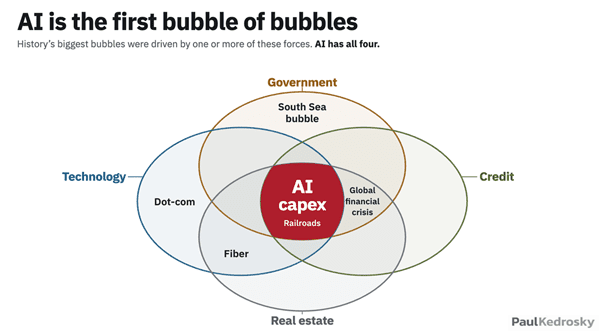
As Paul Kedrosky notes, ‘The current moment is unusual in that is at the intersection of all four bubbleish forces, having credit, government, real estate, and technology drivers. But this feedback loop also makes the current moment uniquely fragile.’
STAT
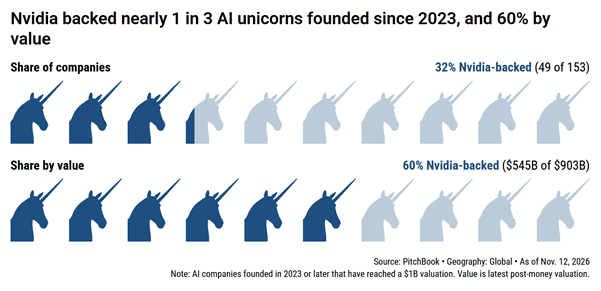
What changed recently is that the AI Bubble lost its circular financing engine. Pitchbook reports, “For years, the AI world has benefited from a cash machine like no other. Nvidia (NVDA), whose chips power much of the more than $1 trillion expected to flow into AI this year, has used its windfalls to rain down capital on every conceivable piece of the AI value chain.”
LINK
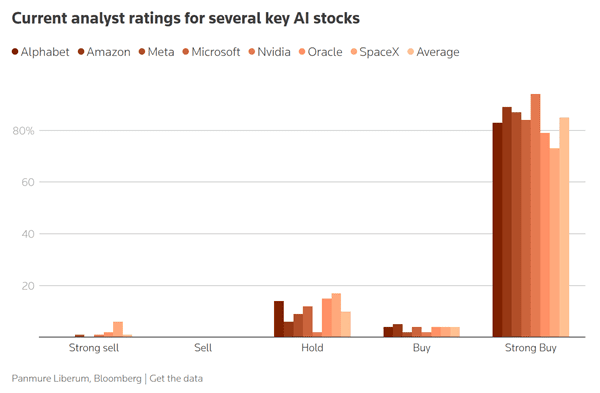
Wall Street analysts remain resolutely bullish. But, as Joachim Klement points out, “Wall Street analysts were overwhelmingly bullish at the peak of the 1990s tech bubble and on the eve of the 2008 global financial crisis.”
LINK
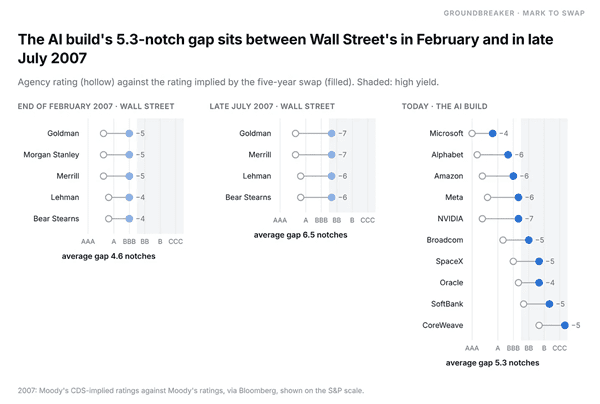
Ratings agencies, too, remain sanguine about the creditworthiness of the major AI players in spite of credit markets signaling otherwise. But they were just as sanguine about the major banks in the lead up to the Great Financial Crisis. To paraphrase Groundbreaker, ‘Every major AI lessee and guarantor’s market-implied credit rating sits four to seven notches below its agency rating, 5.3 on average. Wall Street’s broker-dealers showed the same gap in 2007.’



Comments
Log in or sign up to join the conversation.