

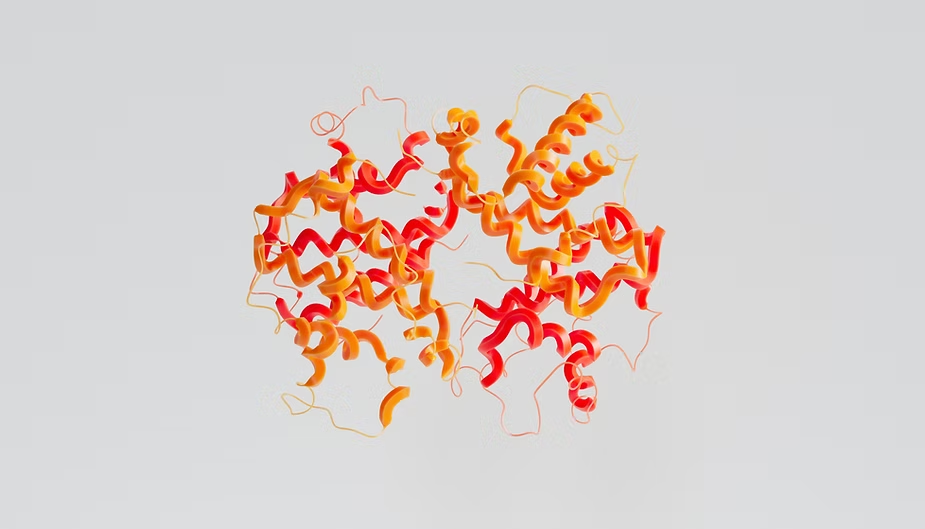
AI in Pharma: Separating Proven Results from Promising Platforms
AlphaFold won a Nobel Prize, Insilico published Phase IIa data, and Isomorphic Labs hasn't dosed a patient yet — a clear-eyed look at what AI drug discovery has actually delivered so far
Key Takeaways
• AI in pharma breaks down into three distinct technical steps — target identification, structure prediction, and molecule generation — each at a different stage of scientific maturity.
• AlphaFold's 2024 Nobel Prize recognized a fifty-year scientific breakthrough in protein structure prediction, not a proven drug-discovery track record.
• Insilico Medicine's rentosertib remains the field's clearest published clinical proof-of-concept, with positive Phase IIa results for idiopathic pulmonary fibrosis published in Nature Medicine in June 2025.
• Isomorphic Labs, the AlphaFold-based platform with roughly three billion dollars in pharma partnerships including Eli Lilly (LLY), Novartis (NVS), and Johnson & Johnson (JNJ), has yet to dose a single patient as of mid-2026.
• Proprietary data matters most in molecule generation (Step 3); target identification and structure prediction can run on public data alone.
• AI-discovered drugs appear to progress through clinical phases at roughly the same odds as traditional drugs, but reach those phases far faster — comparable success rates with substantially more shots on goal per dollar and year.
• This article focuses on drug discovery specifically; a companion piece covers AI's role in clinical trial design and pharmaceutical manufacturing, where regulatory acceptance is arguably further along.
Three Steps, Three Different Technologies
“AI in drug discovery” is often discussed as a single trend, but it actually describes three separate technical problems, each solved by a different kind of AI model and each at a different stage of proof.
Step | What It Does | Input Data Required | AI Model / Tool Example | Output |
1. Target Identification | Mines genetic, omics, and literature data to find which protein is driving a disease | Omics data, diseased-vs-healthy comparisons, genetic studies, literature & patents | NLP / literature-mining tools, knowledge-graph platforms | Shortlist of candidate disease-associated proteins |
2. Structure Prediction | Predicts a target protein's 3D shape and whether it has a usable binding pocket | Amino acid sequence + evolutionary/homologous sequences (UniProt); models trained on ~200,000 PDB structures | AlphaFold (1/2/3), ESMFold, RoseTTAFold, OpenFold3 | Predicted 3D structure with confidence score; druggability assessment |
3. Molecule Generation | Designs and ranks candidate drug molecules to fit the target's binding pocket | Target pocket shape, chemical compound libraries, binding-affinity and toxicity/ADMET data | Chemistry42 (Insilico), IsoDDE (Isomorphic) | Ranked candidate molecules optimized for fit, safety, and pharmacokinetics |
Table 1: The three-step AI drug discovery workflow.
Step | Traditional Timeline | AI-Assisted Timeline | Role of Proprietary Data |
1. Target Identification | Months to years | Days to weeks | Optional — internal assay data and disease models improve results but aren't required |
2. Structure Prediction | Months to years per protein (X-ray/cryo-EM); many proteins never solved | Seconds, via AlphaFold | Optional — proprietary structural data (e.g., AbbVie (ABBV)/J&J contributions to OpenFold3) fine-tunes accuracy |
3. Molecule Generation | 2–4 years for hit-to-lead | As little as 21 days | Essential — a company's history of binding, toxicity, and animal-test results is the main competitive differentiator |
Table 2: Timeline compression and data requirements by step.
The pattern across both tables: the step with the most dramatic theoretical speed-up — structure prediction — is also the step furthest from producing a clinical result, and the step that runs fine on public data alone. The step with the smallest headline number — molecule generation — is both where proprietary data matters most and where the field's one real clinical success story originated.
AlphaFold's Nobel Prize vs. Its Drug Pipeline
In 2024, Demis Hassabis and John Jumper shared the Nobel Prize in Chemistry with David Baker for AlphaFold, which solved a fifty-year-old open problem in structural biology: predicting a protein's 3D shape from its amino acid sequence alone. The AlphaFold database now covers roughly 200 million predicted protein structures, essentially the full known proteome.
DeepMind's drug discovery spinout, Isomorphic Labs, was built specifically to commercialize this breakthrough — yet as the company landscape table below shows, it remains the only major platform with no clinical-stage candidate at all.
The Company Landscape: Who's Actually in the Clinic
Company | Platform / Approach | Primary Step | Clinical Stage | Key Data Point |
Insilico Medicine | Chemistry42 generative chemistry | Step 3 | Phase IIa published (rentosertib) | +98.4 mL FVC vs. -20.3 mL (placebo); Nature Medicine, June 2025; $293M Hong Kong IPO; up to $100M Lilly deal; Phase 3 targeted mid-2027 |
Recursion Pharmaceuticals (RXRX) | Phenomics + generative chemistry | Step 3 | Phase 1/2 (REC-4881) | 75% of patients with reduced polyp burden; 82% durable response at week 25, in familial adenomatous polyposis |
Exscientia (EXAI) | Generative chemistry | Step 3 | Discontinued after Phase 1 (DSP-1181) | Reached Phase 1 in 12 months (vs. typical 5 years) after screening only 350 compounds; discontinued post-Phase 1 |
Isomorphic Labs | AlphaFold-based structure prediction + IsoDDE | Steps 2–3 | Preclinical; Phase 1 expected end of 2026 | 17 active programs; ~$3B in partnerships with Lilly, Novartis, and J&J; IsoDDE claims 2x AlphaFold 3 accuracy on novel systems |
Table 3: Major AI drug discovery platforms and their clinical status as of mid-2026.
The pattern: every company with a clinical-stage result — Insilico, Recursion, Exscientia — built its program primarily around Step 3 (molecule generation). Isomorphic, the platform most associated with Step 2 (the Nobel-Prize-winning piece), is also the only one without a clinical candidate. This isn't evidence the structure-prediction approach failed — Isomorphic is younger than Insilico by roughly seven years — but it does mean media attention and clinical proof are currently pointed in opposite directions.
The One Real Success Story — and the Pipeline Behind It
Rentosertib (ISM001-055) is an oral small-molecule inhibitor of TNIK, a kinase implicated in lung fibrosis, generated by Insilico's Chemistry42 platform in 21 days. In a 71-patient, double-blind Phase IIa trial published in Nature Medicine in June 2025, the 60 mg daily dose group showed a mean lung function improvement of 98.4 mL FVC versus a 20.3 mL decline on placebo, with significant reductions in profibrotic biomarkers. It is the first drug with a fully AI-designed target and compound to receive a USAN name.
Zooming out from this one case to the full industry pipeline, the question becomes whether AI-discovered drugs as a group are progressing through trials at a healthy rate — or whether the lack of approvals so far is a red flag.
Stage | AI-Discovered Drugs (count) | AI Pipeline Transition Ratio | Traditional Industry Benchmark |
Phase 1 | 94 | — | — |
Phase 2 | 56 | ~60% (Phase 2 / Phase 1) | ~63% (Phase 1 → Phase 2) |
Phase 3 | 15 | ~27% (Phase 3 / Phase 2) | ~31% (Phase 2 → Phase 3) |
FDA Approved | 0 | — | <10% of all Phase 1 entrants eventually approved, industry-wide |
Table 4: AI drug discovery pipeline (200+ programs, mid-2026) vs. traditional industry phase-transition benchmarks. Note: the AI pipeline figures are a snapshot of currently active programs, not a single cohort tracked to completion, so they should not be read as a direct attrition rate.
The phase-to-phase ratios in the AI pipeline (60% and 27%) sit close to the traditional benchmarks (63% and 31%). Zero approvals is unsurprising at this stage — fewer than 10% of all drugs entering clinical trials are ultimately approved, and the most advanced AI-discovered candidate, rentosertib, isn't targeting Phase 3 until 2027. Read together with the timeline data in Table 2, the picture is consistent: AI-discovered drugs appear to face roughly the same odds of success as traditionally discovered ones, but reach each phase considerably faster.
Same Odds, More Shots on Goal
If the probability of success per phase is roughly unchanged, but the cost and time to generate each candidate and advance it drops substantially — a fibrosis program reaching Phase II in under 30 months versus a traditional 6–8 years — the economics of drug discovery improve even without any change to the underlying biology's difficulty. Same odds per shot, but far more shots per dollar and per year.
That is a real, measurable improvement — and a more modest, more defensible one than the prevailing “AI will revolutionize medicine” narrative. Two caveats temper it: the sample remains small, with only one mature Phase IIa readout behind these numbers, and the speed gains are concentrated in the preclinical steps, while Phase 1 through 3 trials themselves still run on largely unchanged biological and regulatory timelines. Faster and cheaper at the front end, without making the back end riskier, is nonetheless a genuine structural shift — just a quieter and more gradual one than the headlines suggest.
For now, the field has one genuinely validated clinical success (rentosertib), one earlier positive signal (REC-4881), one notable failure (DSP-1181), and a Nobel-Prize-winning structure prediction technology with no clinical candidates yet (AlphaFold/Isomorphic). That is a real foundation — but it is the foundation of an early-stage field, not evidence of a transformation already delivered. For how AI is reshaping the clinical trial and manufacturing side of pharma, where regulatory acceptance is arguably further along, see the companion article.

Comments
Log in or sign up to join the conversation.