

For many low-income countries, perhaps the greatest deficit they face is a lack of the human skills that build economic growth. The new artificial intelligence tools improve access to a wide range skills. Thus, the World Bank devoted its flagship World Development Report 2026 to “The Promise of Artificial Intelligence.”
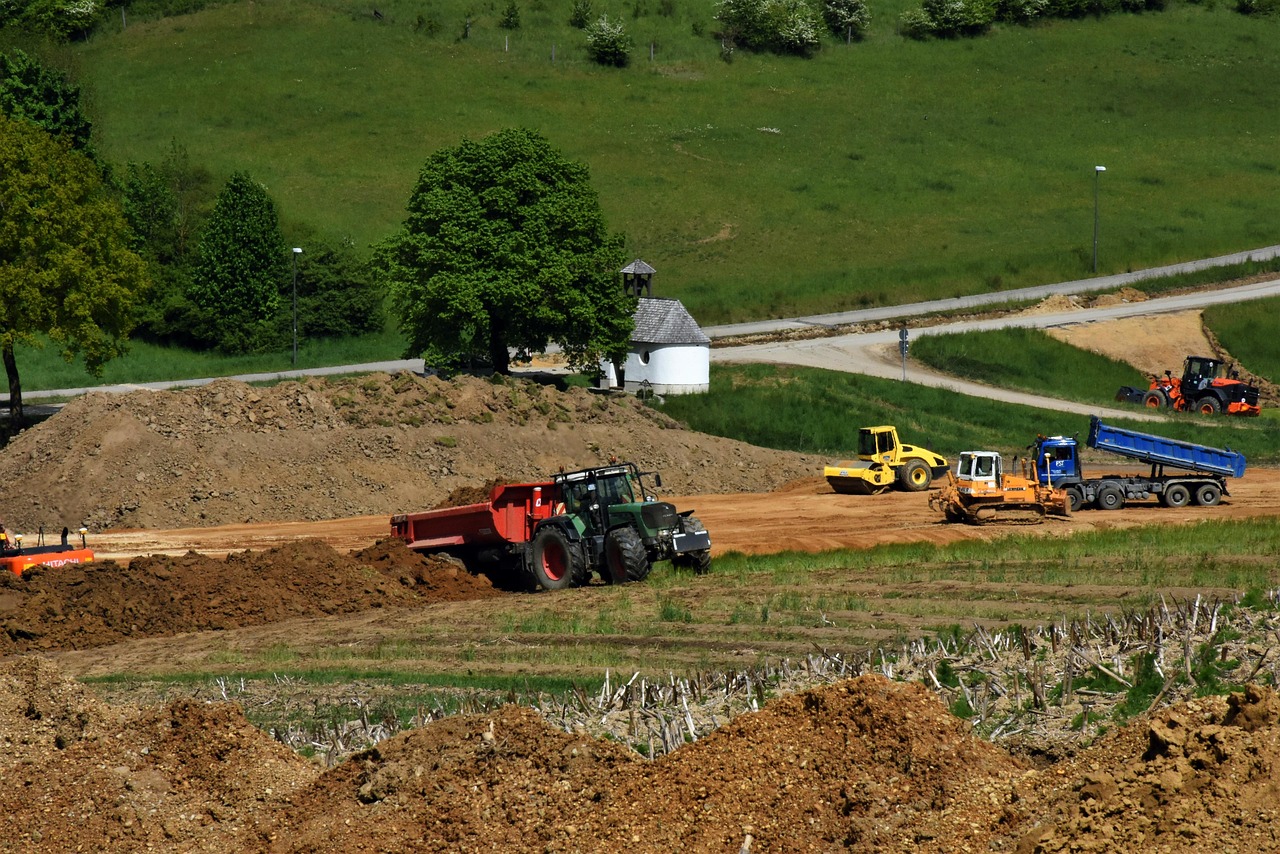
For a vivid example, consider agricultural extension agents, who are government-funded to travel across rural areas providing insight into how output might be improved. The WDR writes:
The planning guidelines of the Food and Agriculture Organization of the United
Nations (FAO) for agricultural extension services specify one agent for every 500–2,000 rural inhabitants, depending on a country’s production systems and the density of its population. But the reality on the ground falls short. Recent estimates indicate that in Nigeria, for example, a single public extension agent may serve anywhere from 5,000 to 10,000 farmers. In India, which has one of the largest public extension systems in the world, with about 120,000 extension professionals—the ratio of extension workers to farmers is about 1 to 5,000 … A gap in service delivery is evident not only in the number of extension agents available to farmers, but also in the quality and responsiveness of the advice they provide. Public extension advice tends to be structurally generic (designed for an average
farmer in an average season) …
If local farmers have some access to a smartphone in the nearest village, and can query an AI tool about local conditions, crops, and what’s working for others, including the ability to send along pictures of the landscape and how the crops are faring, it can make make the difference between extreme poverty and malnutrition in a given year–or not. One experiment with AI advisors in Ethiopia providing locally customized advice increased wheat yields 38%.As the report points out, low-income countries are unlikely to be significant players in the near term in developing frontier cutting-edge AI models, or in producing the most sophisticated semiconductor chips. But in a number of contexts, the use of AI often benefits those starting with less experience or skill, because those workers, firms, and government have the most room for gains from greater access to knowledge and skill. A number of companies and governments in lower-income countries are already using these tools, including use of chatbots for questions and feedback on public services and from the customers of firms. Small AIs can be “built for one narrow task, such as identifying a crop disease or screening a medical image.” The report notes:
Many developing countries face shortages of highly skilled workers. AI can help by enabling less experienced workers to perform more advanced cognitive tasks, allowing some work to be shifted away from scarce specialists and making existing workers more productive. First, if AI automates more expert tasks within an occupation, it lowers the entry requirements
for people to carry out the work in that occupation. There is evidence of such leveling up across cognitive occupations, including customer support, professional writing, and software development. Second, AI can shift a given cognitive task to adjacent occupations that employ people with less expertise, such as shifting the task of medical-image screening from scarce medical specialists to lower-level health care providers. Third, AI makes people more productive at what they currently do. For example, generative AI tools improve the quality of instruction in schools by supporting teachers with lesson planning, generating learning materials matched to students’ skill levels, and providing quicker feedback on student work.The WDR is open about acknowledging a range of practical issues. AI will also disrupt some industries in lower-income countries: for example, AI agents seem likely to displace a number of workers at call centers. Benefits from AI require complementary investments in physical and human infrastructure. Low-income countries may wish to have a process for adapting existing open-source AI tools for local use and/or foor designating certain AI tools as trustworthy. The use of AI in schools can be a decidedly mixed blessing, but the possibilities for customized tutoring when teachers are scarce seem substantial.
Living in the environment of US higher education, as I do, one hears a lot of concern about the use of AI in writing research papers, or in writing novels. A chief concern is that the use of AI involves a loss of something precious and ineffably human. Those issues matter. But the WDR reminds us that the potential gains and tradeoffs may look quite different in low-income developing economies.

Comments
Log in or sign up to join the conversation.