

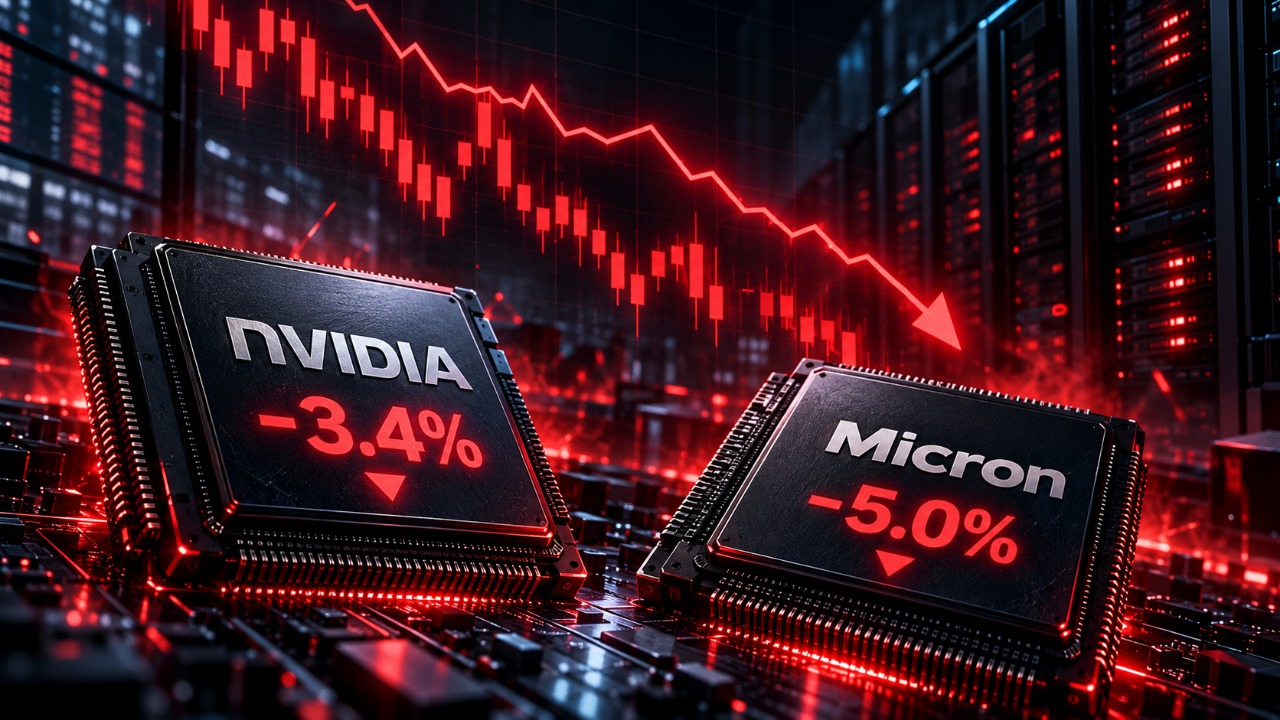
It took just one trading session for the semiconductor sector to lose nearly 6% of its value. On September 14, the PHLX Semiconductor Index fell 5.9%, while #NVIDIA shares dropped around 3.4% and #Micron fell more than 5%. The pressure spread across the broader technology market as well, with the Nasdaq ending the day lower.
The main trigger came from warnings issued by AI company executives. Following concerns about the risks of technology developing too quickly, investors seriously began asking for the first time in a while: what will happen to chipmakers if massive spending on artificial intelligence starts to slow down?
A month without swaps on major pairs! Learn more
What spooked investors:
The market has started reassessing future demand. #NVIDIA and #Micron have been among the biggest beneficiaries of data center construction and growing demand for computing power. Even a hint of a potential slowdown in AI investment is prompting investors to take a more cautious view of future processor and memory sales.
High interest rates are adding pressure. The yield on 10-year US government bonds briefly exceeded 5%, while expectations of another Fed rate hike remain elevated. The more expensive money becomes, the harder it is for technology stocks to justify high valuations.
Investors are taking profits after a strong rally. The semiconductor sector remains one of the year's top performers and, even after the sell-off, is still up around 57% since January. Against this backdrop, the emergence of a new risk provided a convenient reason to close some profitable positions.
The problem for the market is that current high valuations of technology companies already largely assume that AI investment will continue growing rapidly. As companies consistently increased spending on equipment and data centers, this scenario worked in favor of chipmakers. Now, the market has to consider the opposite possibility as well.
At the same time, it is still too early to talk about the end of the AI boom. Demand for computing power remains high, and a single day of selling does not change the long-term trend. However, the nearly 6% decline showed just how sensitive the sector has become to any doubts about the future pace of artificial intelligence spending.
According to FreshForex analysts, as long as pressure on chipmakers persists, it will be harder for #NQ100 to reach new highs. If US Treasury yields remain around 5% and concerns about a slowdown in AI investment intensify, pressure on the technology index could continue.
Our trading platform offers 250+ instruments, including CFDs on stocks, indices, and crypto assets. Follow the trends and trade the markets!
Comments
Log in or sign up to join the conversation.