

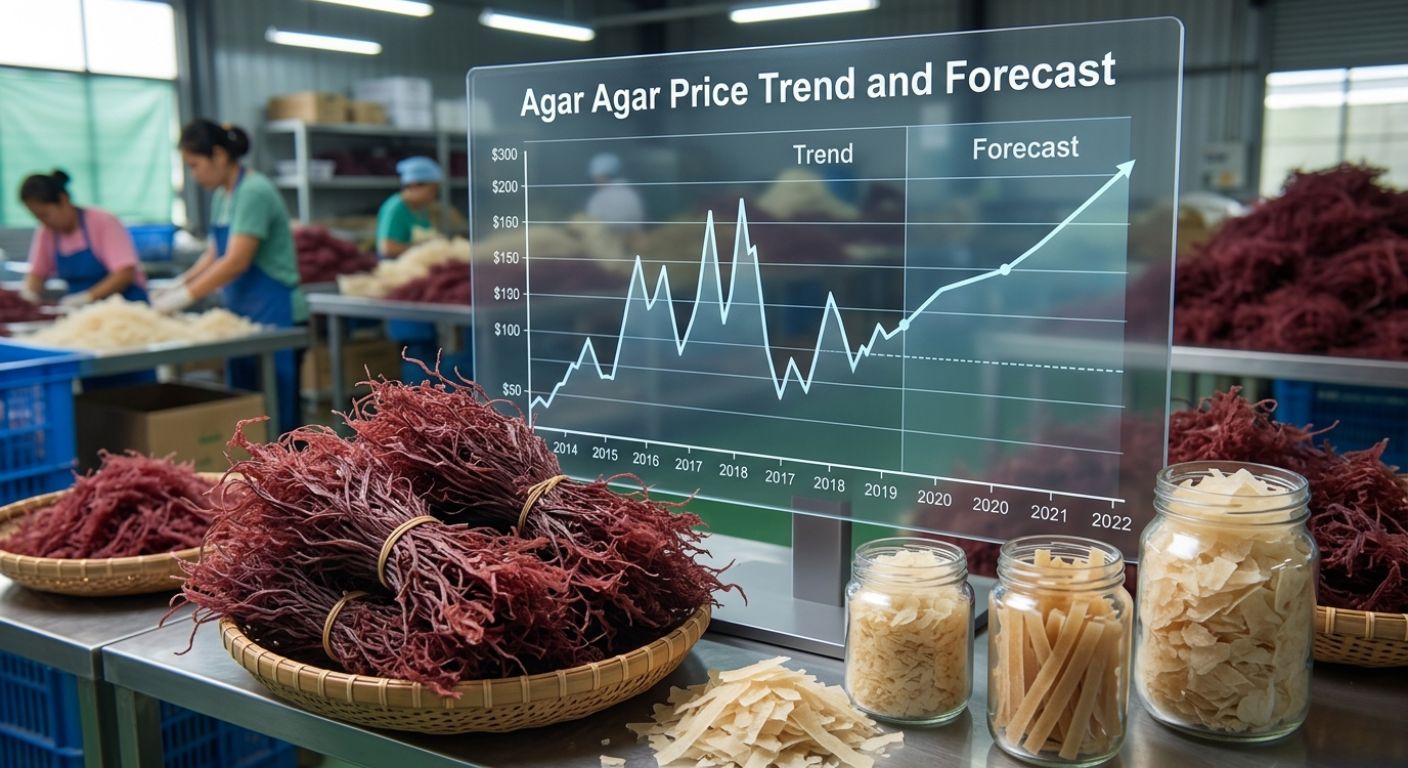
The Agar-Agar Price has become a key point of focus for stakeholders across the global food, pharmaceutical, and biotechnology industries. Derived from red algae, agar-agar is widely used as a gelling, thickening, and stabilizing agent. Its demand continues to rise due to growing applications in vegan food products, microbiological culture media, and specialty formulations.
In recent quarters, the agar-agar market has demonstrated notable price fluctuations influenced by supply chain dynamics, raw material availability, freight costs, and regional demand patterns.
Latest Agar Agar Price Trend: - https://www.chemanalyst.com/Pricing-data/agar-agar-1437
Key Factors Influencing Agar-Agar Price
Before diving into regional trends, it is important to understand the primary drivers shaping the Agar-Agar Price globally:
Raw Material Availability
Agar-agar is extracted from seaweed species such as Gelidium and Gracilaria. Climate conditions, ocean harvesting regulations, and seasonal variations directly impact supply, thereby influencing prices.
Freight and Logistics Costs
Global shipping costs have played a significant role in recent price movements. Increased freight rates, port congestion, and longer transit times have contributed to upward pressure on agar-agar prices.
Demand from End-Use Industries
Food & Beverage (vegan and plant-based products)
Pharmaceuticals (capsules and drug delivery systems)
Biotechnology (culture media)
Steady demand from these sectors ensures price resilience even during supply fluctuations.
Supplier Pricing Strategies
Disciplined seller pricing and controlled supply have prevented extreme volatility in the agar-agar market, particularly in developed regions.
APAC Agar-Agar Price Trends
Read the LinkedIn Article: - https://www.linkedin.com/pulse/agar-price-trends-2026-charts-index-regional-insights-kishan-singh-2xwac/
Japan Market Overview
In the Asia-Pacific region, Japan remains a key importer and consumer of agar-agar. During the latest quarter:
The Agar-Agar Price Index increased by 3.35% quarter-over-quarter
The average Agar-Agar Price reached approximately USD 12,953.33 per metric ton
Price data was based on market surveys in Tokyo and Osaka
Key Drivers in APAC
The rise in Agar-Agar Price in Japan can be attributed to:
Inventory replenishment cycles following earlier stock depletion
Higher freight costs, particularly for imported raw materials
Stable downstream demand from food and biotech sectors
Despite the increase, the market remained relatively balanced, with no signs of extreme supply shortages. Suppliers maintained steady output while buyers actively secured volumes to avoid future price escalations.
APAC Outlook
Looking ahead, agar-agar prices in APAC are expected to remain firm due to:
Continued demand from functional food segments
Limited expansion in seaweed harvesting
Persistent logistics challenges
Europe Agar-Agar Price Trends
Market Overview
In Europe, the Agar-Agar Price Index recorded a moderate quarter-over-quarter increase, reflecting stable yet controlled market conditions.
Prices remained firm across major hubs such as Germany, France, and the Netherlands
Market stability was supported by disciplined supplier pricing
Importers maintained steady replenishment strategies
Key Drivers in Europe
Several factors contributed to the moderate increase in Agar-Agar Price:
Controlled Supplier Availability
European suppliers maintained limited inventory release, preventing oversupply and supporting price levels.
Steady Import Demand
Importers continued to replenish stocks at a measured pace, ensuring consistent demand without causing price spikes.
Strong Regulatory Environment
Strict quality and sourcing regulations in Europe also contributed to stable pricing by limiting low-cost alternatives.
Market Characteristics
Low volatility compared to other regions
Strong reliance on imports
High-quality standards influencing pricing
Europe Outlook
The Agar-Agar Price in Europe is expected to:
Remain stable to slightly bullish
Be influenced by import costs and currency fluctuations
Continue reflecting disciplined supply-side strategies
North America Agar-Agar Price Trends
Market Overview
In North America, the agar-agar market showed a slight upward trend in prices on a quarterly basis.
Prices remained firm across the United States and Canada
Growth was supported by stable demand and controlled importer coverage
Contract pricing dominated the market, limiting spot price volatility
Key Drivers in North America
Stable End-Use Demand
The food and biotechnology sectors continued to drive consistent consumption, supporting the Agar-Agar Price.
Controlled Import Volumes
Importers maintained balanced inventory levels, avoiding both shortages and oversupply.
Limited Spot Discounts
Due to tight supply management, spot market discounts were minimal, keeping overall prices firm.
Market Characteristics
High reliance on imports
Preference for long-term contracts
Stable consumption patterns
North America Outlook
Future Agar-Agar Price trends in North America are expected to:
Remain stable with slight upward bias
Be influenced by global freight costs
Reflect steady industrial demand
Supply Chain Analysis
Upstream (Raw Materials)
Dependence on seaweed harvesting regions
Environmental and regulatory constraints
Midstream (Processing)
Energy and labor costs impact production
Limited number of large-scale processors
Downstream (End Users)
Growing demand from plant-based food industry
Increased use in pharmaceutical applications
Challenges Impacting Agar-Agar Price
Despite steady growth, several challenges continue to influence the Agar-Agar Price:
Climate Dependency
Seaweed cultivation is highly sensitive to environmental changes, impacting supply consistency.
Limited Production Expansion
Expansion of agar production capacity remains slow due to regulatory and ecological concerns.
Logistics Disruptions
Freight volatility continues to be a major factor affecting global pricing trends.
Competition from Substitutes
Alternatives such as gelatin and carrageenan may limit price growth in certain applications.
Opportunities in the Agar-Agar Market
Rising Vegan and Plant-Based Demand
Agar-agar is a preferred substitute for gelatin, driving increased consumption.
Growth in Biotechnology
Its use in culture media ensures consistent demand from research and healthcare sectors.
Premium Product Positioning
High-quality agar-agar products command premium pricing, especially in developed markets.
Agar-Agar Price Forecast (2026 and Beyond)
The outlook for Agar-Agar Price remains cautiously optimistic. Key expectations include:
Short-Term Forecast
Prices likely to remain firm to slightly increasing
Continued influence of freight and supply constraints
Stable demand across all regions
Medium-Term Forecast
Gradual price increase due to limited raw material expansion
Strong demand from food innovation and biotech sectors
Long-Term Forecast
Sustainable growth driven by eco-friendly and plant-based trends
Potential price stabilization if supply chain efficiencies improve
Strategic Insights for Market Participants
For Buyers
Secure long-term contracts to mitigate price volatility
Diversify sourcing regions
Monitor freight trends closely
For Suppliers
Focus on supply chain optimization
Invest in sustainable seaweed sourcing
Maintain disciplined pricing strategies
For Investors
Watch emerging markets in Asia
Track developments in plant-based food demand
Evaluate supply chain resilience
Conclusion
The global Agar-Agar Price trend reflects a market characterized by stability, controlled supply, and consistent demand. While regional variations exist, the overall trajectory points toward firm pricing supported by structural demand from key industries.
APAC, led by Japan, has shown the most noticeable price increase due to replenishment and logistics factors. Europe continues to maintain stable pricing through disciplined supply management, while North America demonstrates steady growth driven by contract-based trading and balanced demand.
As the world moves toward sustainable and plant-based solutions, agar-agar is expected to play an increasingly important role, ensuring continued relevance and value in global markets. Monitoring supply chain developments, raw material availability, and freight dynamics will remain essential for understanding future Agar-Agar Price movements.
Contact US:
Email-Id: - [email protected]
Contact No: - +1 (332) 258-6602
Address: - 420 Lexington Avenue, Suite 300
New York, NY
United States, 10170
Comments
Log in or sign up to join the conversation.