
Small store owners often assume SEO is a luxury reserved for big brands with big budgets. It is not. In fact, smaller catalogues can sometimes move faster than enterprise stores, because there's less legacy technical debt to untangle and fewer approval layers slowing down changes. The real question is not whether small businesses can afford affordable ecommerce SEO services, it is how to prioritise the right work first so early wins fund the next phase of growth.
This guide lays out a practical, budget conscious roadmap: what to fix first, where content and link building fit in and how to know if a best ecommerce SEO agency for small businesses is actually worth the investment.
Why Small Stores Should not Skip SEO
Paid ads deliver fast traffic, but every dollar stops working the moment the budget runs out. Ecommerce SEO, by contrast, compounds a welloptimised product page or a backlink earned two years ago can still be sending free traffic today. For small stores operating on tight margins, that compounding effect matters even more than it does for larger competitors with deeper pockets.
Starting Point: Ecommerce Keyword Research on a Budget
You don't need expensive enterprise tools to do effective ecommerce keyword research. Start with:
Google autocomplete and People also ask sections for real search phrasing.
Competitor product pages to see what terms they're targeting successfully.
Longtail, lowcompetition keywords smaller stores often win faster by targeting specific phrases ("waterproof hiking boots for wide feet") rather than broad, expensive terms ("hiking boots").
Longtail keywords typically convert better anyway, since searchers using specific phrases usually know exactly what they want.
Prioritising Technical Fixes That Actually Move the Needle
Small budgets mean you can't fix everything at once, so prioritisation matters. Focus first on:
Site speed Compress images and remove unnecessary apps or plugins before anything else; slow pages hurt both rankings and conversions immediately.
Mobile usability The majority of shopping traffic is mobile, so a broken mobile experience undercuts every other optimisation effort.
Indexation basics Confirm your important product and category pages are actually being indexed and that lowvalue filtered pages aren't wasting crawl budget.
Broken links and redirects Quick to fix and they stop losing accumulated ranking value from discontinued products.
These fixes typically require minimal ongoing investment but deliver disproportionate early impact exactly what a tight budget needs.
Product SEO Optimisation Without a Big Team
Product SEO optimization doesn't require an army of writers. A focused, prioritised approach works well for small catalogues:
Start with your top 20% bestselling or highest margin products and optimize these first for maximum impact per hour invested.
Write original descriptions that answer real customer questions (sizing, materials, use cases) rather than generic marketing fluff.
Use one clear, keyword relevant image file name and alt text per product photo.
Add a simple FAQ section to top product pages to capture longtail question based searches.
Category Page Optimisation for Small Catalogues
Even with a modest number of categories, category page optimisation pays off quickly:
Add a short, genuinely useful paragraph above the product grid not filler text, but content that helps a shopper decide if they're in the right place.
Ensure category names and URLs include natural keyword phrasing.
Crosslink related categories to help both shoppers and search engines navigate your catalogue logically.
Building an Ecommerce Content Strategy Without a Big Budget
A lean ecommerce content strategy doesn't need daily blog posts. Quality and consistency matter more than volume:
Buying guides for your top product categories.
Comparison content ("Product A vs Product B") for shoppers still deciding.
Seasonal gift guides that can be refreshed and republished each year rather than rebuilt from scratch.
FAQ and howto content addressing common customer service questions this also reduces support tickets while attracting search traffic.
Publishing one genuinely useful piece of content per month, promoted through social media marketing and paired with a broader digital marketing approach, consistently outperforms sporadic, loweffort content dumped without any promotion plan.
Ecommerce Link Building on a Budget
Ecommerce link building doesn't have to mean expensive PR campaigns. Affordable, effective approaches for small stores include:
Supplier and manufacturer partnerships many suppliers will link to authorised retailers if you simply ask.
Local business directories and industry associations relevant if your store has any regional angle and a natural complement to local SEO if you also serve a specific area or have a physical presence.
Guest content and expert roundups contributing genuine expertise to industry blogs or publications in exchange for a relevant backlink.
Digital PR around unique data or stories even small stores can earn press coverage with a genuinely interesting angle (sustainability practices, founder story, unique sourcing).
Working with a provider that offers structured link building services as part of a broader package is often more cost effective than trying to negotiate one off placements individually.
What Makes an Ecommerce SEO Agency Genuinely Affordable
There is an important distinction between affordable and cheap. A best ecommerce SEO agency for small businesses should offer:
Scoped packages that match your catalogue size and budget rather than one size fits all enterprise pricing.
Prioritised roadmaps that tackle highest impact work first, so early wins help justify continued investment.
Transparent reporting tied to actual business metrics organic traffic, rankings and revenue not vanity metrics alone.
Realistic timelines, since anyone promising overnight page one rankings for a new or small store is not being honest with you.
Providers offering suspiciously cheap flat rates for largescope work often cut corners on content quality or use outdated, risky link building tactics that can trigger penalties down the line costing far more to fix later than a properly scoped engagement would have cost upfront.
DIY vs. Outsourced: A Realistic Cost Comparison
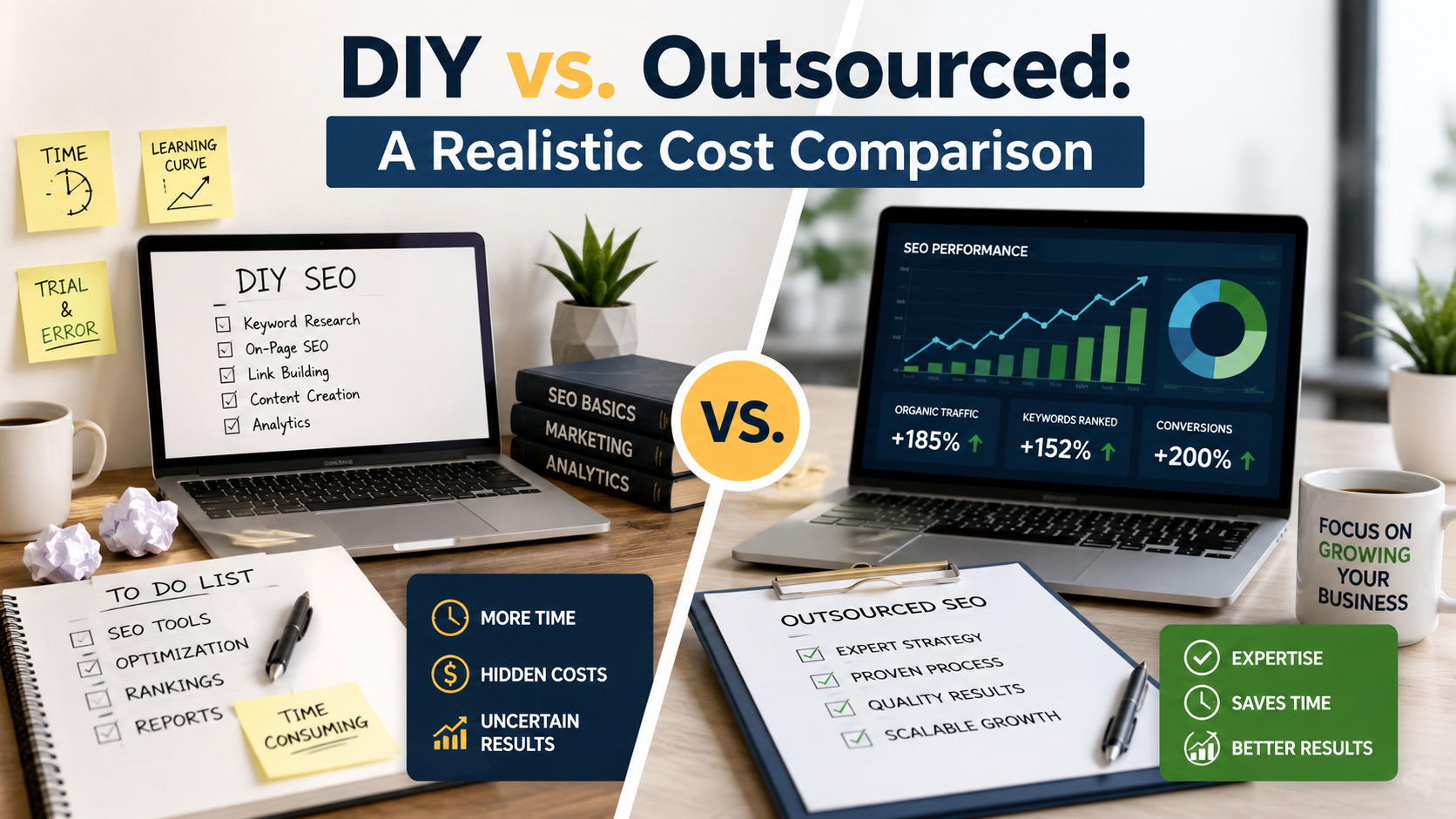
Many small store owners try DIY SEO first and that is a reasonable starting point but it is worth being honest about the real cost of time. If a founder spends 10 hours a week on SEO tasks that could otherwise go toward product sourcing, customer service, or sales, that "free" SEO work carries a genuine opportunity cost. A useful way to decide when to outsource:
Under 100 SKUs, limited competition: DIY basics (keyword research, product descriptions, image alt text) are often manageable inhouse.
1001,000 SKUs, moderate competition: A hybrid approach works well to handle content inhouse while outsourcing technical audits and link building to specialists.
1,000+ SKUs or high competition: Professional ecommerce SEO services typically pay for themselves faster than the time cost of trying to DIY at that scale.
Tools That Do not Break the Bank
Small stores don't need enterprise SEO software to get started. A lean, affordable toolkit typically includes:
Google Search Console and Google Analytics both free and essential for tracking indexation, rankings and organic traffic/conversion data.
A low cost keyword research tool may offer affordable entry level plans sufficient for a small catalogues needs.
PageSpeed Insights free and useful for benchmarking and tracking Core Web Vitals improvements over time.
A basic broken link checker catching 404s and redirecting issues before they accumulate.
Spending on premium enterprise tools rarely makes sense until a catalogue and content library grow large enough to justify the added reporting depth.
Avoiding False Economy: Risky Shortcuts to Skip
When budgets are tight, it's tempting to cut corners but some shortcuts cost far more to undo later than they save upfront:
Buying cheap, low quality backlinks from link farms or private blog networks can trigger search engine penalties that take months to recover from.
Autogenerated or AIspun product descriptions without human review often read poorly and can be flagged as low quality, thin content.
Keyword stuffing in an attempt to rank for too many terms on one page usually backfires, hurting readability and conversion rates without improving rankings.
Ignoring mobile experience to save development costs, when mobile now represents the majority of ecommerce traffic for most store categories.
A genuinely affordable strategy prioritises sustainable, compounding tactics over shortcuts that create bigger, costlier problems down the line.
Tracking Progress Without Expensive Reporting Software
Small stores can track meaningful SEO progress using free tools alone:
Monitor organic traffic trends monthly in Google Analytics, watching for consistent upward movement rather than obsessing over daily fluctuations.
Track keyword ranking movement for a focused list of 1520 priority terms rather than trying to monitor hundreds from day one.
Review Google Search Console's indexation and coverage reports monthly to catch technical issues early, before they compound.
Tie organic traffic growth back to actual order data to calculate a rough but genuinely useful return on the time or money invested.
When It's Time to Move Beyond Affordable Packages
Affordable ecommerce SEO services are an excellent starting point, but as a store grows, budgets often need to grow with it. Signs it is time to scale up investment include:
Consistent month over month organic revenue growth that clearly outpaces the current spend, suggesting untapped opportunity.
Increasing competition in your niche, requiring more aggressive content and link building to maintain rankings.
Catalogue expansion beyond what a lean, prioritised strategy can realistically cover.
A clear, calculable positive ROI that justifies reinvesting a larger share of revenue into the channel.
Recognising this transition point early helps avoid stalling out on a strategy that's outgrown its original scope.
Conclusion
Affordable does not mean ineffective. With the right prioritisation technical fixes first, then top product optimisation, then lean but consistent content and link building small stores can build real, compounding organic visibility without enterprise level budgets. The key is choosing a partner who scopes work realistically and reports on results that actually matter to your bottom line. To explore a tailored, budget conscious growth plan for your store, visit itleadz.
Frequently Asked Question (FAQs)
How much should a small business realistically budget for ecommerce SEO?
Many small stores see solid results starting around $500- $1,500 per month, provided the work is properly prioritised toward the highest impact fixes and pages first.
Can I do ecommerce SEO myself if I can not afford an agency yet?
Yes, to a point. Basic keyword research, product description improvements and image optimisation are achievable inhouse, though technical audits and link building typically benefit from professional expertise as your store grows.
How do I know if an affordable SEO provider is actually cutting corners?
Ask specifically what's included, how content is written and what link building tactics they use. Vague answers or refusal to explain their process are red flags regardless of price.
Should I focus on content or technical SEO first with a limited budget?
Technical fixes almost always come first; there is little value publishing content on a site with speed, indexation, or mobile usability problems undermining everything else.
How long before a small store sees ROI from affordable ecommerce SEO?
Early wins from technical fixes and longtail keyword targeting can appear within 610 weeks, while more substantial revenue growth typically builds over 48 months of consistent work.
Comments
Log in or sign up to join the conversation.