


The data is not particularly favorable to active investing. Active funds typically have higher expenses, more trading turnover, and more frequent portfolio changes, all of which can weigh on returns. In both the U.S. and Europe, the majority of active funds have underperformed passive funds over 3-, 5-, and 10-year periods. U.S. funds have performed slightly better than European funds, but roughly 80% of active funds still lag their benchmarks on a 3-year and 5-year period. In Europe, that figure rises to more than 90%. Of course, active strategies may also pursue different objectives than their benchmarks, making performance comparisons more nuanced.
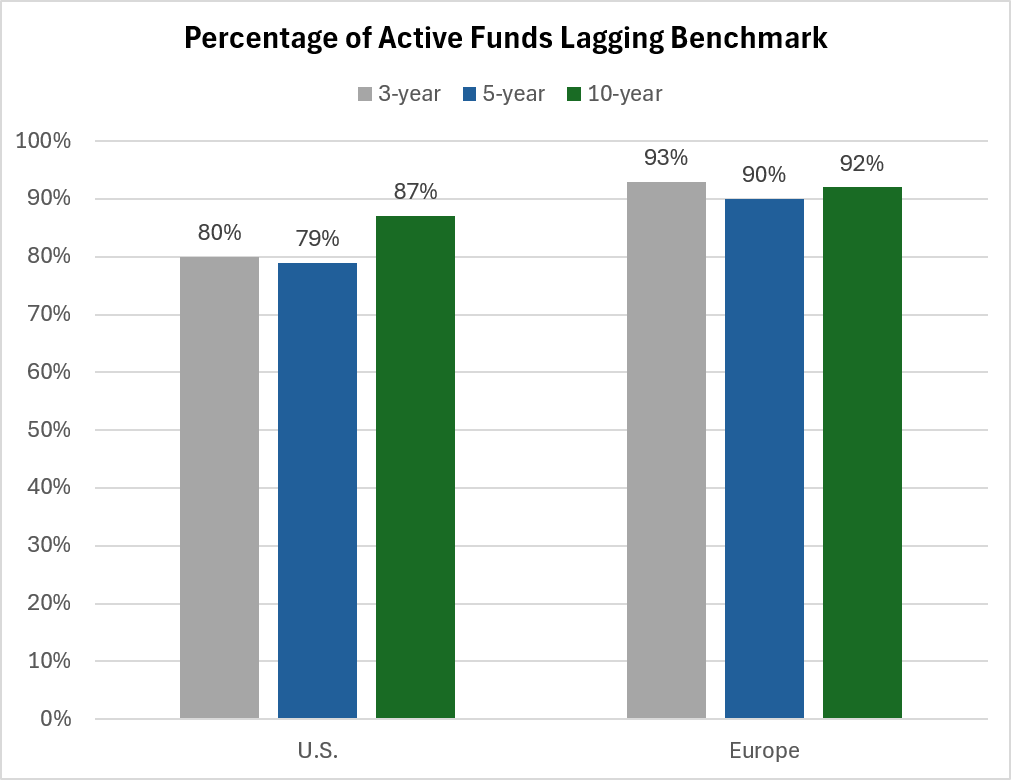
Source: Bloomberg, S&P SPIVA, Apollo Chief Economist.
This graph was produced by Lucas Juery, CFA, CFPⓇ and is not intended to provide financial advice.


Comments
Log in or sign up to join the conversation.