

Account-Based Marketing: A Targeted Approach to B2B Growth
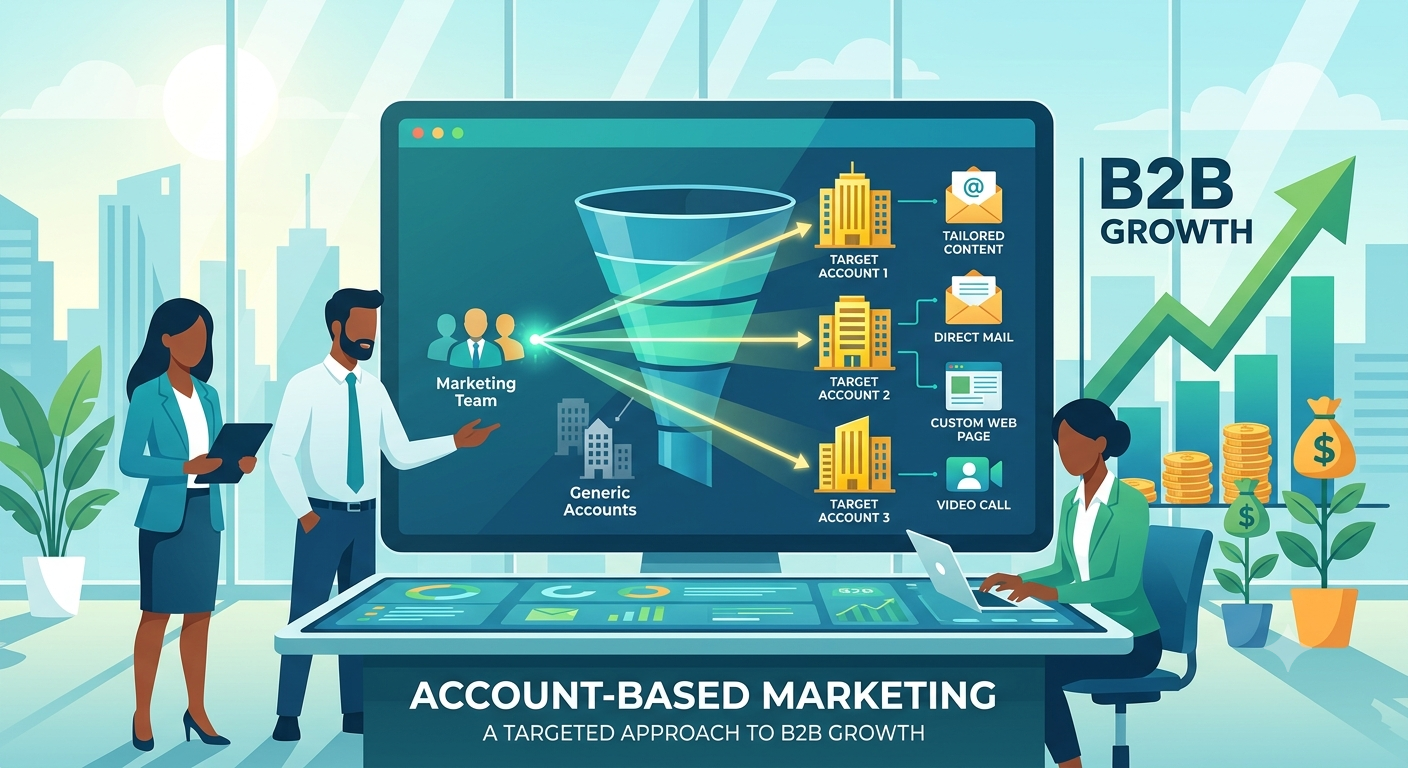
B2B marketing has shifted from broad audience targeting toward more personalized and account-focused strategies. Businesses are no longer only focused on generating a large volume of leads; they are prioritizing meaningful engagement with accounts that have higher revenue potential.
Account-Based Marketing (ABM) enables organizations to identify valuable accounts, create customized campaigns, and build stronger relationships with key decision-makers.
What Is Account-Based Marketing?
Account-Based Marketing is a strategic B2B approach where marketing and sales teams collaborate to target specific high-value accounts. Instead of creating campaigns for a general audience, ABM focuses on understanding the needs, challenges, and goals of selected organizations.
This targeted method allows businesses to deliver relevant messaging and experiences to prospects who are more likely to become customers.
Improving Sales and Marketing Alignment
One of the biggest advantages of ABM is stronger collaboration between sales and marketing teams. Both teams work together to define target accounts, develop engagement strategies, and measure business outcomes.
This alignment ensures marketing activities support sales objectives and helps create a more efficient revenue generation process.
Delivering Personalized Buyer Experiences
Modern B2B buyers expect content and communication that address their specific business challenges. ABM helps marketers create personalized campaigns based on account characteristics, industry needs, and buyer behavior.
Customized emails, content assets, advertisements, and outreach programs help businesses build stronger connections with decision-makers.
Focusing on High-Value Opportunities
Traditional marketing often measures success through lead volume, but ABM focuses on account quality and revenue potential. Businesses can prioritize accounts based on factors such as company fit, purchase intent, engagement level, and business value.
This focused approach helps teams allocate resources more effectively and improve conversion opportunities.
Measuring ABM Success
ABM performance is evaluated through account-level metrics rather than only traditional lead metrics. Businesses can track account engagement, pipeline contribution, conversion rates, and revenue impact.
These insights help organizations refine campaigns and improve future marketing efforts.
Building Sustainable B2B Growth With ABM
Account-Based Marketing helps businesses move toward a more precise and revenue-focused marketing model. By combining data-driven targeting, personalization, and sales collaboration, ABM allows organizations to engage the right accounts with the right message at the right time.
A well-executed ABM strategy can improve lead quality, strengthen customer relationships, and create more predictable B2B growth opportunities.
Comments
Log in or sign up to join the conversation.