

Introduction
I just added a reflection about the Neglected Firm Anomaly to my blog at Seeking Alpha. At a time when more and more investors are chasing opportunities in large or super large caps, while also seemingly showcasing a preference for high vol and 'known' over what is underfollowed, it was nice to read an academic paper about 'Neglect'. It was a paper by two Turkish professors, who investigated the phenomenon at the Istanbul Stock Exchange.
Of course, many of you never invest there. However: tons of stocks listed on Emerging Markets exchanges do also have ADRs or a comparable type of securities listed in New York. Or secondary listings on European or Asian exchanges that are accessible for you. And bigger, professional investors can of course always find a way to go for the original securities when they want. Anyway: the bottom-line of something being less easily accessible should then not be 'Forget It!' but instead: ''Hmmm ... if it is not that easy for me to find good information about this or that stock, then this will hold for my competitors in the market as well!''
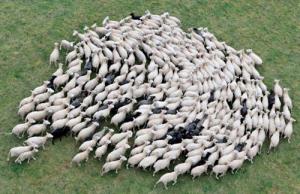
These days markets are filled with relatively new investors, who actually seem to be doing the opposite. They herd and step into things only after they hear stories about others who successfully made big profits with one or the other trade or investment idea.
Nope! In the long run it doesn't work that way. Investing means upfront costs in terms of money and research time. If the story is simple and sounding too good to be true, then it probably is!
The other way round: when you have a structured process and specialize in the things that seem to work for you, honestly learning from your mistakes (a kind of mental 'stop loss methodology' if you like to call it that way), while expanding the strategies that work for you, then in the end outperformance is still possible.
The probability of an investor finding something of interest that can be exploited via trades, is largest when studying smaller capitalization stocks and/or stocks in less-researched countries. Barriers related to 'underfollowing' or 'neglect' are not just bad when you are willing to allocate your research time to them.
Example - A Chess Metaphor: Better to be Brave or Smart?
Let me give you an example.
Compare the market with a chess competition. I am a 'reasonable' player of OK strength, currently playing in the highest (A1) League at Game Knot, one of the larger online chess platforms. With a rating higher than that of 99 percent of the players out there. But still. I am an OK player in the openings and type of games that I play for decades now. I am not a chess prodigy / grandmaster!
Now suppose that I hear about the possibility to compete in one of two chess competitions. One has a Prize Fund of USD 1 million. And all the top grandmasters will go there. The other is Game Knot's own tournament. Grandmasters don't go there, because they go to the other tournament (or they have never heard of Game Knot in the first place!). Suppose that the Prize Fund of this second tournament is much smaller than that of the big tournament.
If one compares the chess grandmasters with the big institutional investors who search for opportunities among large caps and better-known, very liquid stocks, the probability of me playing there with them and winning is small. So basically, the only rational possibility for me still preferring this tournament is when the Prize Fund is so much larger than that of the other tournament, that I will still get a reasonable pay-off even compared to that of my amateur colleagues who went for the smaller tournament. The case where the winner of Tournament 2 makes less then a first or second round loser in Tournament 1. But that is not how investments work.
Mathematically; my overall expected result is equal to the probability to 'score' (let's call that P) times the expected reward related to that 'score (let's call that R).
The big tournament has an overall pay-off of P(big) x R(big). And the small tournament P(small) x R(small).
P(small) is obviously larger for me than P(big). My expertise level is the same in both tournaments normally. But the quality of competitors is - on average - lower.
So basically with my P being smaller when I go for the grand tournament, this is only rational when it more than offsets the expected reward differential with me having much better chances to outsmart others in the smaller tournament 2!
Is that the case with investors who overweigh large and super large caps in their portfolio, thereby exposing them to games with the top (institutional) grandmaster investors?
Definitely not a certainty upfront!
And still: too often investors herd and look for success stories and feedback from others. As opposed to using their skills to participate in the same kind of competition in 'underfollowed and less liquid' stocks, thereby neatly avoiding the battles with some of those grandmasters.
When I use TalkMarkets, SeekingAlpha and some other great online platforms with information - while not having expensive Bloomberg Terminals and a staff of 50 or more headcount in PhD's and MBA's working for me - then I rather compete in situations where the average opponent doesn't even use those great online platforms properly! And where the bulk of investors is private, and non-specialist.
But still ...
Underfollowed and Neglected is not necessarily bad news when you have to do your investment research anyway. It is a chance 'to find something'!
Comments
Log in or sign up to join the conversation.