

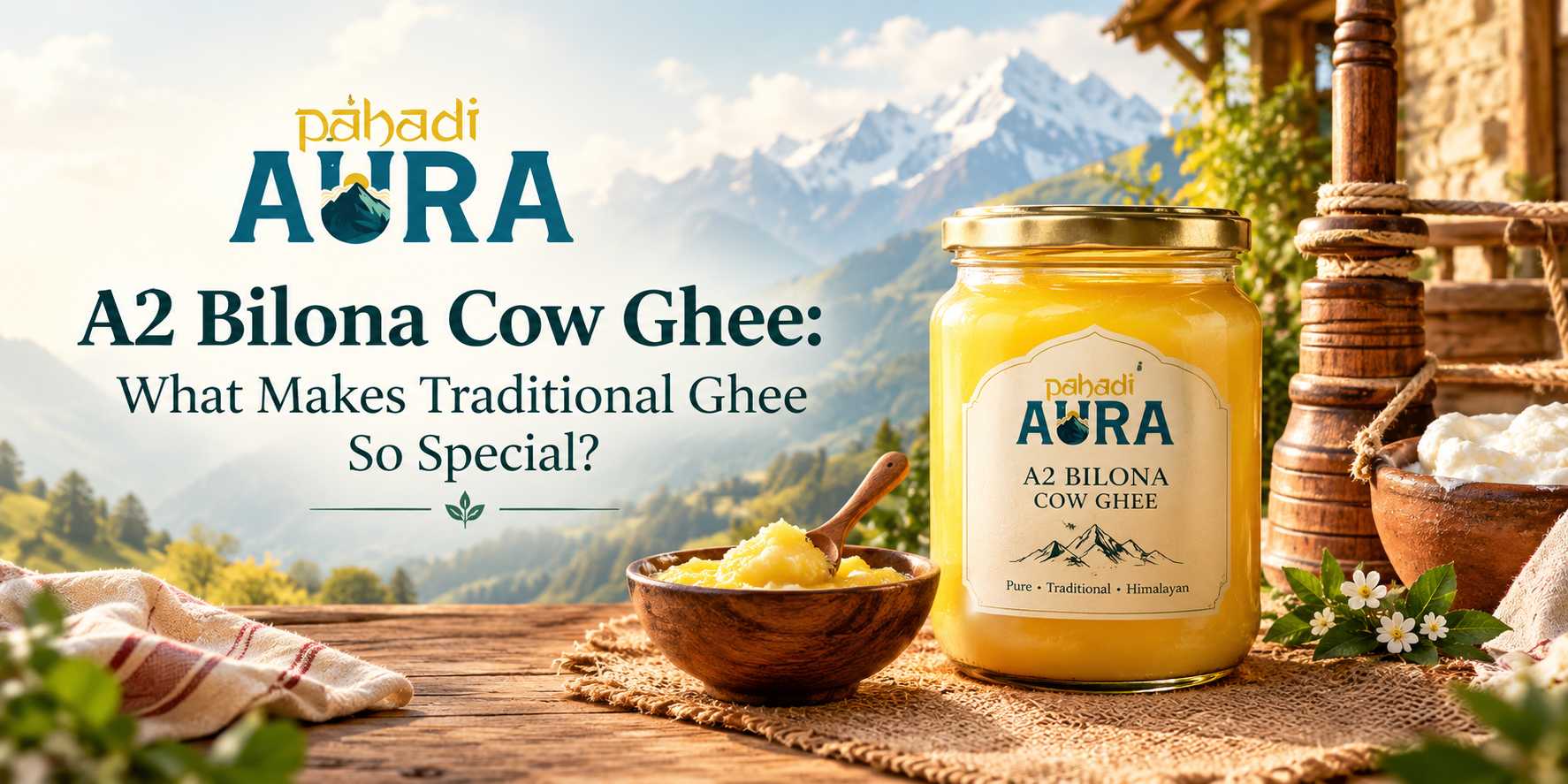
Ghee has always held a special place in Indian kitchens. It is used to temper dal, finish a bowl of khichdi, roast parathas, prepare sweets, and add richness to everyday meals. But in recent years, more people have started looking beyond ordinary ghee and asking an important question: What makes A2 Bilona cow ghee different?
The answer lies not only in the final golden product but in everything that happens before it reaches the jar—from the source of the milk to the traditional method used to make it.
For families looking for traditionally prepared ghee, understanding the Bilona process can help them make a more informed choice.
What Is A2 Bilona Cow Ghee?
A2 bilona cow ghee is traditionally prepared from milk associated with cows producing A2-type beta-casein, using the Bilona method of making ghee.
Unlike a process that simply separates cream and converts it into ghee, the traditional Bilona approach starts with milk that is cultured into curd. The curd is then churned to separate butter, and that butter is slowly clarified to produce ghee.
Pahadi Aura follows this traditional approach for its A2 Pahadi ghee, describing a process that involves curdling milk, wooden churning and slow clarification.
This longer process is one reason traditionally made ghee is often positioned as a premium alternative to mass-produced varieties.
Why Does the Bilona Method Matter?
The word "Bilona" refers to the traditional churning process used to separate butter from curd.
The process can be understood in four simple stages:
1. Fresh milk
Milk is collected from the selected cows.
2. Curd formation
The milk is cultured and allowed to turn into curd.
3. Traditional churning
The curd is churned to separate butter from the buttermilk.
4. Slow clarification
The butter is gently heated until the moisture and milk solids separate, leaving clarified ghee.
Pahadi Aura says its A2 ghee is produced in small batches using this traditional process rather than a factory-style cream-to-ghee approach.
The method requires more time and handling, but that is precisely what attracts consumers who value traditional food preparation.
The Importance of the Cow and Its Environment
When choosing A2 Bilona cow ghee, the production method is only one part of the story. The source of the milk matters too.
Pahadi Aura sources its A2 ghee from indigenous Pahadi Gauri cows and describes them as free-grazing cows from the Himalayan region. Its product information also highlights high-altitude grazing and a natural diet.
For consumers, this provides a more complete story behind the product: the breed, environment, milk and traditional preparation all contribute to the identity of the ghee.
A2 and Desi Cow Ghee: Are They the Same?
These terms are often used interchangeably, but they describe different things.
"Desi cow" generally refers to indigenous Indian cattle breeds, while "A2" refers to a particular beta-casein protein type in milk.
That means the words do not automatically mean exactly the same thing. A brand claiming to offer A2 ghee should ideally explain the source of its milk and the basis for its A2 claim.
This distinction is particularly useful when comparing products online.
What Makes Traditional Ghee Different?
One of the biggest differences consumers notice is the sensory experience.
Traditionally prepared ghee can have a distinctive dairy aroma, rich flavour and characteristic texture. Depending on processing and storage conditions, it may also develop a grainy or danedar texture.
However, appearance alone should never be treated as proof of purity.
A good buying decision should consider several factors together:
Source of the milk
Cow breed and farming practices
Production method
Ingredient list
Quality testing
Storage and packaging
Brand transparency
This is especially important when buying premium ghee online.
Why Is A2 Bilona Ghee More Expensive?
If you've compared different ghee prices, you may have noticed that traditionally made A2 ghee can cost considerably more than mass-market ghee.
There are practical reasons for this.
The Bilona method involves several additional steps: culturing milk into curd, churning the curd into butter and then slowly clarifying that butter.
Pahadi Aura states that approximately 25 litres of A2 milk are used to produce one litre of its ghee, illustrating why its production is positioned differently from industrial cream-based methods.
So when comparing prices, it is useful to compare the production method and sourcing—not simply the price per kilogram.
How Can You Choose Good A2 Bilona Cow Ghee?
Before buying, ask a few simple questions.
Does the brand explain where its milk comes from?
A transparent brand should be able to tell you about the source of its milk.
Does it explain the Bilona process?
Look beyond the word "Bilona" and see whether the actual process is described.
Is the product tested?
Pahadi Aura states that its A2 ghee is lab tested for factors including A2 protein authenticity and fat purity.
Is the ingredient list simple?
Pure ghee should have a straightforward ingredient story.
Does the brand provide clear product information?
Information about sourcing, preparation, storage and packaging can help you make a more confident decision.
How to Use A2 Bilona Cow Ghee in Everyday Cooking
You don't need complicated recipes to enjoy traditionally prepared ghee.
A spoonful can be used to:
Temper dal and vegetables
Spread over hot roti or paratha
Add richness to khichdi
Roast spices
Prepare traditional sweets
Cook rice and pulao
Finish soups and warm meals
Because ghee has a rich flavour, even a relatively small amount can add depth and aroma to a dish.
The goal should be to use it as part of a balanced diet rather than treating it as a miracle food.
Discover Pahadi Aura A2 Bilona Ghee
At Pahadi Aura, the focus is on bringing traditional Himalayan ghee-making to modern kitchens.
The brand's A2 ghee collection is made using the Bilona method and sourced from indigenous Pahadi cows. The collection is available in multiple sizes, including 250 ml, 500 ml, 1 litre, 3.5 litre and 5 litre options.
For those looking to experience traditionally prepared Himalayan ghee, you can explore the complete Pahadi Aura A2 Cow Ghee collection
Final Thoughts
A2 Bilona cow ghee is more than a label on a jar. It represents a traditional approach to making ghee where the journey from milk to finished product involves culturing, churning and slow clarification.
When choosing your ghee, don't focus only on words such as "premium" or "pure." Look at the complete story—where the milk comes from, how the cows are raised, how the ghee is made, how the product is tested and how openly the brand shares this information.
For people who value traditional preparation, authentic sourcing and the rich taste of Himalayan ghee, Pahadi Aura's A2 Bilona ghee offers a way to bring that tradition into everyday cooking.
Comments
Log in or sign up to join the conversation.