


Below are some of the most interesting things I came across this week.
LINK
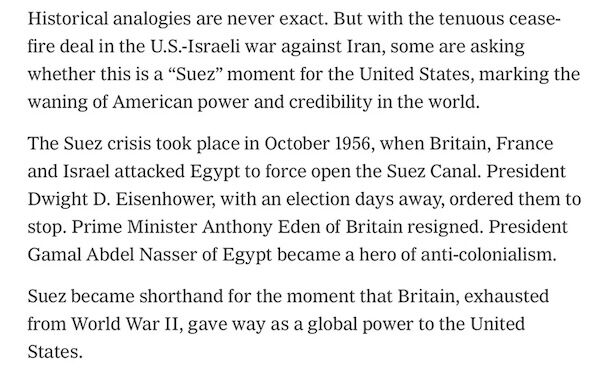
“Historical analogies are never exact. But with the tenuous cease-fire deal in the U.S.-Israeli war against Iran, some are asking whether this is a ‘Suez’ moment for the United States, marking the waning of American power and credibility in the world,” writes Steve Erlanger.
LINK
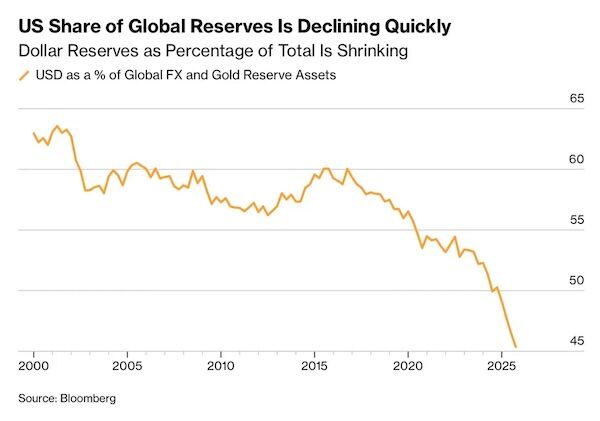
As Simon White notes, the consequences for capital markets are critical: “If the US is no longer seen as reliable a guarantor of stability and security, then there is a diminishing incentive to trade in dollars and recycle them back into the US. The dollar carousel that has underpinned the global monetary system is coming under increasingly grave strain.”
LINK
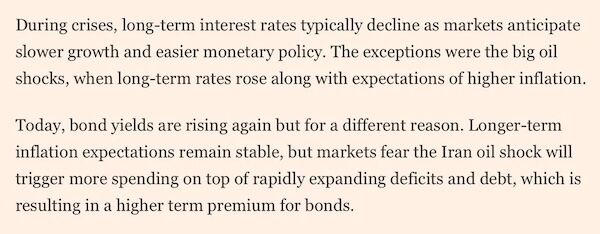
The bond market may be especially vulnerable. “During crises, long-term interest rates typically decline as markets anticipate slower growth and easier monetary policy. The exceptions were the big oil shocks, when long-term rates rose along with expectations of higher inflation,” writes Ruchir Sharma.
STAT
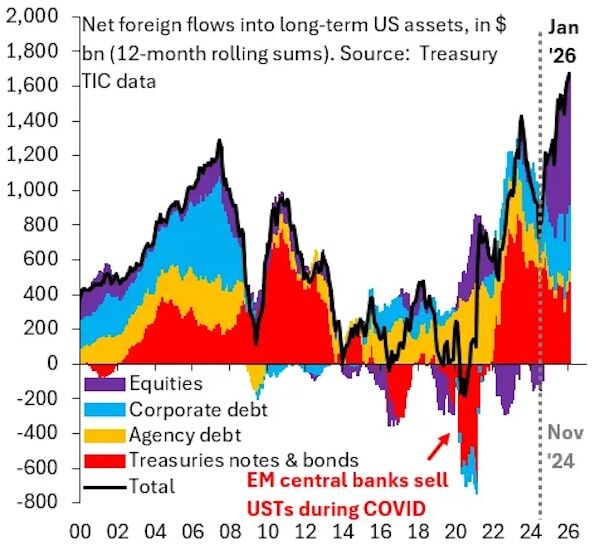
For now, though, “Foreign portfolio flows into the US are the strongest in 25 years,” notes Robin Brooks, with equities garnering the greatest share. But if foreign demand for U.S. assets wanes, stocks could be as affected as any other asset class.
LINK
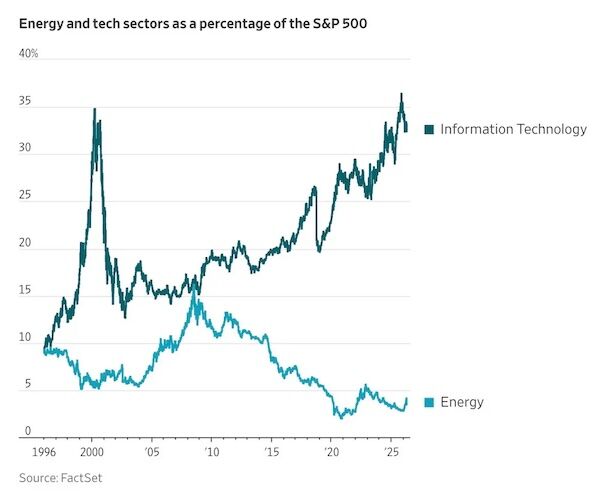
Meanwhile, investors around the world are still significantly underexposed to the energy sector, which has historically been the greatest hedge against inflation risks. And, Jinjoo Lee writes, “The more visible energy gets, the riskier an underweight position gets.”



Comments
Log in or sign up to join the conversation.