

There are many definitions of a “bear market: floating around, but the generally accepted theme is a 20% decline from the peak.
By that definition, the S&P 500 entered into bear market territory on Christmas Eve.
That 20% drop came in pretty darn quick fashion too!
What we have to ask ourselves now: is this just a normal decline or the start of a larger, recessionary bear market.
There have been 21 bear markets since 1929 with the average of all declines sitting at 36%. This data thanks to Charlie Bilello of Pension Partners.
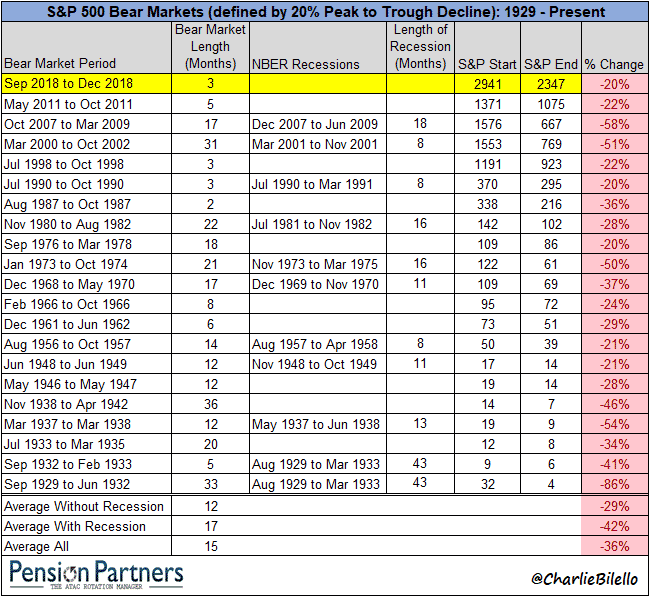
Clearly, a recession associated with a bear market results in much bigger declines than a bear market without a recession.
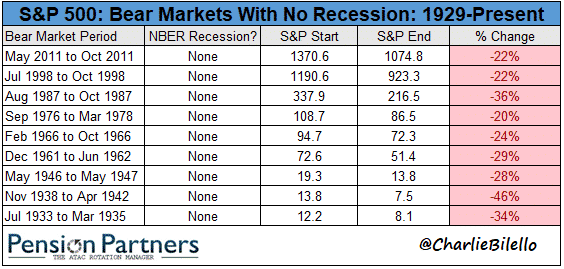
So, is the stock market predicting a recession? Or is this just a short, sharp decline?
Unfortunately, recessions can take a while to play our as Charlie says in his article:
“Looking at the data, the U.S. economy does not yet appear to be in a recession, but that fact is hardly an all-clear. After the March 2000 stock market peak, a recession did not begin until a year later: March 2001. No one can say for sure that in September 2019 (a year from the September 2018 S&P 500 peak) there won’t be a recession.”
What is clear is that markets are in a period of weakness and there will be plenty of counter-trend rallies as we saw yesterday.
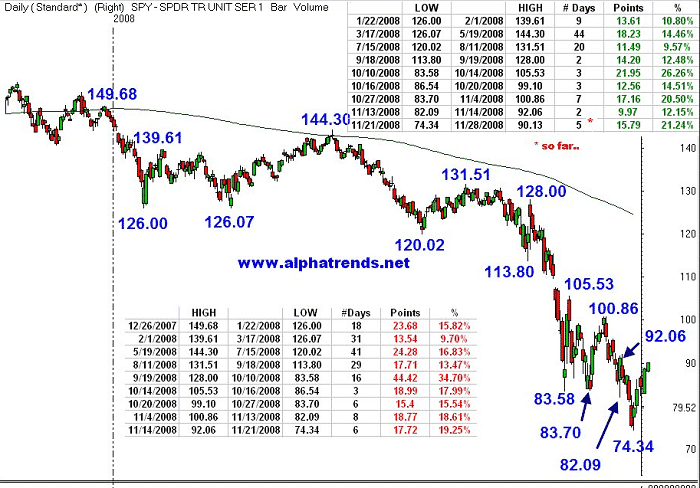
Shorting a bear market can be tricky, just take a look at some of the counter-trend rallies from 2008!
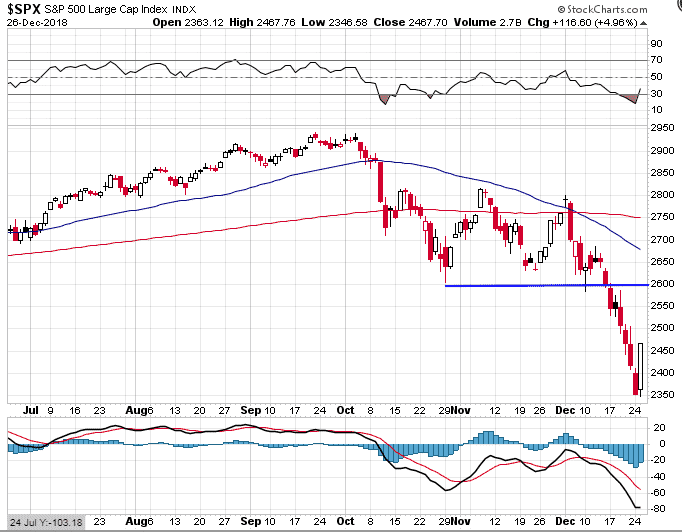
However, if you’re looking to get short this market, 2600 on the S&P 500 would be a logical spot.


Comments
Log in or sign up to join the conversation.