

The bond market has had a rocky year, but several fixed‑income sectors are posting gains so far in 2026, based on a set of ETFs through Tuesday’s close (Aug. 25). The main downside exceptions: medium‑ and long‑term Treasuries, which are modestly in the red this year.
Junk bonds (JNK) and floating‑rate securities (FLRN) continue to lead in 2026, logging gains of 2.9% and 2.7%, respectively — modest advances, but well ahead of the US investment‑grade fixed‑income benchmark’s fractional 0.4% rise, based on the Vanguard Total Bond Market ETF (BND).
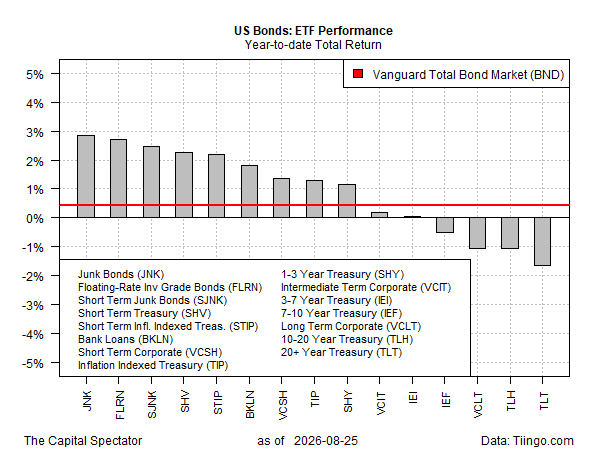
The losers are concentrated in Treasuries, ranging from a 0.5% decline for a portfolio of 7–10‑year maturities (IEF) to a 1.7% slide in long‑term governments (TLT).
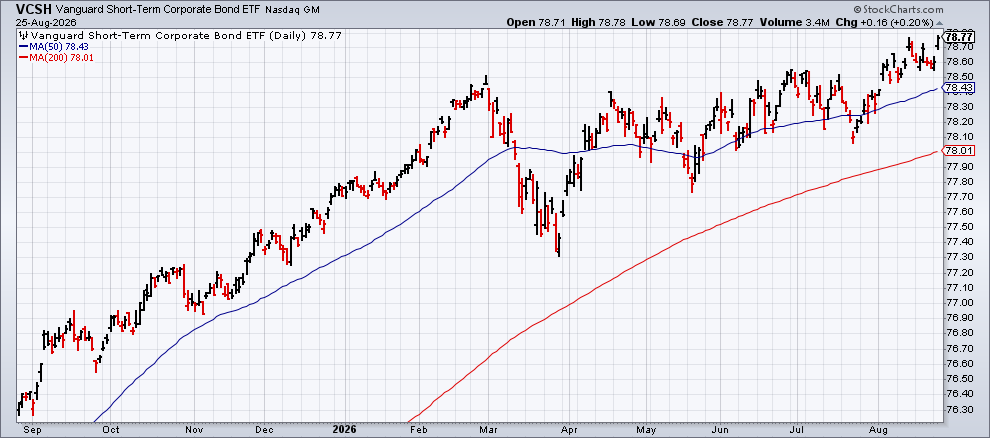
Recent history highlights a clear split in bond‑market performance. The winners have enjoyed an ongoing rally lately. Short‑term corporates (VCSH), for example, jumped to a new record high yesterday.
Bond‑market strength is no mean feat these days as a variety of risk factors swirl, including ongoing uncertainty about inflation and the Federal Reserve’s plans for when and how to maintain price stability — a goal Fed Chairman Warsh has repeatedly emphasized sans details.
Speaking of Warsh, bond investors will be listening closely to his speech on Friday at the Fed’s Jackson Hole meeting. The market is looking for some degree of clarity about the Fed’s so‑called reaction function in an environment where long‑term Treasury yields are already doing part of the tightening for him. In other words, what is the Fed’s playbook for responding to incoming data and market conditions vis‑à‑vis inflation risk?
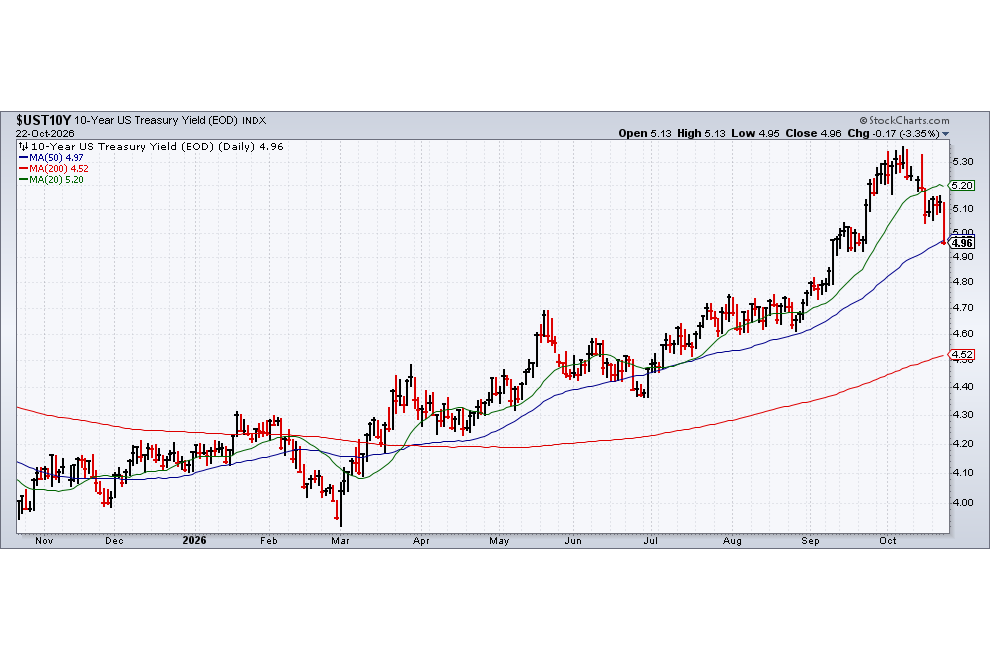
Warsh has been less than forthcoming on this point, preferring to dial back forward guidance and urging investors to look to market signals for context. But a market‑based framework is getting complicated at a time when the Treasury Department is becoming more interventionist — Treasury Secretary Bessent in recent days has discussed plans to increase purchases of government bonds to lower yields, which have been rising amid inflation worries.
By some accounts, Warsh and Bessent have muddied the policy message. It doesn’t help that the Fed and Treasury now appear to be a cross purposes — manipulating yields (Treasury) and telling investors to focus on market signals for guidance (Fed).
It’s unclear whether the Fed chairman’s speech will bring new clarity to his “less‑is‑more” communication strategy. Forthcoming or not, Warsh could set the tone for the bond market in the weeks ahead, for good or ill. The crowd is looking for direction on rates, more transparency with communication, and reassurance that the Fed has a coherent plan for navigating rising yields and persistent inflation pressures. The question is how the market reacts if those points are left vague or ignored.


Comments
Log in or sign up to join the conversation.