

The oil-led Friday rebound was highlighted by a seemingly desperate "road-show" of analysts and government officials, amid suspicion from experienced or geopolitically-informed observers, who remain skeptical that any important 'low' is in. Now, many believe that's the case for the S&P; but not for Oil.
They can't have it both ways; although we believe that even if what we had was primarily a short-covering move by Oil (because now the 'clarification' from the UAE also affirms that there's no deal yet); we still believe Iran would have to limit oil production in a sort of accommodation for Russia's 'help' in Syria; with the Saudi's still remaining the key part of any end-game for oil to be well. For sure we think the downside was overdone; warned against shorting Oil, and as you know generally believe those doing so provided the buy-side for rebounds at this point; triggered by Thursday's 'incorrect' news service oil deal story.
The point: the duration of the Saudi war on Oil prices isn't sufficient to allow the return to seriously expensive oil, because production levels haven't dropped to a level that would validate their effort to undermine foreign oil industry 'flows'. In the case of the U.S., while almost all 'shale' drilling has ceased; production out of those (greater initial flush than tapering production) wells won't drastically be lower for several more years. Hence the Saudi's hurt our industry and jobs but didn't drop our production levels, especially with Gulf of Mexico production just ramping 'up', from already drilled wells that took lots of time to come on-line. In essence the 'hit' from the Saudi's impacted the Russians more than the U.S.
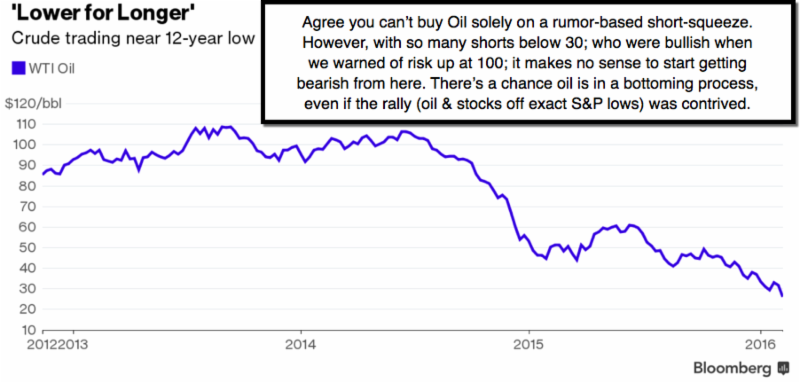
The stronger overall production thus means the Saudi's would have to persist a lot longer (which some believe they intend do); but the rub is their reserves of foreign currency are being drained, due to reduced inflows of Petrodollars; far more important than a focus on some (like Iran) trying to sell in Euros. So yes, if the Saudi's are more concerned about the 'reserve drain', or there is a sort of ultimatum from the U.S. regarding how their contemplated action in Syria might be viewed by Washington (presuming DC's clever enough for a quid-pro-quo); they might reluctantly be dragged to an OPEC meeting on production cuts.
That alone is reason for concern about volatility (in both directions) for Oil. But, while we would like to see higher prices for Oil; it's unlikely (even in optimistic cases) to be sufficient to alter the financial woes or Asian credit challenges; all of which combine to presumably keep a lid on how much the S&P can rebound.
That is not to say that China or Japan won't propose some sort of new reforms that the market temporarily likes. After all; we're going through a restructuring in lots of markets; and lots of economic and monetary policies. Plus you had this insane oil-led short-covering rally both Thursday and Friday morning that came right from (and not coincidentally we suspect) the lateral lows of January.

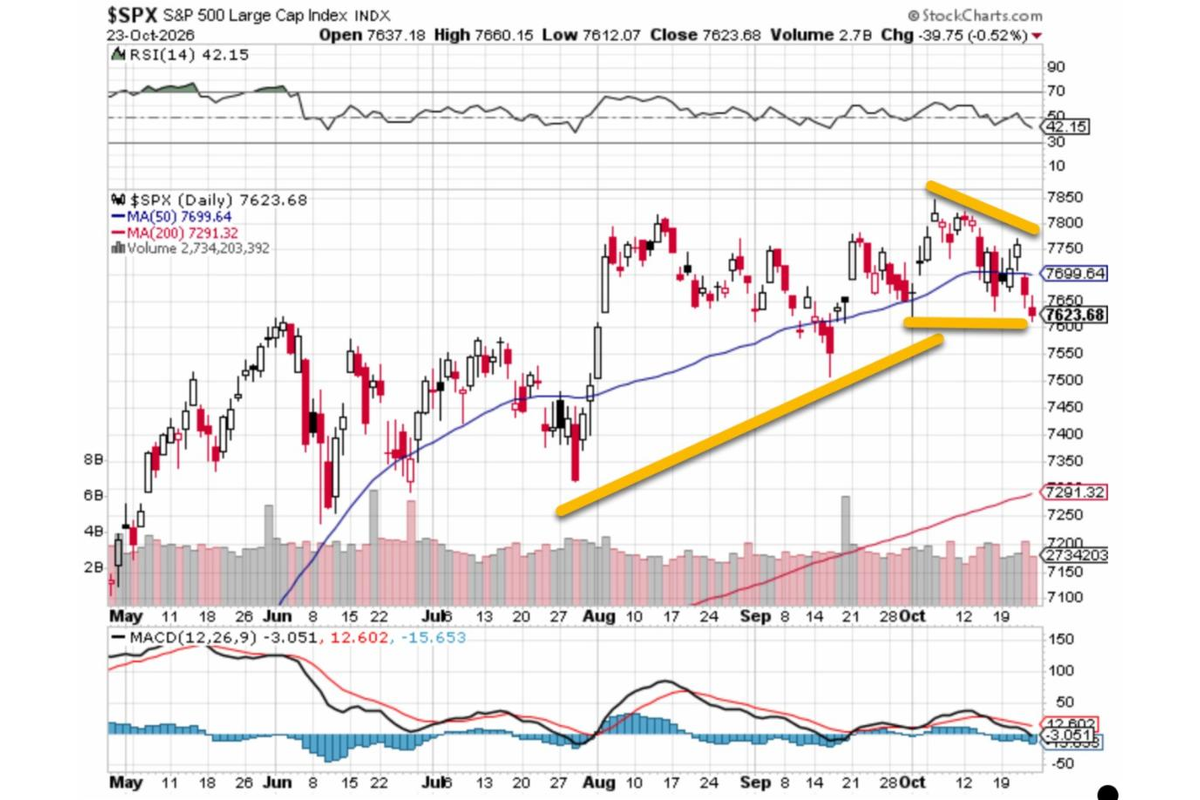
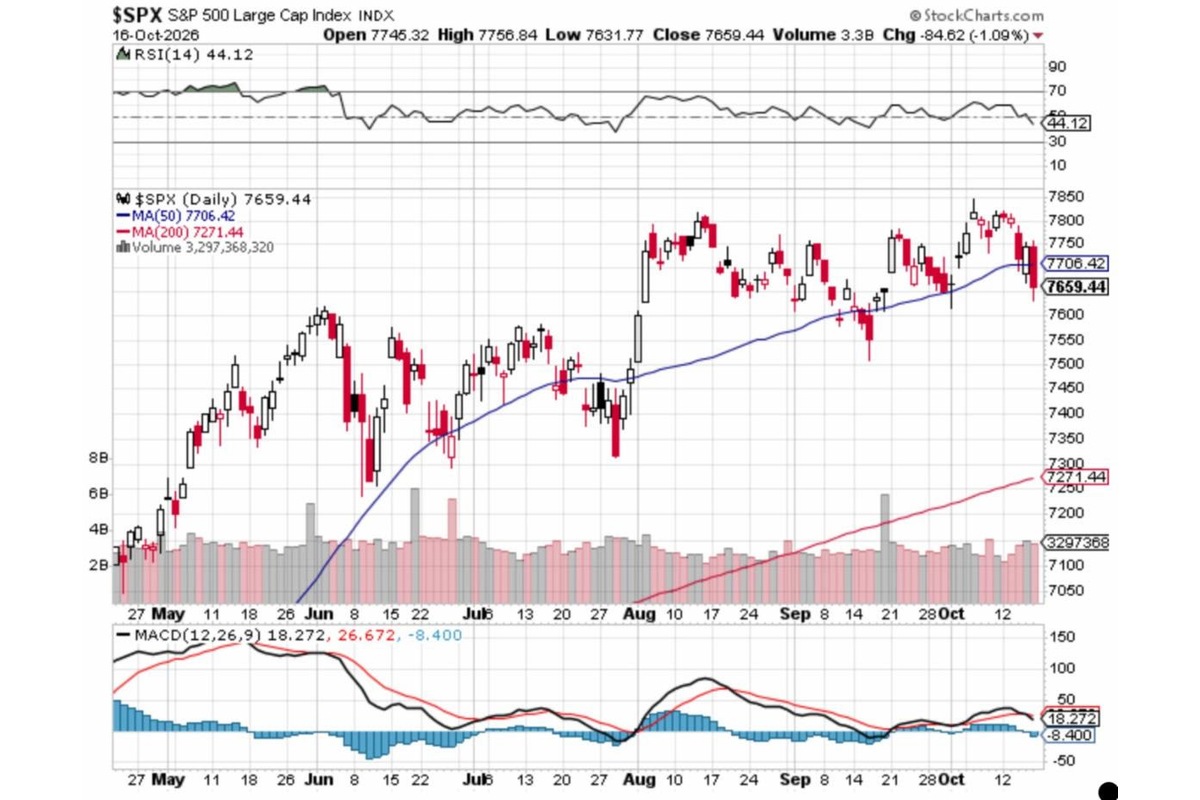
Bottom-line: we got a desperate comeback from a last-ditch short-term S&P support point, that subsequently recovered all that was lost the prior session; and then faded in-front of a weekend, as suspected given Monday's China risk, which might spillover (if hard-down) into European markets.
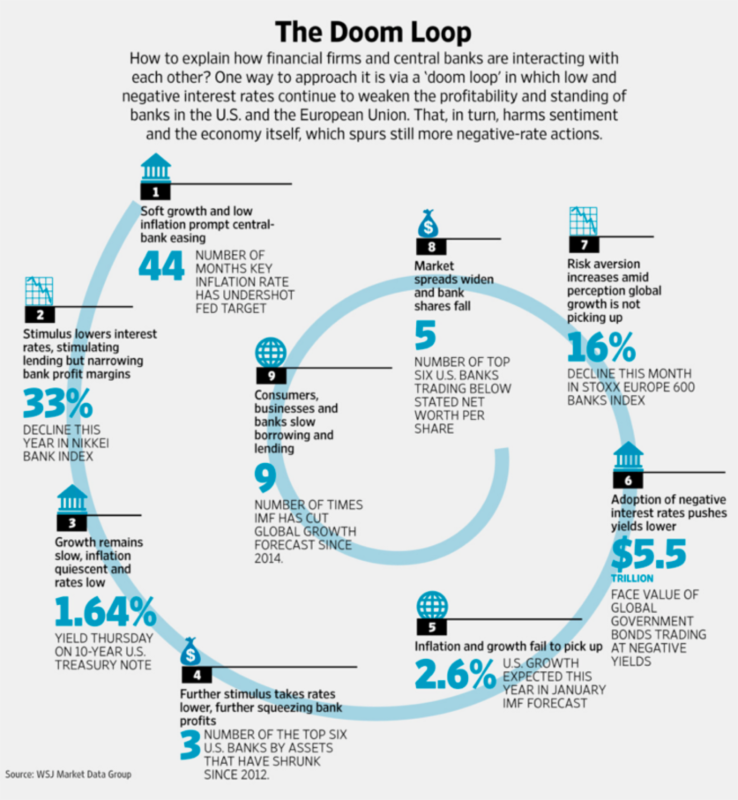
Notably; the U.S. is closed Monday for Presidents Day; hence there can be no reaction in our markets until Tuesday (other than overnight or Globex sessions) thus it was logical to suspect that after a strong morning; bids would become a bit more scarce; but then you got a reprieve in Europe (Schauble was brought in as Finance Minister to defend Deutsche Bank); better Financials in the wake of Jamie Dimond's personal purchase (reminiscent of JP Morgan himself years ago stepping-in and saving the day temporarily); and late today another remark from NY Fed President Dudley; saying all talking about NIRP is 'extraordinarily' premature as regards the United States (words that Yellen might have used as opposed to skirting both sides of the issue and being so vague). I think Dudley really was the 'relief'; after all the NY Fed is key to FX and other trading both on behalf of the Fed, and as repository for lots of foreign assets (including Gold).

Financial stresses have not vanished (they've even increased; look at Portugal) and trotting-out NY Fed Dudley and Germany's Schauble on Friday to try again at painting a stable picture, is understandable if suspicious coming from levels where we bounced (led by an incredible Oil short-squeeze and amid lots more credit accident risk, especially remaining in China). Parading officials actually minimizes their credibility if and when rallies fail, or new banking crises unravel. Such hand-holding gestures seem welcome but can backfire later-on, by calling to attention the rising risks in the financial sectors.

It also puts more pressure on central banks (on which far too much hinges) to try figuring-out what they can do to add to stability, rather than promote further instability, which has been the result of much of what most have generated of late. Less talk (or clarification of NIPR's negative aspects is welcomed too.)

The entire bond market is fighting the Fed. Negative rates are not a good thing and that's why Dudley's remark was a breath of relatively fresh air on the topic.
Our overall short-position is retained from the March S&P 2065 level.
Comments
Log in or sign up to join the conversation.