

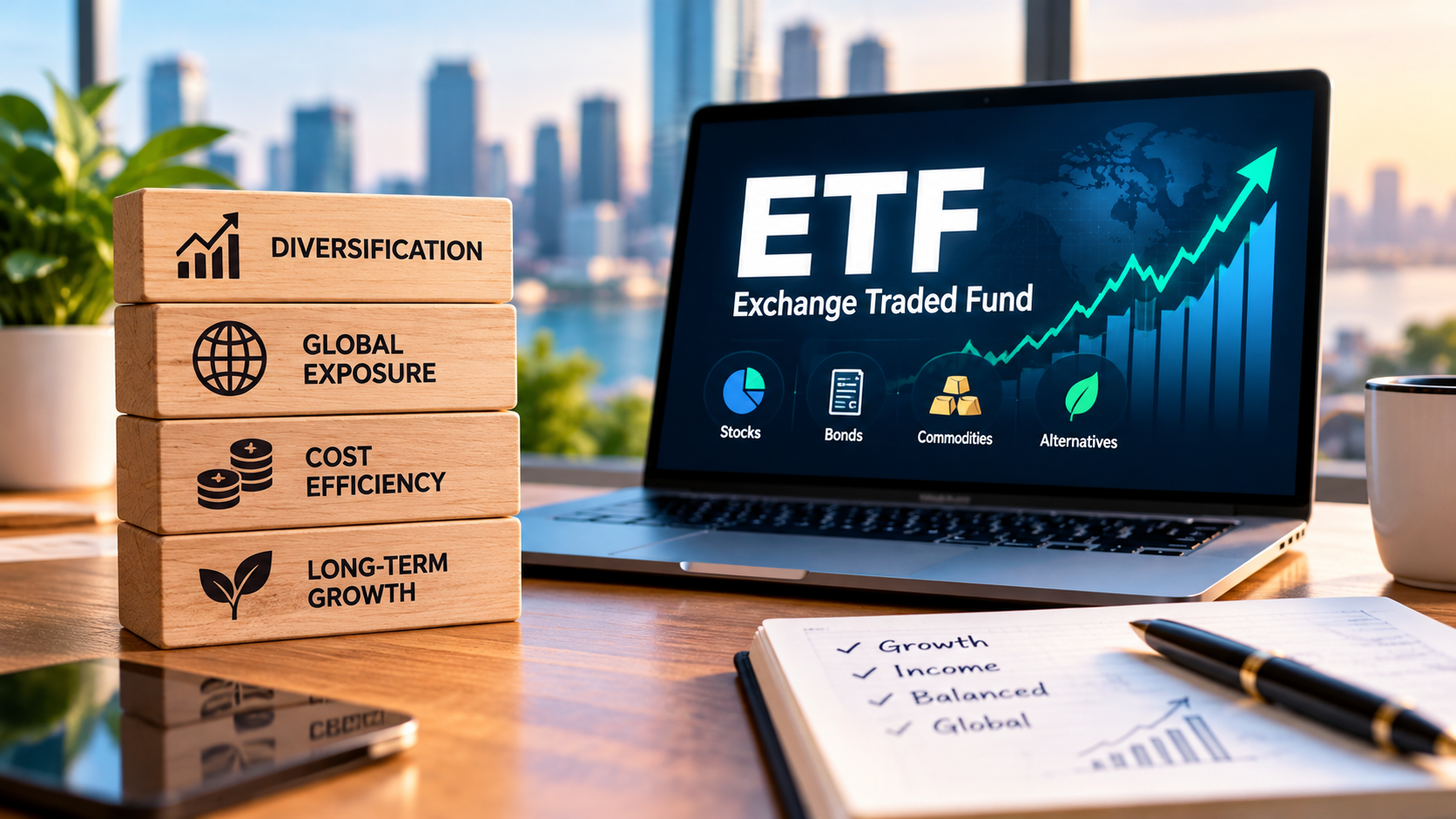
On Wednesday of this week, Alphabet (GOOG) reported earnings that were not well received by the street. A couple of the metrics were missed, raising questions about whether the company is spending too much money on capex for AI, too much relative to what it can make back. Earlier on Wednesday, I saw an ad for the T-Rex 2X GOOG ETF, which has the symbol GOOX.
We've looked at leveraged products from several different angles, including the idea that the more volatile the underlying, the more the 2X fund will deviate from its reference security when looked at over longer periods. Looking at GOOX, it's been pretty close to 2X most of the time, not all of the time, but most of it.
Here are the month-by-month results.
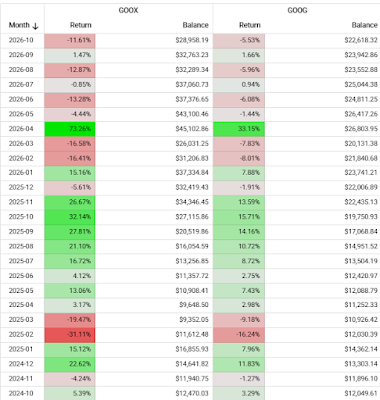
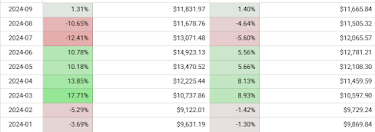
Of course, it is not perfect, but many of the individual months are pretty close. Many of the stats are 2X too... except growth rate, which is 50% more than the reference security.

Figuring out the capital efficiency is interesting. There is clearly no assurance that GOOX will capture 2X GOOG for more than a day despite many months where it has come close. Stocks that are a little less volatile have less volatility drag and have the opportunity to come closer to 2X over a longer period.

Sandisk (SNDK) is far more volatile than GOOG, and so SNXX has been more like 1.1X over the shorter period that it has been trading. I would also throw in that since the start of 2026, GOOX is down far more than 2X GOOG. I think it is useful to revisit these every so often even if the likelihood of using them is very low.
Related to leverage, the 2026 ReturnStacked Symposium was held in Chicago this week. During the event, they tweeted out photos with quotes attributed to the speakers like the following. Last year, after the event, they shared a lot of the content, so we'll see if they do that again this year. The content and the theory, of course, fascinate me.
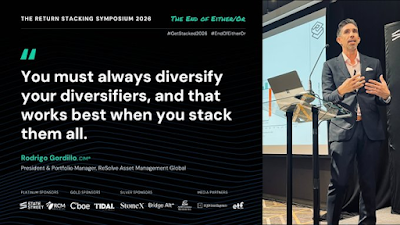
We haven't been able to make it work best by stacking them all. The following is a variation of what we've looked at several times before.
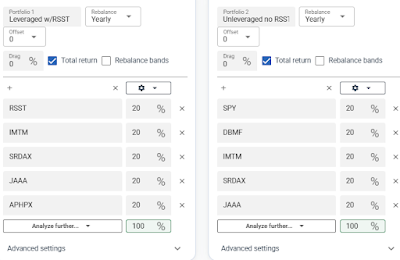
Both portfolios have the same 40% in equities, the same 20% in managed futures replication, the same two fixed income funds, and then in the portfolio leveraged with RSST, we added APHPX, which is like a global macro fund. The premise from ReturnStacked is not about leveraging up; it is about adding diversifiers without having to give up equity or fixed income exposure.
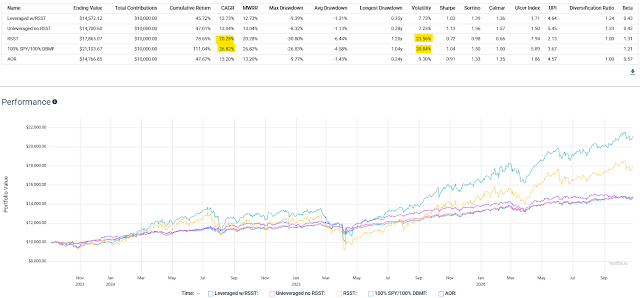
I also ran it with 40% in JAAA as opposed to an additional alternative, and that also lagged by a similar amount. The lag is slight, and it is only a touch more volatile, so it's not bad; it's less volatile than AOR, which is 60/40 and had a higher Sharpe Ratio than AOR too. That's good, but the leverage isn't adding anything versus not being leveraged.
The problem is highlighted. I think RSST versus SPY/DBMF is a reasonable comparison, one we've used before, and RSST seems to always lag. I've said this before; I'm not sure this is actually solving a problem.
The last one is about the tokenization of funds. Here's another angle on this related to interval funds, evergreen funds, or any other fund that does not have daily liquidity. We are not yet at the point I am going to describe. The big idea is that it will soon be possible (probably) to buy a tokenized version of something like Ark Venture Fund (ARKVX) or the KPC Litigation Finance Fund and be able to sell it on-chain without the limits or gating. ARKVX was profiled in this context in the link I dropped, and KPC is a fund I've written about once or twice before; it doesn't have a symbol.
You can think of the tokenized version of a fund as being a different share class of a fund like mutual funds have. That's a little too simplistic, but it paints a good picture. Whatever limits there are to buying the funds through the actual company, like being accredited or needing an advisor, would still be in place. It is not clear to me whether those restrictions would still be in place for someone buying a fund on-chain.
One big issue, though, could be the pricing when you try to trade on-chain. Maybe it will be close to NAV, but maybe not, which is a risk, but there is a price that you'd be able to get out if you had to.
This concept will make its way to brokerage accounts, which will make every aspect easier. Again, it's very early; we're not there yet. This is simply a concept that I think could be useful. A small slice into something like litigation finance interests me, but there is no scenario where I am giving up daily liquidity. Maybe, as described, it's more of a step toward daily liquidity.


Comments
Log in or sign up to join the conversation.