

Introduction
In most modern CNC machining setups, you need cutting tools that really work under pressure, high rpm, and long run production schedules. That is where the carbide insert, as a kind of replaceable cutting tip, comes in quite often in industrial manufacturing. It’s basically a small but important component that helps the process stay stable, cuts down on machine idle time, and usually improves overall productivity in a range of industries.
Carbide inserts show up in turning, milling, drilling, and threading work, mainly because they bring strong hardness plus good wear resistance. In practice, this means they can help people reach a nicer surface quality, run higher cutting speeds, and keep dimensional accuracy closer to what was planned, not just “close enough”.
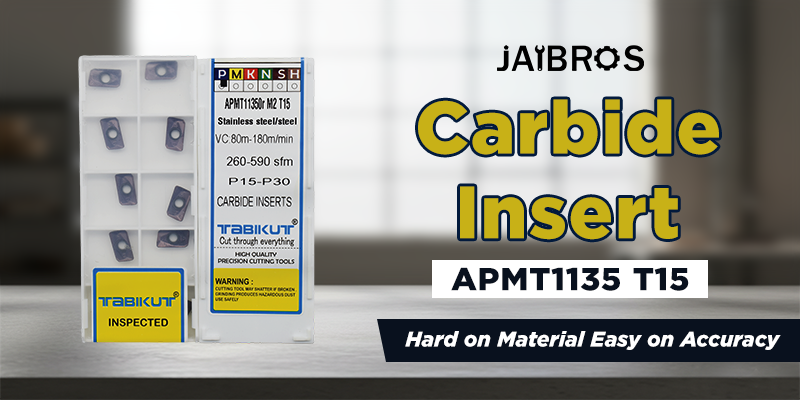
If you understand the main insert types, what they are used for, and the real benefits they offer, you can choose the right tooling much faster for efficient CNC machining operations.
What Is a Carbide Insert?
A carbide insert is a replaceable cutting edge made from cemented carbide material. It is mounted on a tool holder and used for metal cutting operations in CNC machines and conventional machining systems.
Unlike solid cutting tools, inserts can be replaced once worn without changing the complete tool body. This makes them highly cost-effective for industrial manufacturing.
A quality carbide insert provides:
High heat resistance
Better wear resistance
Improved cutting efficiency
Faster machining speeds
Longer tool life
Better surface finish
These features make carbide inserts essential in modern manufacturing industries.
How Carbide Inserts Work in CNC Machining
Carbide inserts remove material from the workpiece during cutting operations. Their geometry, coating, and grade determine machining performance and cutting stability.
In CNC machining environments, inserts are designed to perform efficiently under:
High spindle speeds
Heavy feed rates
Continuous cutting conditions
Hard material machining
Their replaceable design allows manufacturers to minimize downtime and maintain production efficiency.
Main Types of Carbide Inserts
Different machining applications require different insert shapes and cutting characteristics.
Turning Inserts
Turning inserts are used in CNC lathes and turning centers for operations such as:
Facing
Profiling
External turning
Internal boring
Finishing
These inserts are available in square, triangular, round, and diamond shapes, depending on the machining requirement.
A properly selected carbide insert improves cutting precision and surface finish during turning operations.
Milling Inserts
Milling inserts are used in face mills, shoulder mills, and slotting cutters.
Applications include:
Face milling
Slot cutting
Contour machining
Shoulder milling
Milling inserts are specially designed to handle interrupted cutting conditions and heavy cutting loads.
Drilling Inserts
Modern carbide drill systems often use replaceable inserts for hole-making operations.
These inserts help achieve:
Faster drilling speeds
Better chip evacuation
Higher hole accuracy
Improved machining productivity
Indexable drilling systems are widely used in automotive and aerospace industries.
Threading Inserts
Threading inserts are designed for producing internal and external threads on machined components.
They support:
Metric threading
UNC threading
UNF threading
Pipe threading
These inserts help maintain consistent thread quality during production operations.
Carbide Insert Shapes and Applications
Square Inserts
Square inserts provide strong cutting edges and are commonly used for rough machining operations.
Triangular Inserts
These inserts offer multiple cutting corners and good machining versatility.
Round Inserts
Round inserts are ideal for heavy-duty cutting and interrupted machining conditions.
Diamond Inserts
Diamond-shaped inserts are mainly used for precision finishing applications because of their sharp cutting geometry.
Importance of Carbide Insert Grades
Different workpiece materials require different insert grades.
A typical carbide insert chart helps machinists choose inserts according to:
Material type
Cutting speed
Feed rate
Machining operation
Insert grades are commonly categorized for:
Steel
Stainless steel
Cast iron
Aluminum
Hardened materials
Choosing the right insert grade improves tool life and machining efficiency.
Benefits of Carbide Inserts
Carbide inserts provide several advantages in industrial machining environments.
Longer Tool Life
Their wear-resistant material allows them to perform efficiently for longer production cycles.
Higher Cutting Speeds
Carbide inserts can handle faster machining speeds compared to conventional tooling materials.
Better Surface Finish
Precision insert geometry helps improve the surface quality of machined components.
Reduced Downtime
Replaceable inserts reduce machine stoppage during tool replacement.
Improved Productivity
Manufacturers can achieve higher production output with consistent machining performance.
A properly selected carbide insert significantly improves operational efficiency in CNC machining.
Carbide Inserts vs Solid Carbide Tools
Manufacturers often compare insert tooling with solid carbide cutting tools.
Carbide Inserts
Advantages include:
Replaceable cutting edges
Lower tooling cost
Faster tool replacement
Better for mass production
Solid Carbide Tools
Advantages include:
Higher rigidity
Better precision
Suitable for smaller diameters
Excellent for detailed machining
Many industrial workshops use both inserts and solid carbide tools depending on production requirements.
Role of Carbide Drill Bits in Manufacturing
Hole-making operations are critical in industrial production.
Modern carbide drill bits provide:
Better drilling accuracy
Faster cutting performance
Improved wear resistance
Higher heat stability
These tools are commonly used in:
Automotive industries
Aerospace manufacturing
Mold production
Precision engineering
High-performance carbide drill bits improve machining efficiency while maintaining superior hole quality.
Applications of Carbide Inserts
Carbide inserts are used across multiple industries.
Automotive Industry
Used for machining:
Engine components
Shafts
Brake systems
Transmission parts
Aerospace Industry
Used for machining titanium alloys and precision structural parts.
Medical Industry
Supports the production of surgical instruments and implants.
Oil and Gas Industry
Used for machining hard metals in drilling and pipeline equipment.
A durable carbide insert helps maintain precision and productivity in these demanding industries.
Conclusion
Carbide inserts are an essential part of modern CNC machining and industrial manufacturing. Their ability to handle high-speed operations, hard materials, and continuous production makes them highly valuable in precision engineering environments. From turning and milling to drilling and threading, carbide inserts improve productivity, reduce downtime, and deliver consistent machining results.
For industries looking for reliable CNC tooling solutions, Jaibros offers a wide range of precision cutting tools, inserts, and industrial machining products designed to support modern manufacturing requirements with quality and performance.
FAQs
1. What is a carbide insert used for?
A carbide insert is used for metal cutting operations such as turning, milling, drilling, and threading in CNC machining.
2. What are the main types of carbide inserts?
The main types include turning inserts, milling inserts, drilling inserts, threading inserts, and grooving inserts.
3. Why are carbide inserts preferred in CNC machining?
They provide higher cutting speeds, longer tool life, better wear resistance, and improved machining efficiency.
4. What is a carbide insert chart?
A carbide insert chart helps machinists select the correct insert grade and geometry based on machining material and cutting conditions.
5. How do carbide drill bits improve productivity?
Carbide drill bits improve drilling speed, hole accuracy, wear resistance, and overall machining performance in industrial operations.
Comments
Log in or sign up to join the conversation.