
If you've started looking into veneers, you've probably noticed that prices are all over the place. One clinic advertises a low figure per tooth, another quotes a full smile package, and a third won't give a number until you've had a consultation. It's confusing, and it makes comparing clinics feel almost impossible.
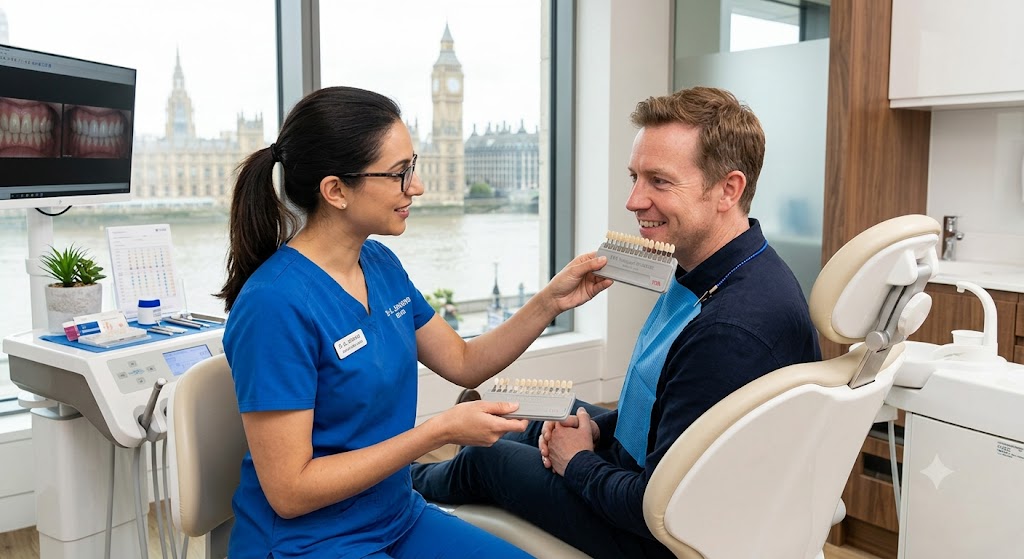
The reason is simple: there's no such thing as a standard veneer treatment. Two people asking for "porcelain veneers" can need completely different work, from the number of teeth involved to the preparation needed beforehand. Veneers placed purely for cosmetic reasons also aren't usually available on the NHS, so almost everyone is comparing private quotes built in very different ways.
Here are the eight factors that shape what you'll actually pay, and what to look for when you compare quotes.
1. How many teeth you're treating
This is the biggest single factor, and the one people most often underestimate. It's natural to think about the four or six teeth right at the front, but a broad smile often shows eight or more teeth on the top arch, sometimes stretching back to the premolars.
If only the front teeth are covered, the teeth behind them can look darker or narrower by comparison, especially when you're photographed from the side. For that reason, many clinics now offer veneer packages in London that cover a full smile across both arches, with the price confirmed after an assessment. A package can look expensive next to a per-tooth figure, but it's often closer to the real cost of the result people have in mind.
2. The material you choose
"Porcelain veneers" is a broad term. Clinics work with a range of ceramic materials, and they differ in strength, translucency, thickness and how they're made. Some are better suited to patients who grind their teeth; others are chosen for how closely they mimic the way light passes through natural enamel.
These differences affect price, and they should also affect which option is recommended for you. Composite veneers, made from tooth-coloured resin, generally cost less upfront, but they tend to stain and wear more quickly than porcelain and may need more maintenance over time. Ask your dentist to explain the options they use and why one suits your teeth, rather than simply choosing by price.
3. Planning and digital design
Good veneers start well before any tooth is prepared. Many clinics now use digital smile design, which combines photographs and intraoral scans to plan the shape, length and proportions of your new teeth. Some also create a trial mock-up so you can see the proposed shape in your own mouth.
This planning takes time, equipment and clinical skill, and it's usually built into the overall cost. It's worth it. Careful planning helps you and your dentist agree on the direction before anything permanent happens, and it reduces the chance of costly changes later.
4. Treatment you may need beforehand
Veneers need a healthy foundation. If you have gum disease, decay, old fillings that need replacing or teeth that are significantly out of line, those issues usually need addressing first.
Common preparatory treatments include:
Hygiene appointments to get gums healthy
Fillings or crowns on damaged teeth
Professional teeth whitening, so veneers can be matched to a brighter natural shade
Clear aligners, where teeth are too crowded or rotated for veneers alone
This work may be quoted separately, so check whether a veneer price assumes your mouth is already treatment-ready.
5. Who makes your veneers
Your dentist plans the smile and fits the veneers, but a dental ceramist makes them. Their skill is a major part of how natural the finished result looks, from the subtle translucency at the edges to the surface texture that catches the light.
Some clinics use external laboratories, sometimes overseas, while others have a lab on-site. Where your veneers are made, and how closely the dentist and ceramist work together, influences both cost and quality. It's a fair question to ask at any consultation.
6. The clinician's experience
Veneers are technically demanding. Preparing teeth conservatively, managing the bite and bonding each veneer precisely all take skill built up over many cases. Dentists with extensive cosmetic experience often charge more, and in many cases that's reflected in how predictable their results are.
It's worth knowing that "cosmetic dentist" isn't a protected specialist title in the UK. Every dentist must be registered with the General Dental Council, which you can check on the GDC's online register, but for cosmetic work it's sensible to ask about the dentist's training and experience with veneers specifically. Asking to see examples of their own cases is also reasonable.
7. Where the clinic is based
Running a clinic in Central London costs more than running one in a smaller town. Rent, staffing and equipment all feed into what patients pay, which is one reason veneer prices in London tend to sit higher than in other parts of the UK.
The trade-off is access. A clinic close to where you live or work makes consultations, fitting appointments and future reviews much easier to fit around daily life.
8. What's included after fitting
This is where quotes differ most, and where the cheapest option can turn out to be more expensive. Before comparing prices, find out whether the quote includes:
The initial consultation, scans and planning
Temporary veneers while the final ones are made
Review appointments after fitting
Minor adjustments if your bite needs tweaking
A night guard, if you grind your teeth
What happens, and what it costs, if a veneer chips
A quote that covers aftercare clearly is often better value than a lower figure that leaves these costs to come later.
How to compare veneer quotes fairly
When you've gathered a few quotes, line them up by asking the same questions of each:
How many teeth does this price cover?
Which material is included, and why was it recommended?
Is any preparatory treatment needed, and is it included?
Where are the veneers made?
What aftercare is included, and for how long?
On paying for treatment, many clinics offer finance options, which can usually be discussed during your consultation. Make sure you understand the terms fully before agreeing to anything.
Ultimately, the only reliable price is a written, itemised quote given after a proper assessment of your teeth. Treat low headline figures with caution until you know exactly what they include.
Frequently Asked Questions
Why do veneer prices vary so much between clinics?
Clinics price veneers in different ways. Some quote per tooth, others quote packages, and quotes may or may not include planning, temporaries and aftercare. Material choice, lab quality, clinician experience and location all play a part too, so two quotes that look different may not be comparable until you know what each covers.
Are veneers available on the NHS?
Veneers placed purely to improve appearance aren't usually available on the NHS. In some cases a dentist may recommend a restoration for clinical reasons, but cosmetic veneers are generally a private treatment.
Is it cheaper to have fewer veneers?
Treating fewer teeth costs less upfront, but it can leave a visible difference between the veneers and the natural teeth beside them. Your dentist should show you how many teeth appear when you smile and explain whether a smaller treatment would give the result you're hoping for.
Are composite veneers a cheaper alternative?
Composite veneers usually cost less initially and can often be placed with little or no tooth preparation. However, they tend to stain, chip and wear more quickly than porcelain, so they may need polishing, repair or replacement sooner. Over the long term, the difference in cost may be smaller than it first appears.
Can I pay for veneers in instalments?
Many private clinics offer finance options, and these can usually be discussed at your consultation. Terms vary, so read the details carefully and make sure the monthly cost fits comfortably within your budget before committing.
Comments
Log in or sign up to join the conversation.