

According to TechSci Research report, “5G Technology Market Share - Global Industry Size, Trends, Opportunity, and Forecast 2031, The Global 5G Technology Market will grow from USD 171.72 Billion in 2025 to USD 1414.99 Billion by 2031 at a 42.12% CAGR.
5G technology is becoming an essential foundation for the rapidly developing digital economy. Its combination of high-speed connectivity, ultra-low latency, increased network capacity, and support for massive numbers of connected devices is enabling applications that were difficult to implement effectively with previous generations of wireless networks.
The technology is increasingly being incorporated into industrial automation, smart cities, connected transportation, healthcare, energy management, entertainment, and enterprise communication. At the same time, the expansion of artificial intelligence (AI), Internet of Things (IoT), cloud computing, edge computing, and immersive digital experiences is creating additional demand for reliable and high-performance connectivity.
Unlike conventional connectivity upgrades that primarily focus on improving consumer internet speeds, 5G is opening the door to entirely new operational models. Factories can connect machines wirelessly, cities can manage infrastructure through real-time data, and transportation systems can communicate with connected vehicles. These applications are increasing investments in network infrastructure while creating opportunities for telecom operators, technology vendors, service providers, and enterprises.
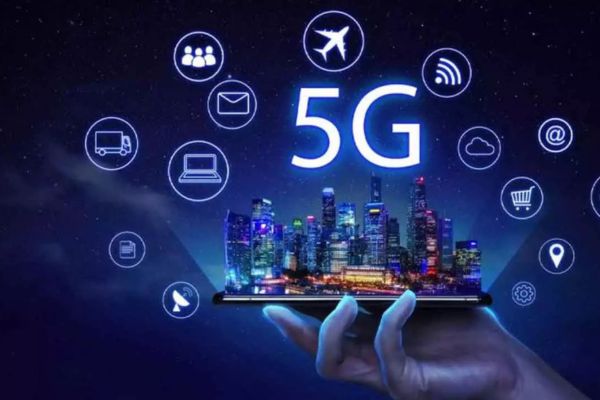
Industry Key Highlights
The Global 5G Technology Market is projected to grow from USD 171.72 Billion in 2025 to USD 1,414.99 Billion by 2031.
The market is expected to register a CAGR of 42.12% during the forecast period.
Autonomous vehicles, smart grids, industrial robotics, IoT, and smart-city infrastructure are increasing demand for 5G connectivity.
North America is the fastest-growing regional market.
The Services segment is the fastest-growing component in 2024.
5G is supporting high-bandwidth and low-latency applications across consumer and enterprise environments.
Private 5G networks and network slicing are creating new opportunities for enterprise connectivity.
AI, edge computing, cloud platforms, and Industry 4.0 are accelerating 5G adoption.
Healthcare, manufacturing, logistics, transportation, and public safety are becoming important application areas.
Increasing demand for customized connectivity and managed services is shifting the ecosystem toward service-oriented business models.
Request For Sample Copy of Report For More Detailed Market insight
Main Drivers
Rapid Expansion of Connected Technologies
The growing adoption of connected technologies is one of the strongest forces behind the global 5G market. Businesses and consumers are increasingly using connected devices, smart sensors, cloud applications, and real-time digital services.
5G is designed to support high device density while maintaining reliable communication. This makes it particularly valuable in environments where thousands or even millions of devices may need to exchange information.
As IoT adoption expands across homes, factories, cities, transportation systems, and utilities, the requirement for scalable wireless infrastructure is expected to increase significantly.
Growth of Autonomous Vehicles
Autonomous and connected vehicles require rapid communication between vehicles, infrastructure, cloud platforms, and other road users. Delays in data transmission can affect decision-making and safety, making low-latency connectivity an important technological requirement.
5G can support real-time communication for applications such as traffic management, navigation, fleet monitoring, vehicle-to-infrastructure communication, and advanced driver-assistance systems.
The development of connected transportation ecosystems is therefore creating additional demand for 5G networks and related technologies.
Industrial Automation and Robotics
Manufacturing is undergoing a major digital transformation through Industry 4.0 technologies. Connected machinery, robotics, sensors, AI systems, and automated production lines require reliable and responsive communication.
5G can support wireless machine-to-machine communication and real-time coordination between industrial systems. Its low-latency capabilities can help manufacturers operate automated equipment with greater flexibility.
This is particularly valuable for factories that need adaptable production environments and continuous access to operational data.
Smart Grid Development
Energy infrastructure is becoming increasingly digital. Smart grids depend on sensors and connected systems that can monitor electricity generation, distribution, demand, and equipment conditions.
5G can facilitate rapid communication between grid components, enabling utilities to respond more efficiently to changing energy conditions. The technology can also support distributed energy resources and advanced monitoring systems.
As countries modernize their power infrastructure and increase renewable-energy integration, demand for intelligent connectivity is expected to rise.
Increasing Demand for High-Speed Data
Consumers are using increasingly data-intensive services, including video streaming, cloud gaming, augmented reality (AR), virtual reality (VR), and high-resolution content.
Enterprises are also generating significant amounts of data through cloud applications, analytics, remote monitoring, and digital collaboration. The resulting increase in network traffic is encouraging telecom providers to expand high-capacity 5G infrastructure.
Emerging Trends
Growth of Private 5G Networks
Private 5G networks are becoming increasingly attractive to enterprises that require dedicated, secure, and highly reliable connectivity.
Manufacturing facilities, ports, warehouses, healthcare campuses, and industrial sites can deploy private networks to connect equipment and applications while maintaining greater control over network performance.
This trend is creating new revenue opportunities for telecom operators and technology providers.
Network Slicing
Network slicing allows operators to create customized virtual network environments for different applications. Each slice can be configured according to specific requirements related to bandwidth, latency, reliability, or security.
For example, a healthcare application may require highly reliable low-latency connectivity, while another application may prioritize capacity. This flexibility can help enterprises use 5G resources more efficiently.
Edge Computing and 5G Integration
The combination of 5G and edge computing is becoming increasingly important for applications requiring rapid data processing.
Instead of sending all information to distant data centers, edge computing allows data to be processed closer to where it is generated. When combined with 5G connectivity, this can reduce delays and improve the responsiveness of applications such as industrial automation, autonomous transportation, gaming, and real-time analytics.
AI-Driven Network Management
Artificial intelligence is increasingly being used to optimize telecommunications infrastructure. AI systems can analyze network traffic, identify anomalies, forecast demand, and support automated network management.
This can help operators improve network performance while reducing operational complexity.
Expansion of Immersive Experiences
AR and VR applications require substantial bandwidth and responsive connectivity. 5G can support more immersive digital experiences by providing faster data transmission and lower latency.
Applications are emerging across gaming, entertainment, education, training, retail, and industrial visualization.
Real-World Use Cases
Smart Cities
Smart cities are among the most promising applications for 5G. Connected traffic systems, surveillance cameras, environmental sensors, smart lighting, public transportation, and digital government services can communicate through high-capacity networks.
5G enables these systems to exchange information more efficiently, supporting more responsive urban management.
Healthcare
Healthcare organizations can use 5G to support telemedicine, remote patient monitoring, connected medical devices, and advanced digital healthcare services.
The technology's low latency and high bandwidth can also support applications requiring real-time transmission of medical information. Remote procedures and advanced healthcare robotics represent longer-term opportunities for 5G-enabled connectivity.
Manufacturing
Factories can connect robots, sensors, automated machinery, cameras, and enterprise systems through 5G. Real-time communication can help coordinate production activities and support predictive maintenance.
Wireless industrial connectivity can also make production facilities more flexible because equipment can potentially be repositioned without extensive rewiring.
Autonomous Transportation
Connected vehicles can communicate with road infrastructure, traffic management systems, and cloud platforms. This can support real-time traffic updates, route optimization, fleet management, and safety-related applications.
As autonomous driving technologies mature, dependable low-latency networks could become increasingly important.
Energy and Utilities
Utilities can use 5G-enabled sensors for monitoring electricity networks, equipment performance, consumption patterns, and distributed energy resources.
Real-time connectivity can support more efficient energy management and help operators respond to changes in demand and supply.
Logistics
Warehouses, ports, and logistics centers can use 5G to connect autonomous vehicles, robotic systems, tracking devices, and inventory management platforms.
This connectivity can support automated material handling, real-time asset tracking, and more efficient supply chain operations.
Competitive Analysis
Ericsson AB
Nokia Corporation
Huawei Technologies Co., Ltd.
Qualcomm Technologies Inc
Samsung Electronics Co., Ltd.
Intel Corporation
Cisco Systems, Inc.
ZTE Corporation
IBM Corporation
Fujitsu Limited
MediaTek Inc.
Verizon Communications Inc.
Customers can also request for 10% free customization on this report.
Market Segmentation
The Global 5G Technology Market is segmented based on component, technology, spectrum, application, and region.
By Component
The market includes:
Hardware
Software
Services
The Services segment emerged as the fastest-growing component in 2024.
As 5G infrastructure becomes more sophisticated, organizations increasingly require services that go beyond basic connectivity. Network management, consulting, integration, cloud connectivity, edge computing, cybersecurity, and application enablement are becoming important components of enterprise 5G deployments.
Businesses adopting Industry 4.0, smart-city technologies, autonomous systems, and connected healthcare applications often require specialized expertise to design and manage their networks.
Telecom providers are also introducing value-added services such as private 5G networks and network slicing, allowing them to develop customized offerings for specific industries.
By Technology
The market is categorized into:
Enhanced Mobile Broadband (eMBB)
Ultra-Reliable Low Latency Communication (URLLC)
Massive Machine Type Communication (mMTC)
eMBB supports high-speed consumer and enterprise applications, while URLLC is designed for applications requiring highly reliable and responsive connectivity. mMTC focuses on connecting large numbers of devices, making it particularly relevant to IoT deployments.
By Spectrum
The market includes:
5G NR Sub-6GHz
5G NR mmWave
Sub-6GHz networks provide broader coverage and are suitable for a wide range of applications. mmWave technology can provide extremely high capacity and is particularly relevant to dense environments and applications requiring very high data throughput.
By Application
The market is segmented into:
Consumer
Enterprises
Consumer applications include smartphones, streaming, gaming, AR, VR, and connected devices. Enterprise applications span manufacturing, healthcare, transportation, energy, logistics, smart cities, and other industrial environments.
By Region
North America is the fastest-growing region in the global 5G technology market.
The United States and Canada have benefited from substantial investments in telecommunications infrastructure, technological innovation, and advanced digital applications. Major telecom operators have accelerated network deployment to meet growing demand for high-speed connectivity.
The region also benefits from a mature technology ecosystem involving telecom companies, cloud providers, semiconductor manufacturers, technology startups, and research organizations.
Strong adoption of AI, autonomous vehicles, industrial IoT, cloud computing, and smart technologies is further increasing the need for low-latency and high-capacity networks.
Future Outlook
The Global 5G Technology Market is positioned for extraordinary expansion, with its value expected to rise from USD 171.72 Billion in 2025 to USD 1,414.99 Billion by 2031, representing a 42.12% CAGR during the forecast period.
The next phase of 5G development is expected to focus increasingly on enterprise applications rather than smartphones alone. Private networks, industrial automation, connected vehicles, smart cities, IoT, healthcare, and intelligent energy systems will create new opportunities for infrastructure providers and service companies.
The growing integration of AI, edge computing, cloud platforms, robotics, and 5G is likely to further expand the technology's capabilities. These technologies can collectively support faster decision-making, greater automation, improved operational visibility, and new digital business models.
The growing importance of the services layer is also expected to reshape the competitive landscape. Enterprises will increasingly seek customized solutions rather than basic connectivity, creating opportunities for managed services, network integration, cybersecurity, cloud connectivity, and specialized industry solutions.
Overall, 5G is evolving into a foundational technology for the connected economy. As industries continue to digitize their operations and demand real-time communication, the combination of high bandwidth, low latency, massive device connectivity, and flexible network architectures will continue to drive the global 5G technology market toward sustained long-term growth.
Contact US:
Techsci Research LLC
420 Lexington Avenue, Suite 300,
New York, United States- 10170
Tel: +13322586602
Email: [email protected]
Comments
Log in or sign up to join the conversation.