

Introduction
The global telecommunications landscape is undergoing one of the most significant transformations in modern history with the rapid deployment of fifth-generation (5G) infrastructure. As digital connectivity becomes the backbone of economic growth, governments, enterprises, and telecom operators are investing heavily in next-generation network technologies capable of delivering ultra-fast speeds, minimal latency, massive device connectivity, and superior network reliability. Unlike previous generations of wireless technology, 5G is not merely an upgrade in mobile broadband; it serves as the foundation for intelligent digital ecosystems that will support smart cities, autonomous transportation, industrial automation, digital healthcare, immersive entertainment, and connected enterprises.
According to TechSci Research report, “5G Infrastructure Market Size - Global Industry Share, Trends, Opportunity, and Forecast 2021-2031F", The Global 5G Infrastructure Market is projected to grow from USD 22.43 Billion in 2025 to USD 114.09 Billion by 2031 at a 31.14% CAGR.
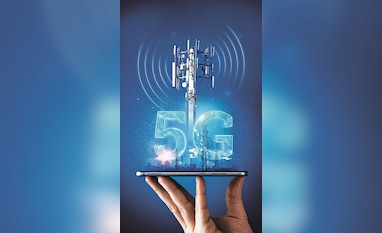
As businesses continue their digital transformation journeys, reliable connectivity has become a strategic necessity rather than a technological advantage. Enterprises are deploying cloud applications, artificial intelligence, Internet of Things (IoT), edge computing, robotics, and automation systems that require uninterrupted, high-capacity communication infrastructure. Consequently, telecom providers are accelerating investments in Radio Access Networks (RAN), macro cells, small cells, Network Function Virtualization (NFV), Mobile Edge Computing (MEC), and Software-Defined Networking (SDN) to build scalable, intelligent, and future-ready networks.
Beyond telecommunications, 5G infrastructure is reshaping industries including automotive, manufacturing, healthcare, logistics, energy, education, and public safety. The technology enables real-time communication between machines, vehicles, sensors, and cloud platforms, opening opportunities for unprecedented automation, operational efficiency, and customer engagement.
Request For Sample Copy of Report For More Detailed Market insight
Industry Key Highlights
Global market expected to grow from USD 22.43 Billion in 2025 to USD 114.09 Billion by 2031.
Forecast CAGR of 31.14% through 2031.
Asia-Pacific continues to lead global 5G deployment.
Automotive remains the dominant application segment.
Network Function Virtualization (NFV) leads core network technologies.
Growing investments in Radio Access Network infrastructure.
Rapid expansion of IoT and connected devices.
Increasing adoption of edge computing solutions.
Smart city initiatives accelerating deployment worldwide.
Strong investments from telecom operators and governments.
Market Overview
The evolution of 5G infrastructure represents a major technological milestone in the global communications industry. As digital services become increasingly data-intensive, traditional communication networks struggle to meet growing expectations regarding bandwidth, latency, reliability, and scalability. Fifth-generation infrastructure addresses these challenges through a highly intelligent network architecture capable of supporting diverse digital applications simultaneously.
Unlike earlier wireless technologies focused primarily on mobile communication, 5G infrastructure serves as a universal connectivity platform connecting people, machines, vehicles, industrial equipment, healthcare systems, and urban infrastructure. Its capability to support massive machine-type communication and ultra-reliable low-latency communication positions it as a foundational technology for future digital economies.
Telecommunication providers are investing extensively in upgrading existing infrastructure while deploying new radio equipment, fiber backhaul, distributed antenna systems, and cloud-native network architectures. Simultaneously, governments are allocating spectrum resources and introducing policies that encourage nationwide 5G adoption to strengthen economic competitiveness and digital inclusion.
As enterprises embrace Industry 4.0 initiatives, demand for high-capacity wireless connectivity continues rising. Manufacturing plants require real-time monitoring of production equipment, healthcare providers increasingly utilize connected medical devices, logistics companies depend on intelligent fleet management, and municipalities implement smart city solutions powered by interconnected sensors.
Emerging Trends
Artificial Intelligence Enhancing Network Intelligence
Artificial Intelligence has become one of the defining trends transforming modern 5G infrastructure. AI enables telecom operators to automate network management, predict equipment failures, optimize traffic routing, improve spectrum utilization, and enhance customer experiences.
Intelligent algorithms continuously analyze network conditions, enabling predictive maintenance and minimizing service disruptions. AI-powered automation significantly reduces operational costs while improving overall network efficiency and reliability.
As networks become increasingly complex, AI will continue playing an essential role in enabling autonomous network operations capable of adapting dynamically to changing traffic patterns and user demands.
Expansion of Edge Computing
Edge computing is rapidly emerging as a critical component of next-generation 5G infrastructure. Rather than processing information exclusively within centralized cloud environments, edge computing enables data processing closer to end users and connected devices.
This architecture dramatically reduces latency while supporting applications requiring immediate decision-making, including autonomous vehicles, industrial robotics, augmented reality, virtual reality, and smart manufacturing systems.
The integration of Mobile Edge Computing with 5G networks creates new opportunities for enterprises seeking faster response times and improved operational performance.
Cloud-Native Network Architecture
Cloud-native infrastructure continues replacing conventional hardware-centric telecom networks.
Virtualized network functions allow operators to deploy, scale, and manage services more efficiently while reducing infrastructure costs and improving flexibility. Cloud-native architecture enables faster software updates, automated service provisioning, and greater operational agility.
This transition is expected to remain a defining trend as operators modernize legacy infrastructure.
Smart City Development
Governments across multiple regions continue investing in smart city initiatives supported by intelligent communication networks.
5G infrastructure enables traffic management systems, intelligent lighting, environmental monitoring, connected surveillance, emergency response coordination, and public transportation optimization.
The increasing adoption of digital urban infrastructure significantly contributes to long-term demand for advanced wireless communication technologies.
Industrial Digital Transformation
Manufacturing organizations increasingly leverage 5G connectivity to support Industrial Internet of Things (IIoT), predictive maintenance, digital twins, robotics, and automated quality inspection.
Real-time machine communication improves productivity while minimizing operational downtime.
The emergence of fully connected manufacturing facilities is expected to generate substantial opportunities throughout the forecast period.
Market Drivers
Rising Demand for High-Speed Connectivity
One of the strongest growth drivers is the increasing requirement for faster and more reliable internet connectivity.
Consumers expect seamless video streaming, cloud gaming, virtual collaboration, remote education, and uninterrupted digital experiences. Enterprises similarly require robust connectivity to support cloud computing, data analytics, and digital operations.
The ability of 5G networks to deliver ultra-fast data transmission with minimal latency makes them the preferred communication technology for both consumers and businesses.
Internet of Things Expansion
The rapid growth of connected devices continues driving infrastructure deployment.
Billions of sensors, smart appliances, industrial machines, healthcare equipment, connected vehicles, and environmental monitoring systems require continuous, reliable communication.
5G infrastructure provides the scalability necessary to support massive IoT ecosystems while maintaining network performance.
Growth of Autonomous Technologies
Autonomous vehicles, drones, robotics, and intelligent transportation systems rely on instantaneous communication.
Ultra-low latency enables real-time decision-making essential for vehicle navigation, collision avoidance, industrial automation, and mission-critical applications.
As autonomous technologies mature, investments in 5G infrastructure are expected to accelerate further.
Enterprise Digital Transformation
Organizations across banking, manufacturing, healthcare, retail, logistics, and telecommunications continue modernizing operations through digital transformation initiatives.
Cloud computing, AI, IoT, automation, and remote workforce solutions all require resilient communication infrastructure.
Consequently, enterprises increasingly collaborate with telecom operators to implement private 5G networks capable of supporting mission-critical business applications.
Government Investments
Governments worldwide recognize advanced digital infrastructure as a catalyst for national economic development.
Public investments supporting spectrum allocation, rural broadband expansion, smart city development, transportation modernization, and digital public services continue encouraging large-scale 5G deployment.
Supportive regulatory frameworks further stimulate private-sector investment.
Market Opportunities
Significant opportunities continue emerging across multiple industries.
Healthcare organizations increasingly deploy connected medical devices, telemedicine platforms, robotic surgery systems, and AI-powered diagnostics requiring reliable wireless connectivity.
The manufacturing sector presents major opportunities through smart factories, predictive maintenance, digital twins, industrial automation, and connected production systems.
Education, agriculture, logistics, mining, energy, financial services, entertainment, and public safety also represent promising markets benefiting from next-generation communication capabilities.
Private enterprise networks are expected to become another major opportunity as organizations seek secure, dedicated communication infrastructure optimized for business-critical operations.
Market Challenges
Despite exceptional growth prospects, several challenges continue influencing market development.
The substantial capital investment required for infrastructure deployment remains one of the industry's primary obstacles. Telecom operators must invest heavily in spectrum licenses, fiber optic backhaul, small cells, macro towers, radio equipment, and network modernization before realizing long-term returns.
Spectrum availability and regulatory complexity further impact deployment timelines. Different regulatory approaches across countries can delay infrastructure implementation while increasing operational uncertainty.
Additionally, cybersecurity has become an increasingly important concern. As billions of connected devices exchange sensitive information across digital ecosystems, operators must continuously strengthen network security, privacy protection, and threat detection capabilities to maintain user trust.
Major market participants include:
Qualcomm Technologies, Inc.
Telefonaktiebolaget LM Ericsson
Integrated Electronics
Cisco Systems, Inc.
Qorvo Inc.
Samsung Electronics Co. Ltd.
NEC Corporation
MediaTek Inc.
Huawei Technologies Co., Ltd.
Marvell Technology, Inc.
Future Outlook
The future of the Global 5G Infrastructure Market remains exceptionally promising as governments, enterprises, and consumers increasingly embrace digital transformation.
Emerging technologies including Artificial Intelligence, Machine Learning, Edge Computing, Digital Twins, Extended Reality (XR), autonomous mobility, and Industry 4.0 will continue expanding demand for high-performance communication infrastructure.
Private enterprise networks, intelligent transportation systems, connected healthcare, smart manufacturing, and sustainable smart cities will become major long-term growth opportunities.
As deployment costs gradually decline and spectrum availability improves, broader commercial adoption is expected to accelerate worldwide.
10 Benefits of the Research Report
Provides comprehensive market size and long-term growth forecasts.
Identifies major industry trends shaping future development.
Evaluates key growth drivers and investment opportunities.
Offers detailed segmentation across technologies and applications.
Examines regional growth potential and competitive dynamics.
Profiles leading market participants and their strategic initiatives.
Assists investors in identifying high-growth opportunities.
Supports business expansion and strategic planning.
Highlights technological innovations transforming the industry.
Enables informed decision-making through comprehensive market intelligence.
MAIN DRIVERS & TRENDS
Rising demand for ultra-fast connectivity.
Expansion of IoT ecosystems.
Growth of connected vehicles.
AI-powered network automation.
Cloud-native infrastructure adoption.
Mobile Edge Computing deployment.
Smart manufacturing initiatives.
Government investments in digital infrastructure.
Private enterprise 5G networks.
Increasing adoption of intelligent communication technologies.
REAL-WORLD USE CASES
Autonomous vehicles utilizing Vehicle-to-Everything communication.
Smart factories deploying connected industrial robots.
Remote healthcare supported by real-time diagnostics.
Smart cities managing intelligent traffic systems.
Logistics companies optimizing fleet operations.
Educational institutions delivering immersive virtual learning.
Utilities monitoring smart energy infrastructure.
Entertainment platforms supporting augmented and virtual reality experiences.
Contact US:
Techsci Research LLC
420 Lexington Avenue, Suite 300,
New York, United States- 10170
Tel: +13322586602
Email: [email protected]
Web: https://www.techsciresearch.com/
Comments
Log in or sign up to join the conversation.