

For businesses, accountants, and accounts payable professionals, staying compliant with IRS reporting requirements remains a top priority. As reporting rules continue to evolve, understanding the latest updates surrounding the 1099 MISC form is essential for avoiding penalties and maintaining accurate tax records. In 2026, several developments—including changes to reporting thresholds, electronic filing requirements, and increased IRS scrutiny—are making 1099 compliance more important than ever.
This guide explores the key changes and considerations for 1099 MISC reporting in 2026 and offers practical steps organizations can take to strengthen their compliance processes.
Understanding Form 1099 MISC
Form 1099-MISC is used to report certain types of miscellaneous income paid to individuals and businesses. Common reportable payments include:
Rent payments
Attorney proceeds
Royalties
Awards and prizes
Medical and healthcare payments
Other miscellaneous income payments
While many businesses are familiar with Form 1099-NEC for nonemployee compensation, Form 1099-MISC continues to play a critical role in reporting a wide range of non-payroll transactions. Proper classification of payments is essential to ensure accurate reporting and avoid costly IRS corrections.
Key Changes Affecting 1099 MISC Reporting in 2026
1. Potential Changes to Reporting Thresholds
One of the most discussed developments for 2026 is the possibility of significant changes to long-standing reporting thresholds under recent legislative proposals. Businesses should closely monitor IRS guidance and legislative updates, as reporting requirements may expand and affect which payments must be reported.
Organizations that rely on outdated thresholds could find themselves underreporting transactions, leading to compliance risks and potential penalties.
2. Increased IRS Enforcement
The IRS has intensified its focus on information return compliance. Businesses that fail to issue accurate forms, miss deadlines, or submit incomplete taxpayer information may face increased scrutiny and financial penalties.
As a result, organizations should implement stronger internal controls and regularly review their vendor reporting procedures.
3. Electronic Filing Updates
Electronic filing continues to become the standard for tax reporting. The IRS is transitioning toward modern filing systems such as IRIS while gradually moving away from older filing platforms. Businesses that still rely on manual processes should begin preparing for updated electronic filing requirements.
Companies that embrace digital filing systems can improve accuracy, reduce administrative burden, and ensure timely submissions.
The Importance of Form W-9 Collection
A complete and accurate Form W-9 remains the foundation of successful 1099 MISC reporting.
Before issuing payments to vendors, businesses should:
Obtain a completed Form W-9
Verify taxpayer identification numbers (TINs)
Maintain updated vendor records
Document solicitation efforts for missing information
Collecting W-9 forms early in the vendor onboarding process helps prevent year-end reporting issues and reduces the likelihood of receiving IRS notices related to incorrect taxpayer information.
Backup Withholding Requirements
Another critical area of compliance is backup withholding. Businesses may be required to withhold a percentage of certain payments when a payee fails to provide a valid TIN or when the IRS notifies the payer of reporting discrepancies.
Organizations should understand:
When backup withholding is required
How to calculate withheld amounts
Deposit requirements
Reporting obligations
Failure to properly administer backup withholding can result in significant liability for the payer.
Handling IRS Notices and B Notices
Many businesses receive CP-2100 notices or B Notices when taxpayer identification information does not match IRS records.
When these notices arrive, businesses should:
Review the notice carefully.
Contact affected vendors promptly.
Request corrected taxpayer information.
Maintain documentation of all communications.
Follow IRS timelines for resolution.
Having a documented response process can significantly reduce compliance risks and demonstrate good-faith efforts during an audit.
Common 1099 MISC Reporting Mistakes
Even experienced accounting professionals can make errors when preparing information returns. Common mistakes include:
Filing the wrong form type
Reporting incorrect payment amounts
Missing filing deadlines
Failing to collect W-9 forms
Entering incorrect TINs
Ignoring backup withholding requirements
Overlooking electronic filing mandates
Regular training and annual compliance reviews can help organizations identify weaknesses before they become costly problems.
Best Practices for 2026 Compliance
To strengthen your 1099 MISC compliance program, consider implementing the following best practices:
Establish a formal vendor onboarding process.
Collect and validate W-9 forms before issuing payments.
Maintain accurate vendor records year-round.
Conduct periodic TIN verification checks.
Track reportable payments throughout the year.
Review IRS filing deadlines and reporting requirements annually.
Utilize electronic filing solutions whenever possible.
Create documented procedures for handling IRS notices and corrections.
These proactive measures can reduce administrative headaches while helping organizations remain compliant with evolving IRS requirements.
Conclusion
As reporting requirements continue to evolve, businesses must stay informed about the latest developments affecting 1099 MISC reporting. From potential threshold changes and electronic filing updates to enhanced IRS enforcement and backup withholding requirements, 2026 presents several challenges—and opportunities—for compliance professionals.
Organizations that invest in strong documentation, accurate vendor management, and ongoing compliance education will be better positioned to avoid penalties and navigate future reporting changes with confidence. By taking a proactive approach today, businesses can ensure their 1099 MISC reporting remains accurate, efficient, and fully compliant throughout 2026 and beyond.
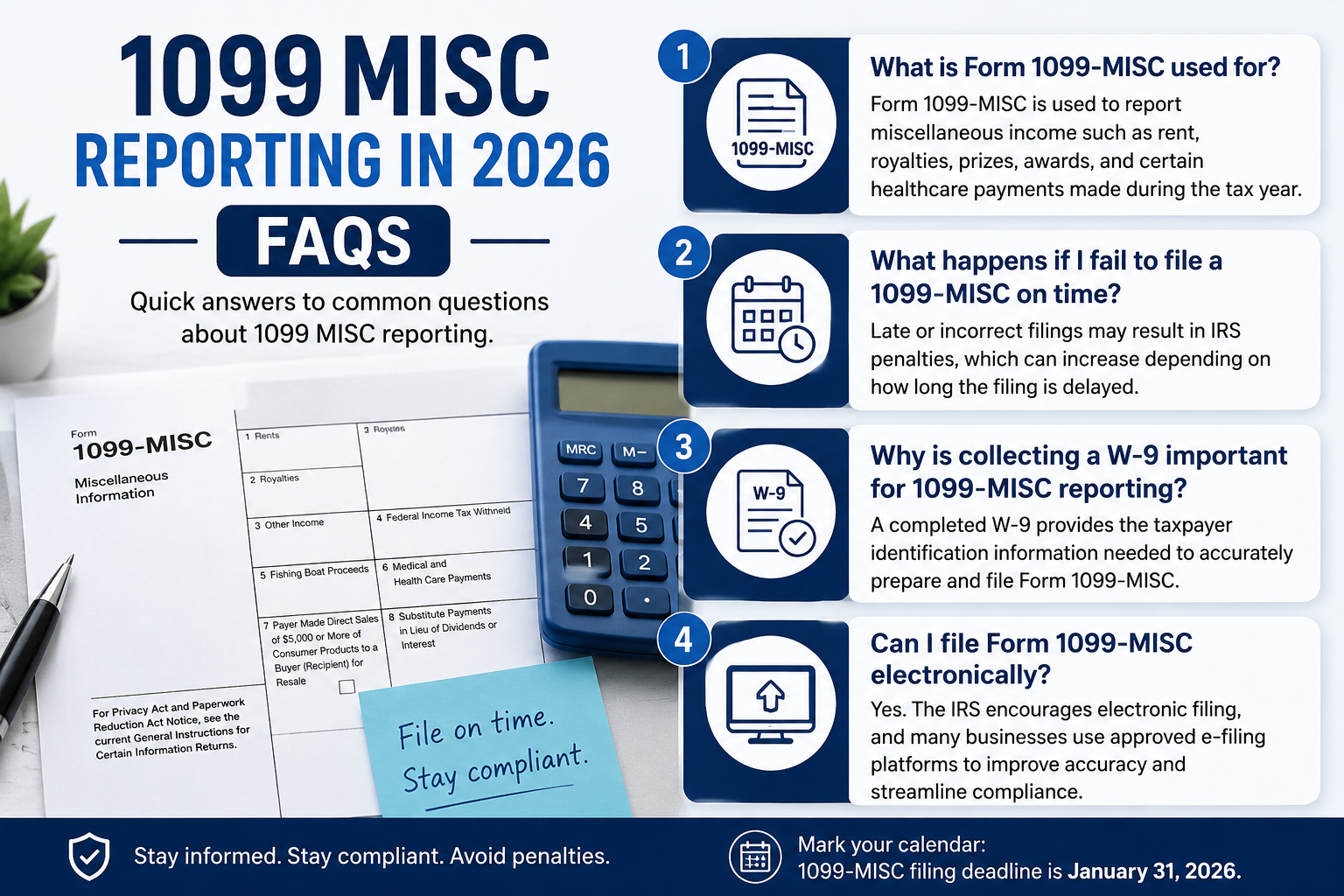
FAQs
1. What is Form 1099-MISC used for?
Form 1099-MISC is used to report miscellaneous income such as rent, royalties, prizes, awards, and certain healthcare payments made during the tax year.
2. What happens if I fail to file a 1099-MISC on time?
Late or incorrect filings may result in IRS penalties, which can increase depending on how long the filing is delayed.
3. Why is collecting a W-9 important for 1099-MISC reporting?
A completed W-9 provides the taxpayer identification information needed to accurately prepare and file Form 1099-MISC.
4. Can I file Form 1099-MISC electronically?
Yes. The IRS encourages electronic filing, and many businesses use approved e-filing platforms to improve accuracy and streamline compliance.
Comments
Log in or sign up to join the conversation.