

Tax season has a way of turning simple side income into a paperwork puzzle. If you sell on Etsy, drive for a rideshare app, freelance on the side, or get paid through Venmo or PayPal, you've probably run into two forms that look similar but serve very different purposes: the 1099-K form and Form 1099-MISC. Confusing the two — or assuming they cancel each other out — is one of the most common mistakes taxpayers make, and it can lead to underreporting income or, worse, reporting it twice.
Here's a clear breakdown of what each form actually reports, who sends it, and how to use both correctly when you file.
What Is a 1099-K Form?
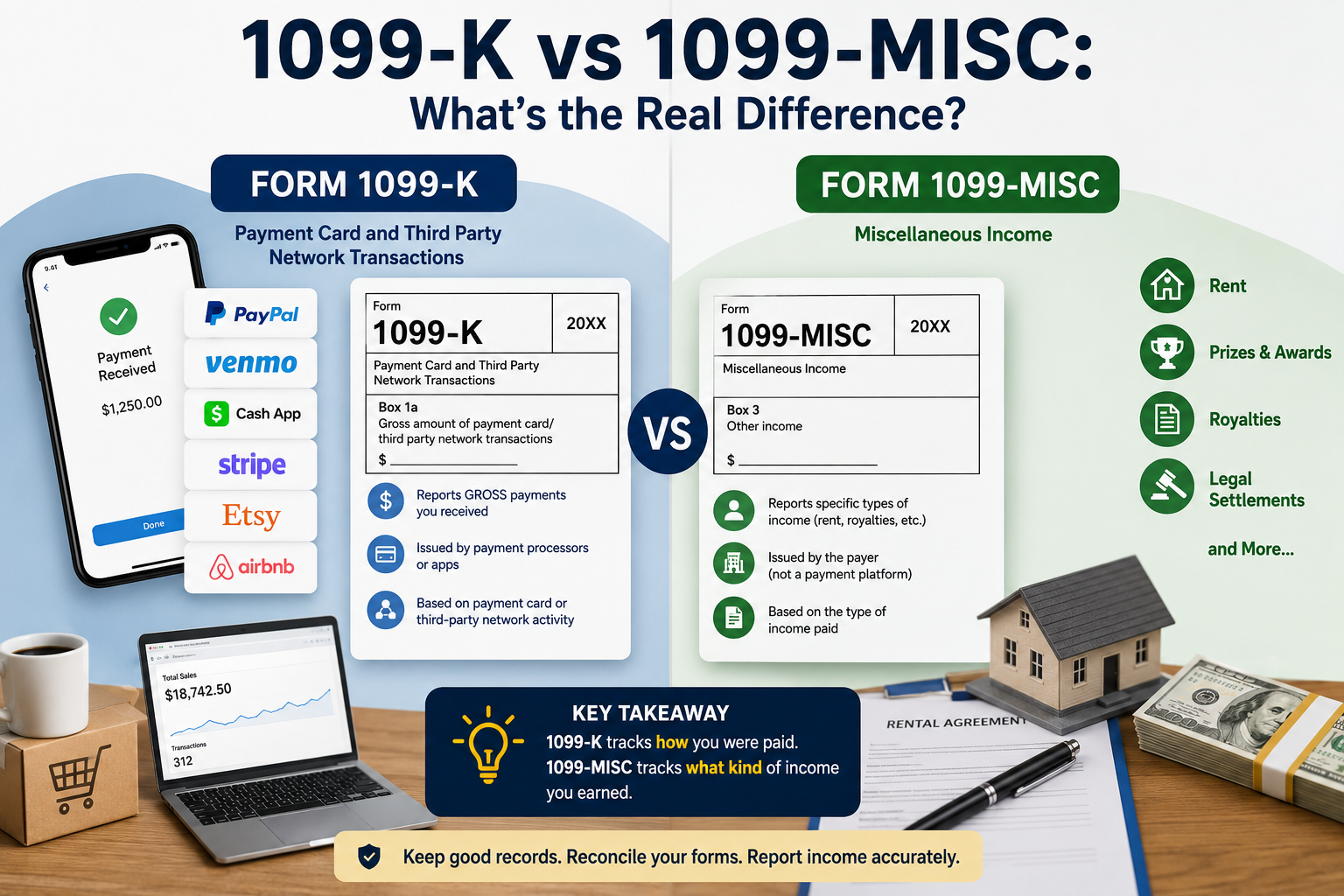
Form 1099-K, officially titled "Payment Card and Third Party Network Transactions," is issued by payment settlement entities — think PayPal, Venmo, Cash App, Stripe, Etsy, Airbnb, or your credit card processor. It reports the gross amount of payments you received through that platform during the year.
The key word is gross. The 1099-K doesn't subtract fees, refunds, or the cost of goods sold. It's simply a running total of money that moved through a third-party network to you, based on payment card transactions or third-party network transactions.
For years, the reporting threshold sat at $20,000 and 200 transactions, which meant casual sellers rarely got one. That threshold has been phased down significantly, so far more people — including those with modest side income — are now receiving a 1099-K form who never did before.
What Is Form 1099-MISC?
Form 1099-MISC is older and broader in scope, covering miscellaneous income such as rent, prizes and awards, royalties, and certain other payments not made through a third-party payment network. Note that nonemployee compensation — the classic "I freelanced for a client" scenario — moved to Form 1099-NEC a few years back, so 1099-MISC today is used less often for independent contractor work and more for things like legal settlements, royalty payments, or rent paid to a landlord.
Unlike the 1099-K, a 1099-MISC is issued directly by the person or business that paid you, not by a payment processor. It reflects a specific transaction relationship rather than aggregated platform activity.
The Core Difference
Think of it this way: the 1099-K tracks how you were paid (through a card network or app), while the 1099-MISC tracks what kind of income you earned (rent, royalties, awards, and similar categories). They aren't competing forms — they're answering different questions, and it's entirely possible to receive both in the same tax year if you have multiple income streams.
This distinction matters most for gig workers, freelancers, and small online sellers. A freelance graphic designer might get paid through PayPal (triggering a 1099-K) while also billing a client directly by invoice (which, if compensation, would show up on a 1099-NEC rather than a 1099-MISC these days). Meanwhile, a landlord who collects rent through a payment app could receive a 1099-K for those transactions even though rental income conceptually belongs with 1099-MISC-style reporting.
Common Mistakes to Avoid
Assuming platform totals equal taxable profit. The 1099-K shows gross payments, not net income. Sellers still need to subtract business expenses, refunds, and cost of goods sold when calculating actual taxable earnings.
Double-counting income. If a client pays you through Venmo for freelance work, that income might appear on a 1099-K. Don't also report it separately if a 1099-MISC or 1099-NEC arrives referencing the same payment — reconcile the forms instead of adding them together.
Ignoring a 1099-K because it "doesn't look right." Personal reimbursements (like a friend paying you back for dinner) shouldn't count as taxable income, but they sometimes get swept into 1099-K totals if not tagged correctly on the app. Keep records to explain discrepancies.
Missing the form entirely. Because thresholds have dropped, many people who never received a 1099-K before are getting one now. Check your payment app accounts even if you don't expect anything.
Bottom Line
Both forms exist to help the IRS match reported income with what taxpayers actually earned, but they capture different pieces of the puzzle. Understanding the distinction — and keeping your own records of gross receipts, expenses, and payment sources — makes it far easier to file accurately and avoid triggering an unnecessary IRS notice.
Comments
Log in or sign up to join the conversation.