

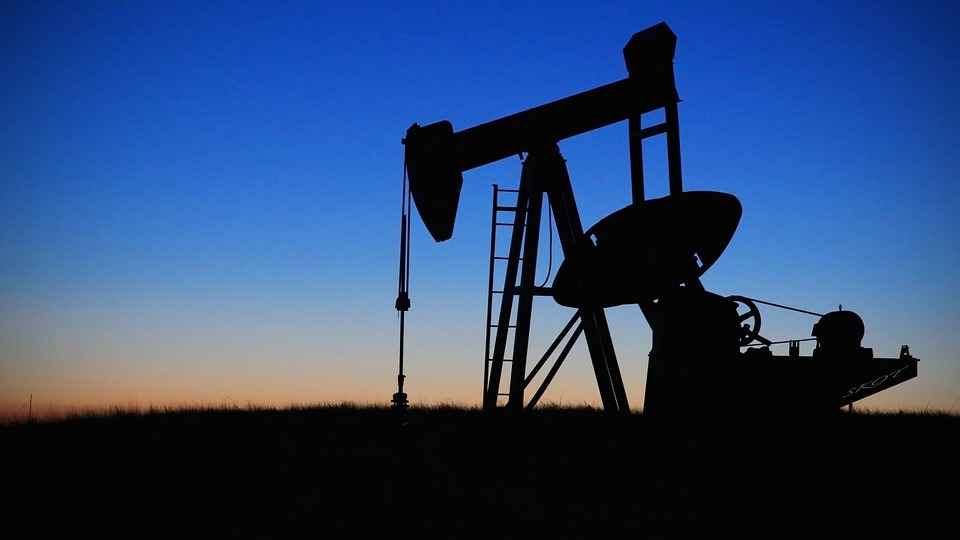
Image Source: Pixabay
Europe did not previously heed the threat from President Donald Trump when he said that they were getting too reliant on Russian oil and gas and that Vladimir Putin was a problem. Then under President Biden, Russian Invaded Ukraine. And they had to continue to write checks to Russia’s war machine. Now when President Trump tries to warn them about the strategic importance of Greenland and the importance of the United States having control of that area once they get in Europe seems to be sleeping.
Tensions rose over the long holiday weekend as President Donald Trump took action to secure American interests in Greenland. Demonstrating his commitment to national security and strategic advantage, President Trump announced a 10% tariff on NATO allies with military personnel in Greenland, warning the rate would increase to 25% in June if negotiations for the “purchase of Greenland” do not succeed. In a direct letter to Norway’s prime minister, President Trump linked his strong stance on Greenland to being overlooked for the Nobel Peace Prize, stating, “I no longer feel an obligation to think purely of Peace.” In response to President Trump’s call to secure Greenland , European Union leaders convened for what they call crisis talks on Sunday. Of course, the crisis really is in weak European leadership.
President Putin has made it clear that the competition in the Arctic is set to intensify. He noted back in 2025 that the United States is aggressively advancing its interests in the region, and NATO is increasingly viewing the Far North as a potential hotspot. Russia claims full sovereignty over the Northern Sea Route (NSR), severely limiting foreign access while forging tighter dual-use (commercial and military) partnerships with China. Despite recent claims from Foreign Minister Lavrov denying interest in Greenland, these moves directly challenge U.S. and European security in the Arctic.
China’s ambitions are surging as it brands itself a “near-Arctic state,” pursuing its Polar Silk Road strategy. Beijing is pouring resources into icebreaker fleets, scientific research, and joint patrols with Russia, including operations in the Bering Sea near Alaska. While China hasn’t yet deployed naval or submarine forces near Greenland or issued open threats, its deepening economic and technological push into the region raises serious concerns about dual-use capabilities and future military leverage.
The United States and NATO are responding with urgent measures. The U.S. has prioritized Arctic security by operating Pituffik Space Base in Greenland for missile warning, space surveillance, and defense against polar threats.
The Trump administration has sounded the alarm, declaring control of Greenland essential for national security due to mounting risks from Russia and China in the critical GIUK Gap (the Greenland-Iceland-UK chokepoint for Atlantic access). Failed negotiations with Denmark and Greenland officials on January 14, 2026, coupled with increased European NATO deployments and threatened tariffs on Denmark and other European allies, show the escalating pressure. Despite some experts and Danish commanders downplaying direct threats to Greenland, it is clear that the U.S. is raising the stakes to force compliance and bolster the Western presence.
Instead of opposing the United States, European leaders should be urging the United States to take control of Greenland and develop it—not only for our protection but for the protection of Europe as well. Fox News reported that Scott Bessent says Greenland is essential for Trump’s “Golden Dome” defense plan. He told Maria Bartiromo, “I think the president has a very strong view on Western Hemisphere security and believes that the U.S. should not outsource our national security. He believes that Greenland is essential for the Golden Dome Missile Shield. The president is worried that if there is an incursion into Greenland, the U.S. would be called upon to defend it. Greenland is becoming more and more attractive for foreign conquest.”
The Arctic is now at the epicenter of a rapidly intensifying global power race. With Russia’s invasion of Ukraine disrupting Arctic Council cooperation and stalling critical initiatives, uncertainty in the region is surging. NATO’s bold northern expansion—welcoming Finland and Sweden—has injected new energy and drawn clear military lines, setting the stage for historic shifts. As unresolved territorial claims persist under UNCLOS and Arctic ice melts faster than ever, military activity is heating up and the potential for miscalculations is rising daily.
Global competition is reaching a fever pitch, as Russia, China, and Western nations vie for control, transforming the Arctic into the next great frontier. Immediate, unified action is essential—this is our moment to secure Western interests and shape the region’s future. If we hesitate, rivals could seize the advantage, putting security, commerce, and stability at risk—not just in the Arctic, but across the world. The stakes couldn’t be higher. The region holds vast untapped resources—immense reserves of oil and natural gas beneath the ice—waiting to fuel prosperity for those bold enough to act now.
The race for Arctic dominance is hitting a boiling point, with Russia, China, and the West locked in a high-stakes struggle for control.
The Arctic isn’t just cold—it’s hot with opportunity and risk, becoming the world’s next geopolitical gold rush. Now is the time for bold action, not hesitation. If the West blinks, our adversaries will snatch the lead, threatening the very foundations of our security, our economies, and global stability. The Arctic is loaded with untapped treasure—massive oil and natural gas reserves just waiting under the ice—ready for those gutsy enough to grab them and secure prosperity for generations. The clock is ticking, and the stakes couldn’t be bigger.
And as if the world stage weren’t tense enough, the market sits on edge, eyes glued to the headlines, waiting to see how President Trump will react to the new powder keg in Iran. The New York Poset reported that “ Iran issued a sickening threat against President Trump Wednesday, broadcasting a picture of the commander in chief during the 2024 Butler rally assassination attempt — with the words “This time it will not miss the target.” The ominous warning was aired on Iranian state-run TV, Agence France Presse (AFP) reported.
It marks Tehran’s most direct threat yet against Trump, following his repeated threats that the US will strike the country if it continues its brutal crackdown on anti-government protesters. Iran appeared to step up threats against Trump by broadcasting a photo of him during the Butler assassination attempt. The image of a bloodied-Trump appeared to be taken from a pro-government rally in Iran, which has been allowed to air despite nationwide blackouts over the protests the regime. Trump was infamously the target of an assassination attempt during a campaign rally in Butler, Pennsylvania, when he was shot in the ear by gunman Thomas Crooks.
Amazingly, with everything, the actual energy prices are up. Really cold temperatures are hitting parts of the nation, and that’s supporting both the heating fuels and natural gas. One of the things that’s keeping the market well anchored during these high-risk times is the fact that Venezuelan oil is already coming to our shores.
Natural gas surged higher as the cold weather risk became a reality. Natural gas is up close to 20% and taking a breather right at the gap window. After a big surge like this, it wouldn’t be surprising to see the market catch its breath for a few days. But just like we’ve seen before, there could be more gas in the tank. The next target on the upside is the gap fill at $3.50, and beyond that, resistance stacks up between $3.60 and $4. Stay tuned—the fireworks might not be over yet.
Fox Weather reports that a polar vortex has locked in over most of the U.S., bringing days of arctic temperatures ahead for millions through January. The core of the polar vortex, which contains some of the coldest air on the planet, has shifted south over much of the eastern U.S. and will allow waves of subfreezing temperatures to grip parts of the Midwest.
Fox Weather reported that the displacement of the polar vortex over the eastern half of the U.S. will usher in days of arctic cold through the end of January. Brutal, life-threatening wind chill temperatures have already taken hold across the Northern Plains, Upper Midwest and parts of the Ohio Valley and interior Northeast — the first of several arctic outbreaks. The core of the polar vortex, which contains some of the coldest air on the planet, has shifted south over much of the eastern U.S. and will allow waves of subfreezing temperatures to grip parts of the Midwest. It will be slightly warmer, but not by much across the Northeast, while enough cold air could take hold across the South to set the stage for rare winter snowstorms.
More By This Author:
No Mercy - The Energy Report
Trump Wants Them To Pay Their Fair Share - The Energy Report
Oil Hopes And Fears - The Energy Report


Comments
Log in or sign up to join the conversation.